
Organizations often assume workplace conflict is primarily about personalities.
Someone is “difficult.”
Someone else is “too sensitive.”
A manager “doesn’t communicate well.”
Sometimes that is true.
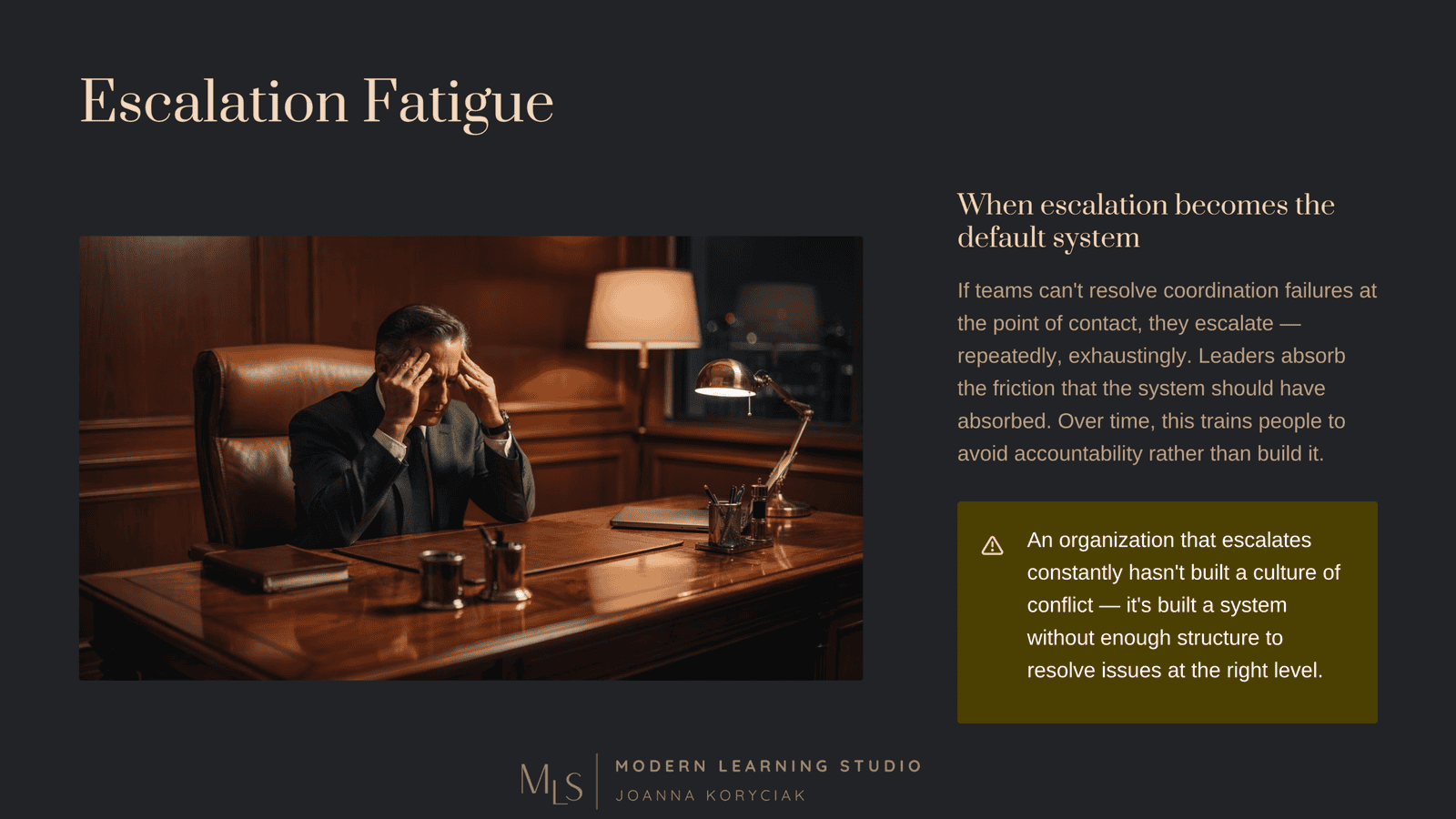
But in many workplaces, conflict is actually operational confusion wearing an emotional disguise.
The real issue is coordination.
What Coordination Failure Looks Like
Coordination failures happen when organizations rely on assumptions instead of structure.
Examples include:
- unclear ownership
- inconsistent expectations
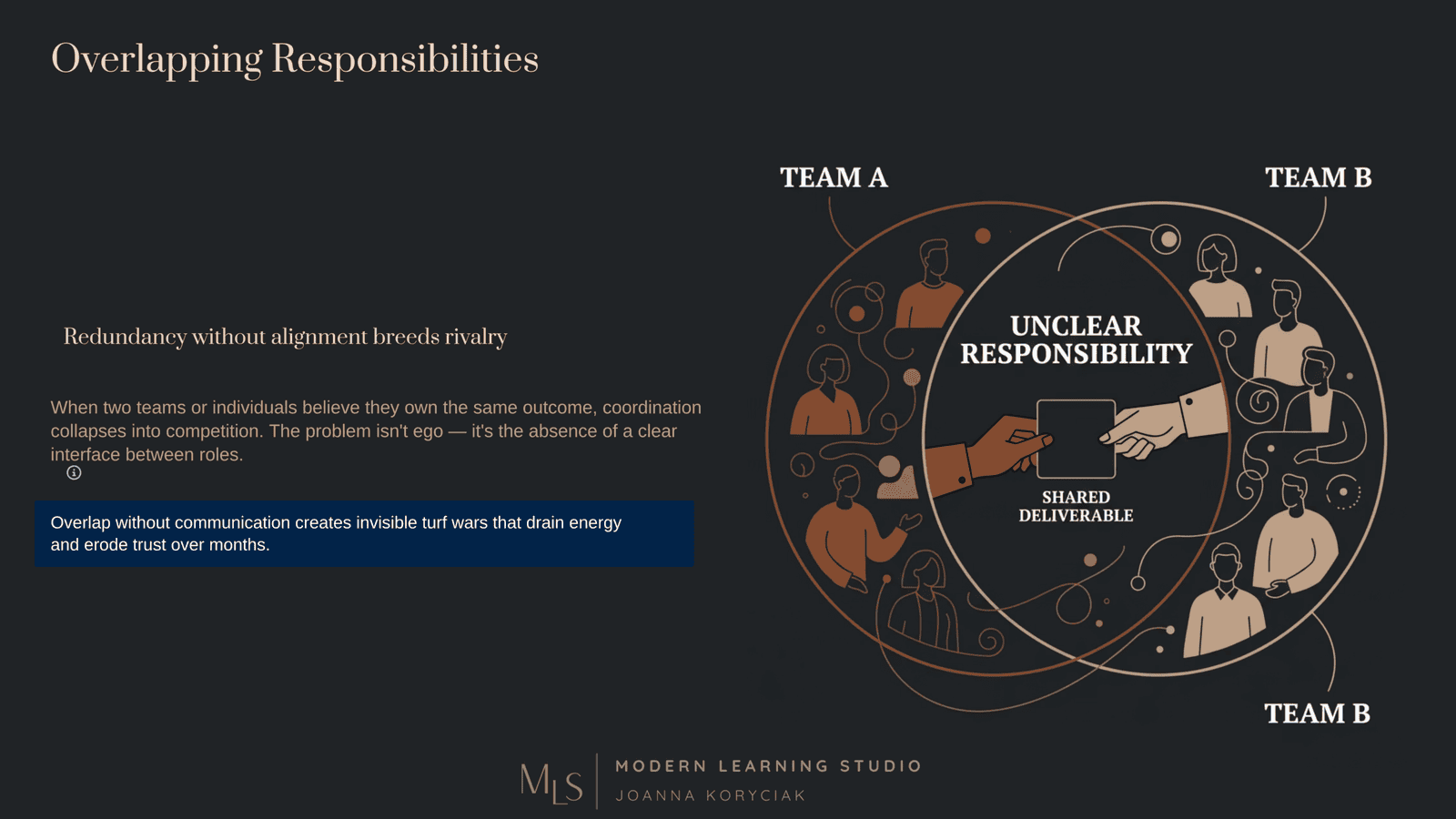
- overlapping responsibilities
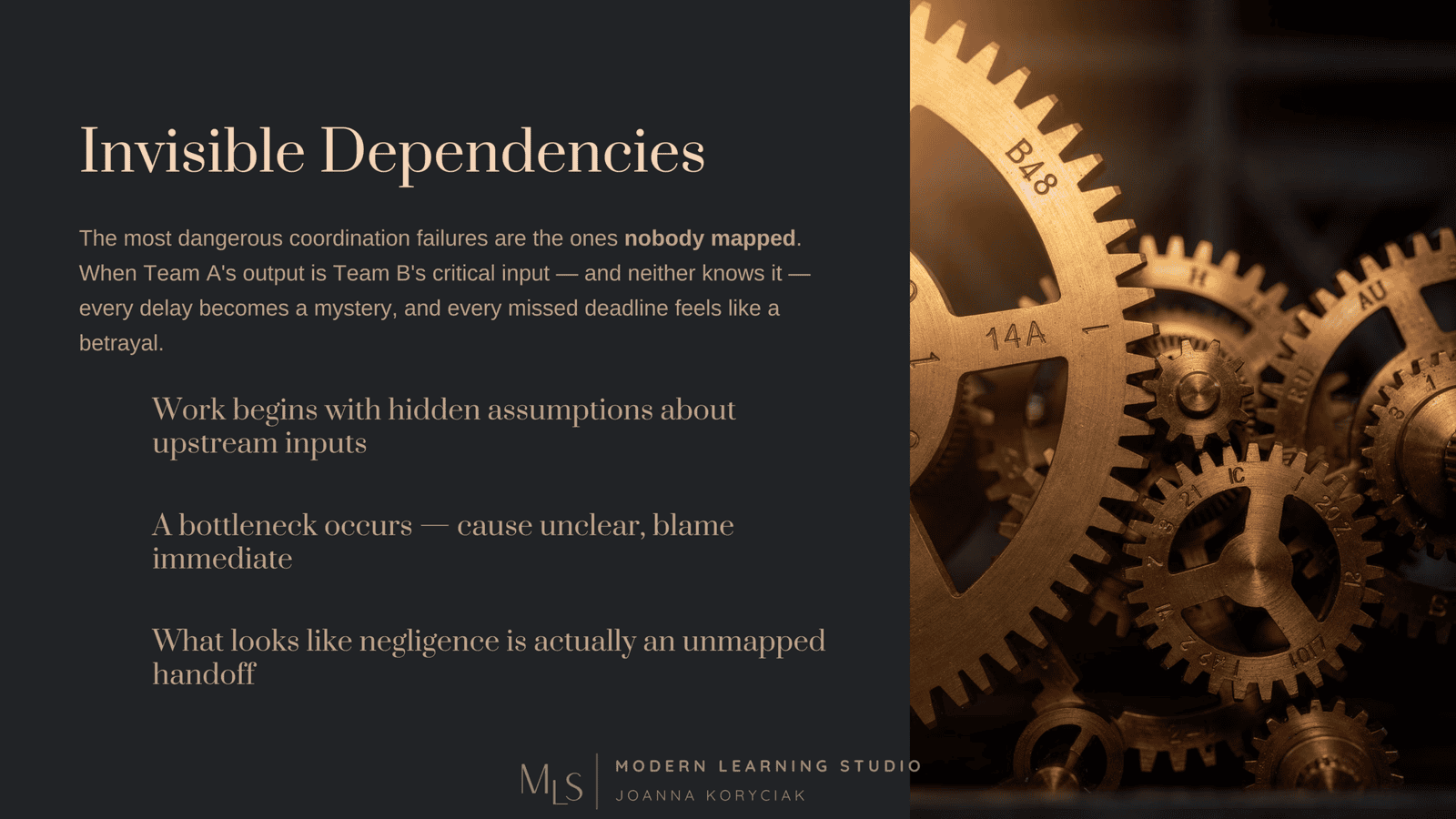
- disconnected departments
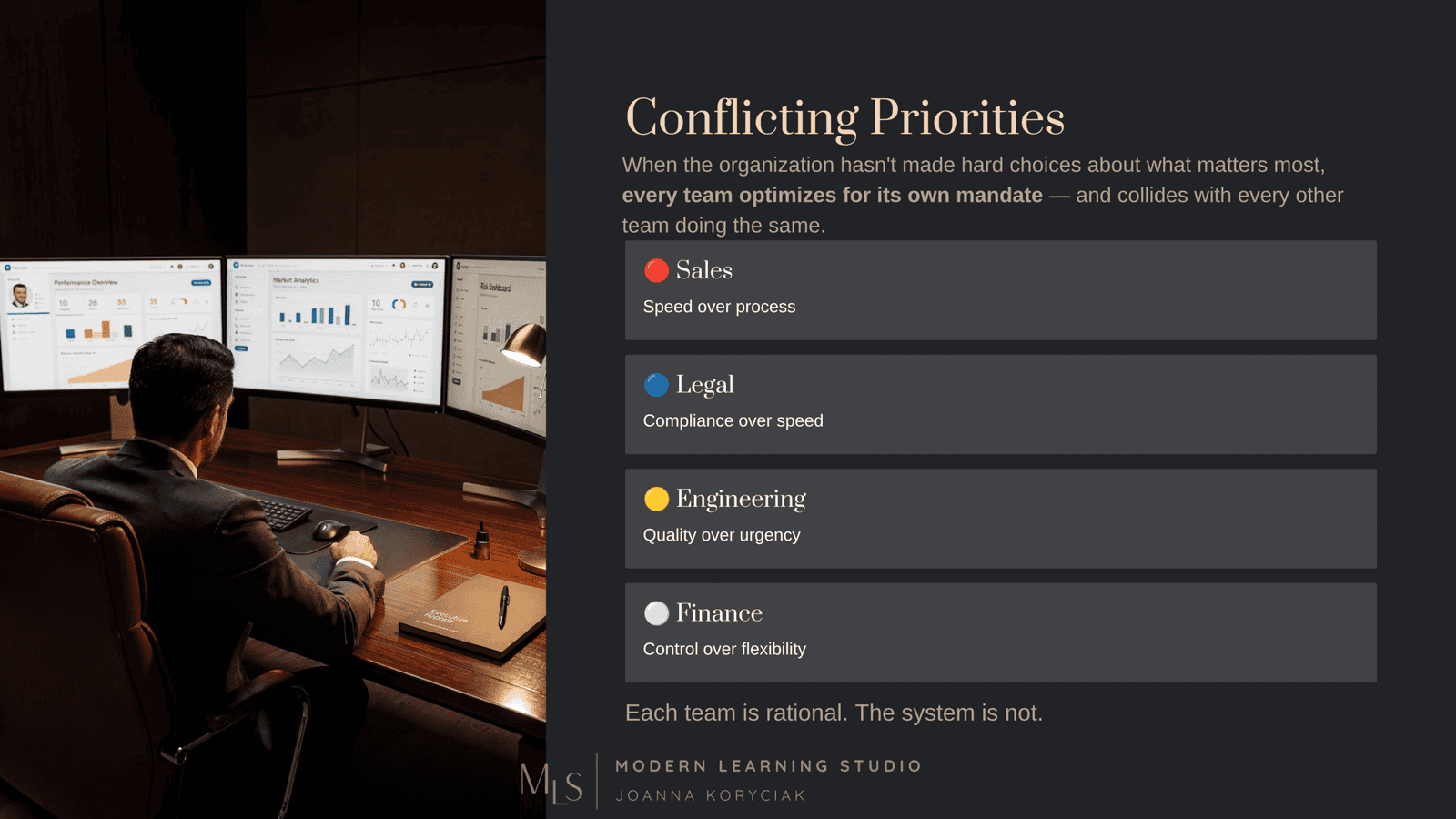
- shifting priorities without visibility
- undocumented workflows
- missing decision authority
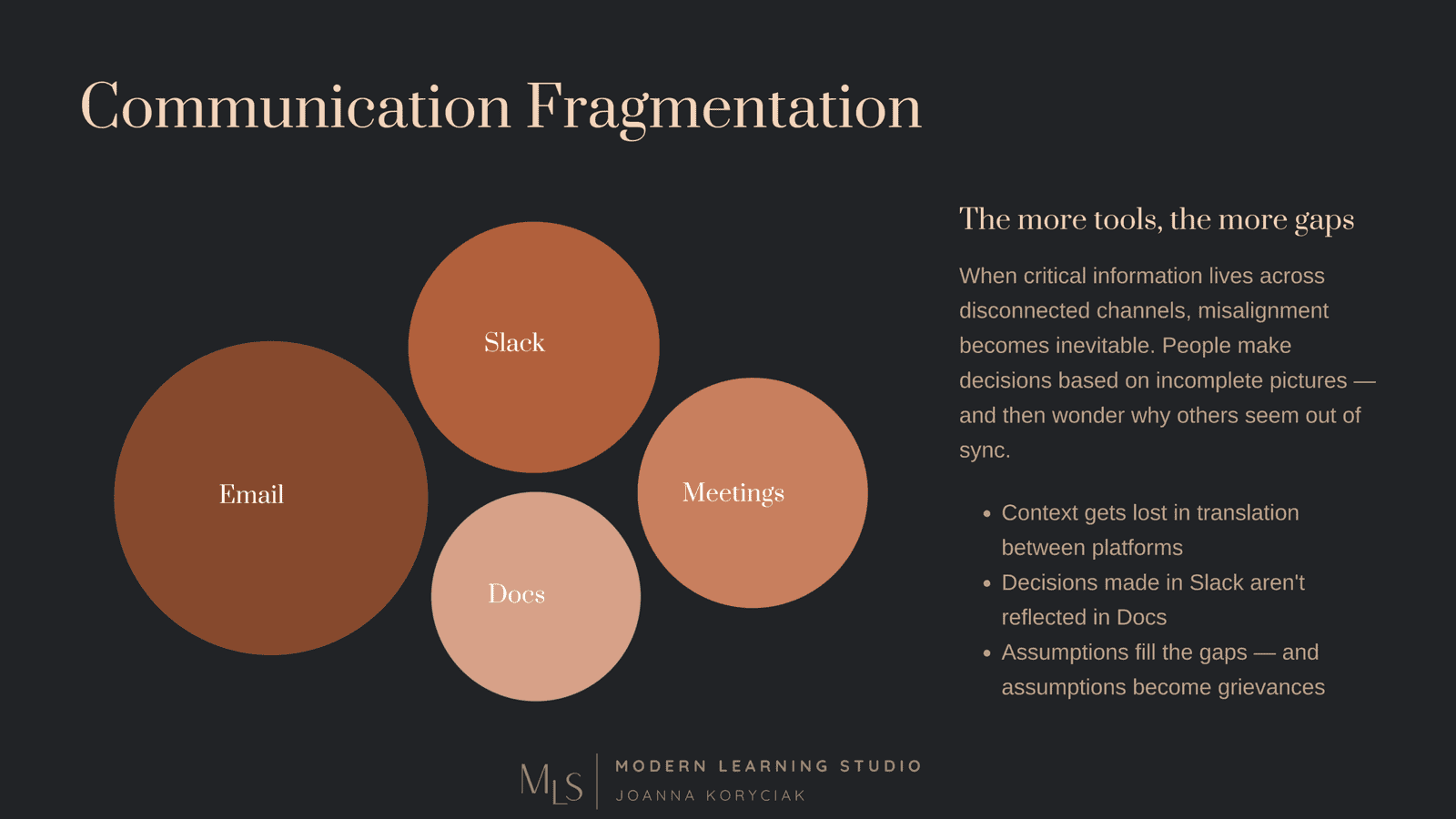
- communication scattered across multiple platforms
When people cannot clearly see:
- who owns what
- what happens next
- where information lives
- how decisions are made
they begin compensating emotionally for structural uncertainty.
That compensation often appears as:
- frustration
- defensiveness
- tension
- disengagement
- blame
- passive resistance
The emotional reaction becomes visible.
The operational cause remains hidden.
Why Teams Personalize Structural Problems
Humans naturally interpret repeated friction personally.
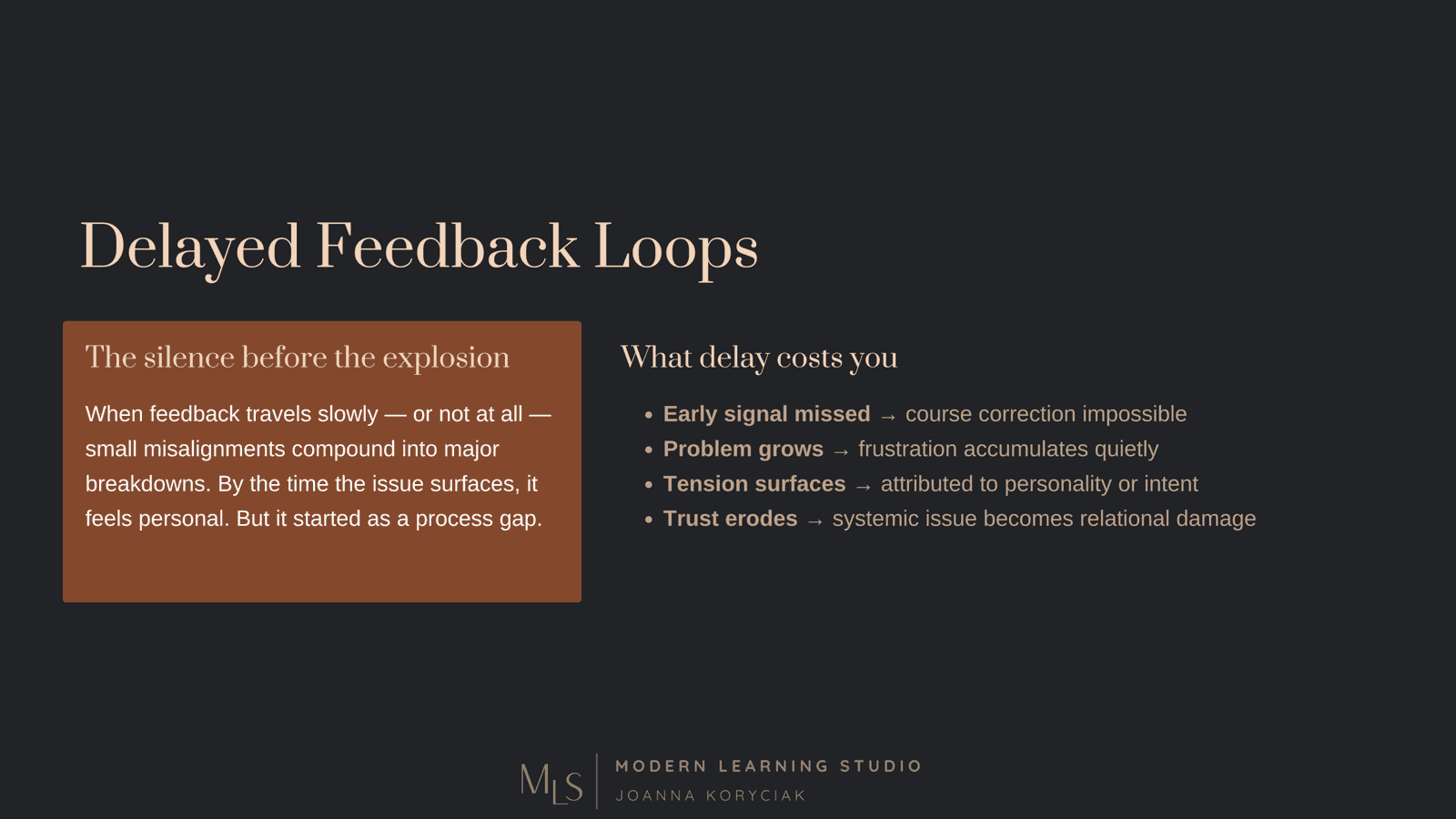
If a process consistently creates confusion, people eventually stop blaming the process and start blaming each other.
Examples:
- delayed approvals become “nobody supports my work”
- unclear priorities become “leadership changes their mind constantly”
- missing documentation becomes “people here never communicate”
- inconsistent onboarding becomes “new hires just don’t get it”
Over time, operational instability erodes trust.
Not because employees are irrational.
Because the system forces people to continuously interpret ambiguity.
The Hidden Cost of Poor Coordination
Poor coordination creates invisible organizational drag.
Managers spend time:
- clarifying preventable confusion
- resolving duplicate work
- correcting inconsistent execution
- mediating avoidable tension
Employees spend cognitive energy trying to:
- locate information
- interpret expectations
- navigate unclear processes
- understand unwritten rules
This creates exhaustion that organizations often mislabel as:
- disengagement
- poor attitude
- low accountability
- communication problems
But many employees are not resisting work.
They are compensating for unstable systems.
Healthy Organizations Reduce Interpretation Load
Strong operational environments reduce the amount of interpretation employees must perform.
Clear systems create:
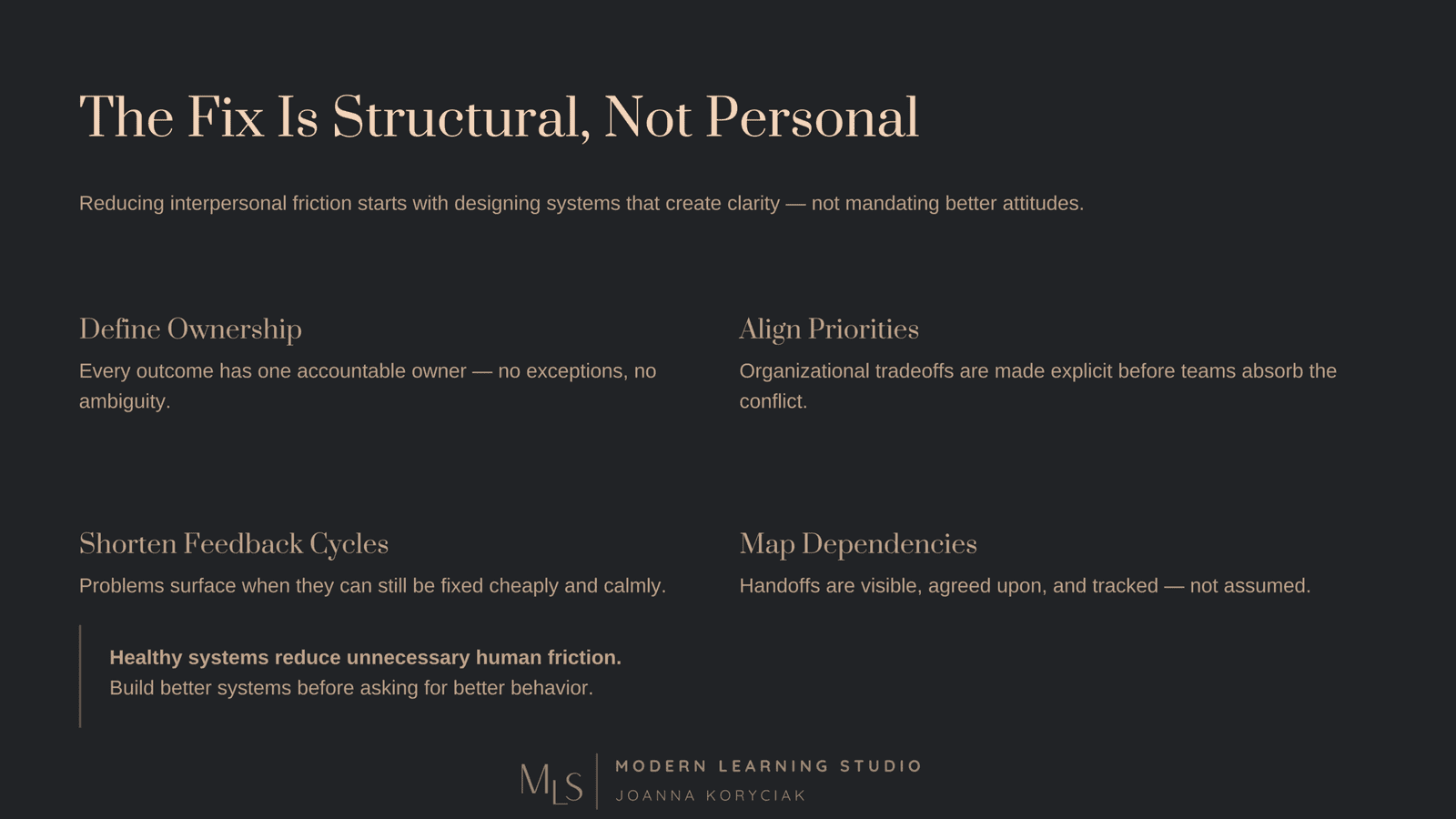
- predictable workflows
- visible ownership
- smoother handoffs
- better decision velocity
- lower emotional friction
People collaborate better when they are not constantly decoding the organization.
This is one reason operational clarity directly affects culture.
Culture is not only emotional.
Culture is structural.
Coordination Is a Learning System
Many organizations think learning only happens in training sessions.
In reality, employees learn continuously from operational systems.
They learn:
- what leadership prioritizes
- where confusion exists
- whether processes are reliable
- whether accountability is consistent
- whether information is accessible
Every workflow teaches something.
A chaotic workflow teaches employees to operate reactively.
A clear workflow teaches confidence and consistency.
That is why operational design is also organizational learning design.
Final Thought
Not every workplace conflict is interpersonal.
Sometimes the real issue is:
- fragmented systems
- unclear ownership
- invisible processes
- operational ambiguity
When coordination improves, many “people problems” shrink naturally.
Because clarity reduces friction.
And organizations function better when employees no longer have to guess how the system works.