1

The $10 Trillion Disconnect

Employee disengagement now represents a major global productivity loss, but the deeper problem may be structural. This deck examines declining manager engagement, expanding spans of control, AI-related pressure, and why rebuilding the manager experience is essential to organizational resilience.

The $10 Trillion Disconnect Read More »

1

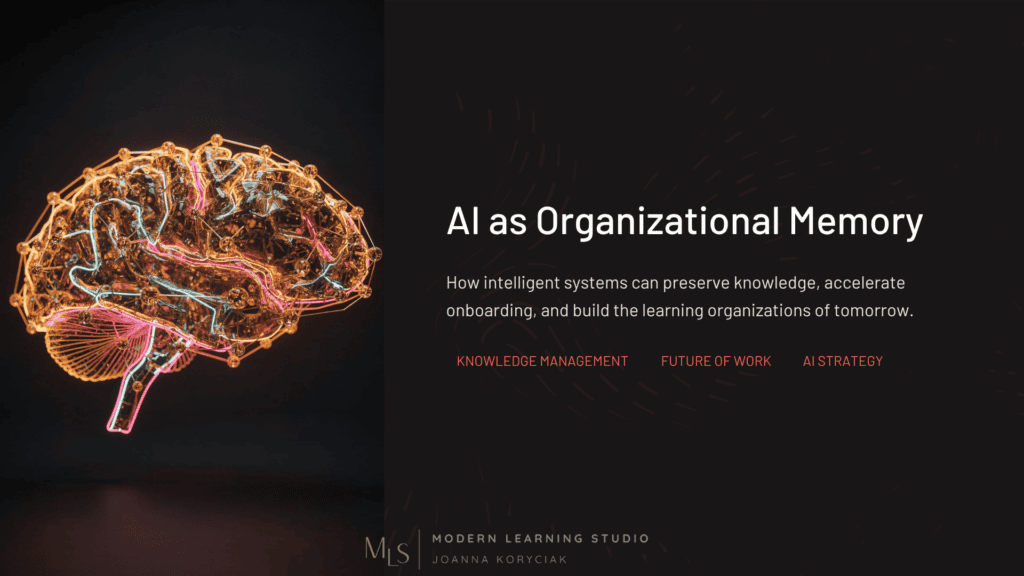
AI as Organizational Memory

AI as organizational memory reframes artificial intelligence as more than a productivity tool. It explores how intelligent systems can help organizations preserve institutional knowledge, reduce repeated explanations, strengthen onboarding, and make operational knowledge easier to find and apply. The article connects knowledge management, learning systems, onboarding, succession planning, and workforce development into a practical framework for building organizations that remember, learn, and adapt.

AI as Organizational Memory Read More »

1

The Hidden Cost of Underdevelopment

Underdevelopment rarely looks like failure. More often, it looks like stability: people still show up, meetings still happen, and the work still gets done. This article explores the hidden organizational cost of unsupported growth — the quiet loss of questions, ownership, initiative, and contribution from capable people who could have developed further. Grounded in Gallup research, it reframes employee development as performance infrastructure, not a perk.

The Hidden Cost of Underdevelopment Read More »

1

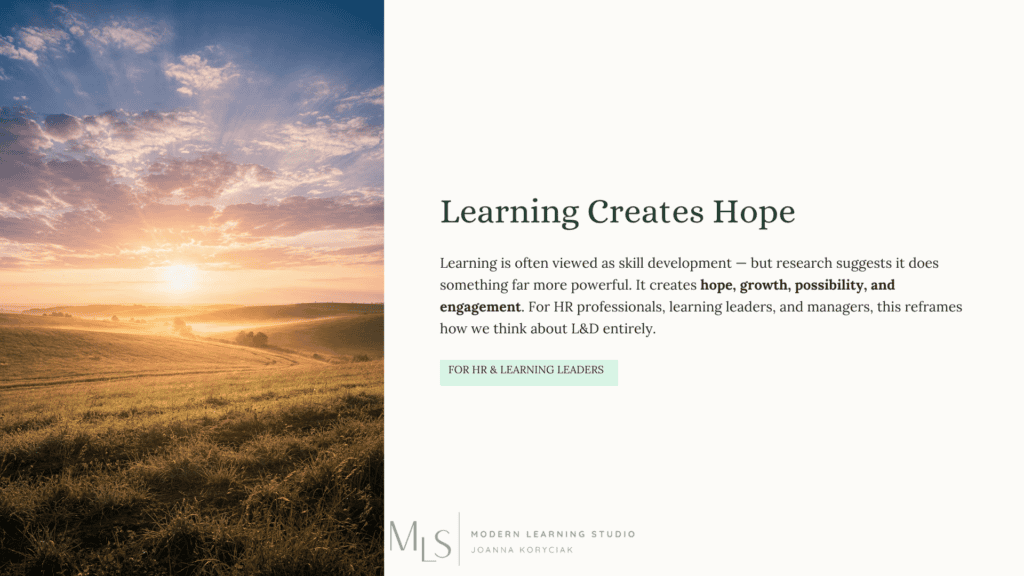
Learning Creates Hope

Learning is often treated as skill development, but its deeper function is creating hope. This piece explores how learning builds trust, growth, possibility, and engagement — and why HR and learning leaders should design development experiences that help people see a future worth growing toward.

Learning Creates Hope Read More »

1

The Anatomy of Burnout in Modern Workplaces

Burnout is often treated as an individual problem, but it frequently begins as system strain. This piece examines eight workplace fault lines — ambiguity, emotional masking, context switching, cognitive overload, unclear expectations, sustained interruptions, operational friction, and emotional exhaustion — and reframes burnout as a design issue that leaders can address through clearer systems, expectations, and work conditions.

The Anatomy of Burnout in Modern Workplaces Read More »