
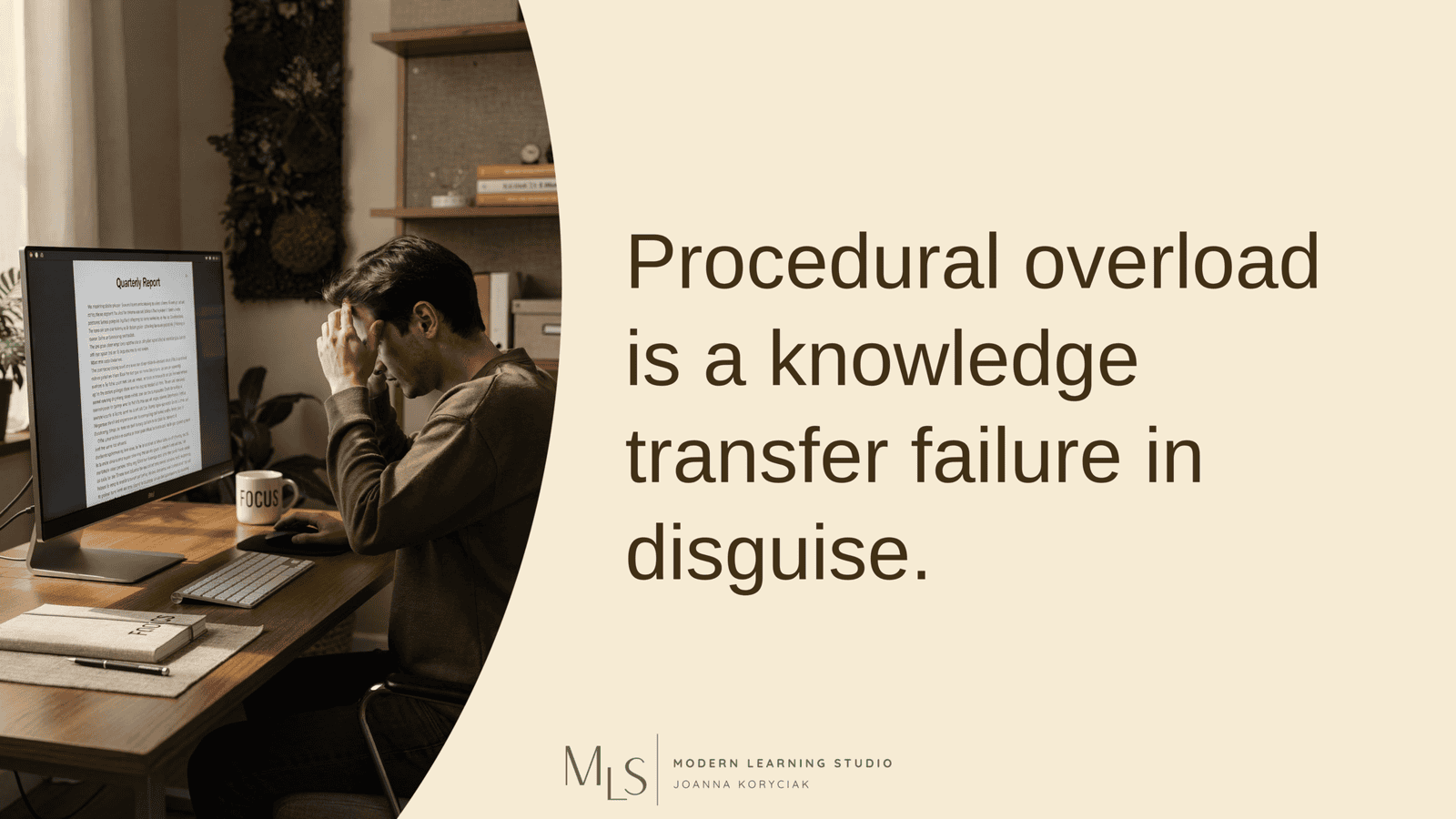
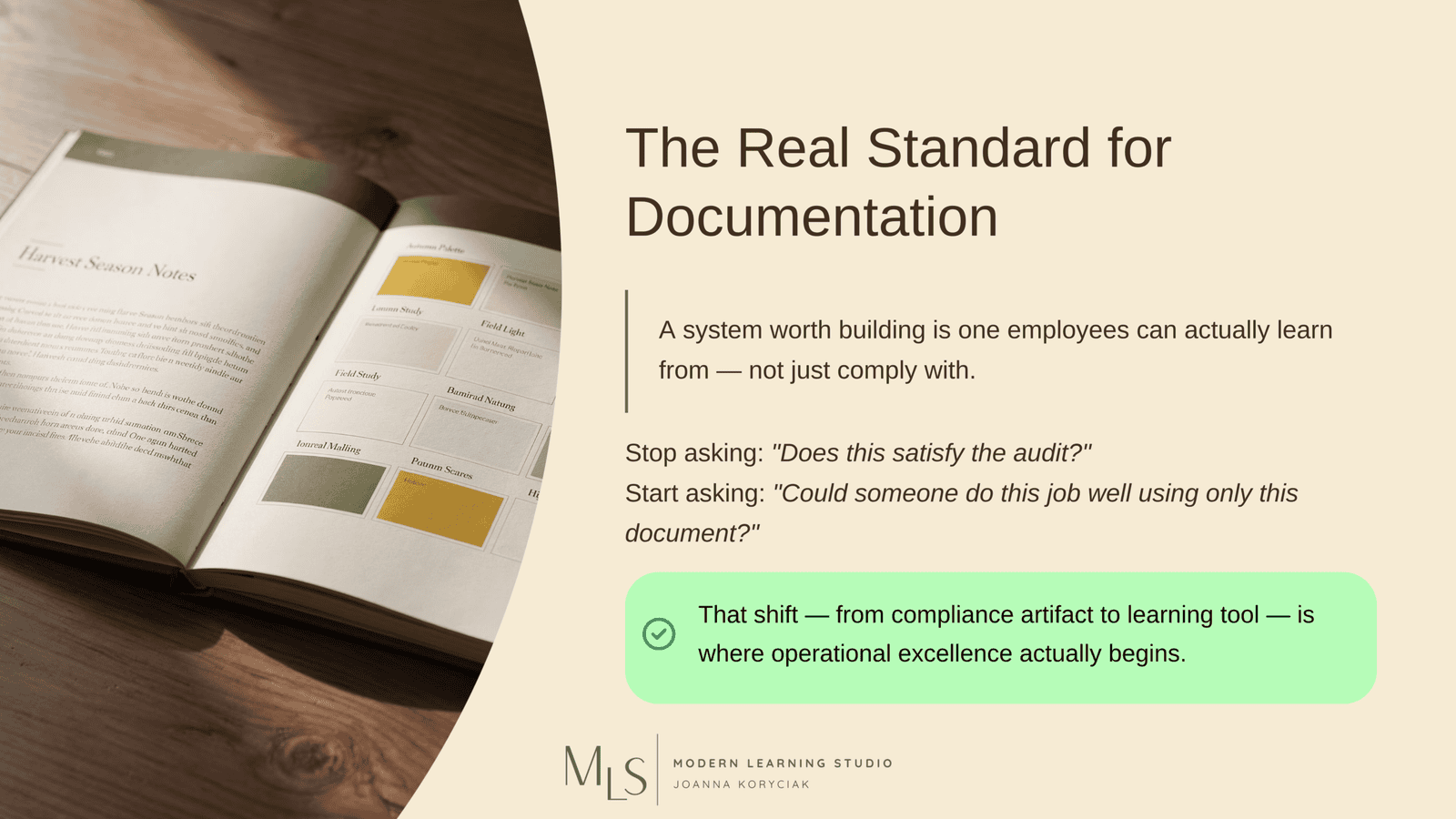
Many organizations believe they have a training problem.
In reality, they often have a usability problem.
Their SOPs exist.
Their documentation exists.
Their policies exist.
But employees still struggle to execute the work consistently.
Why?
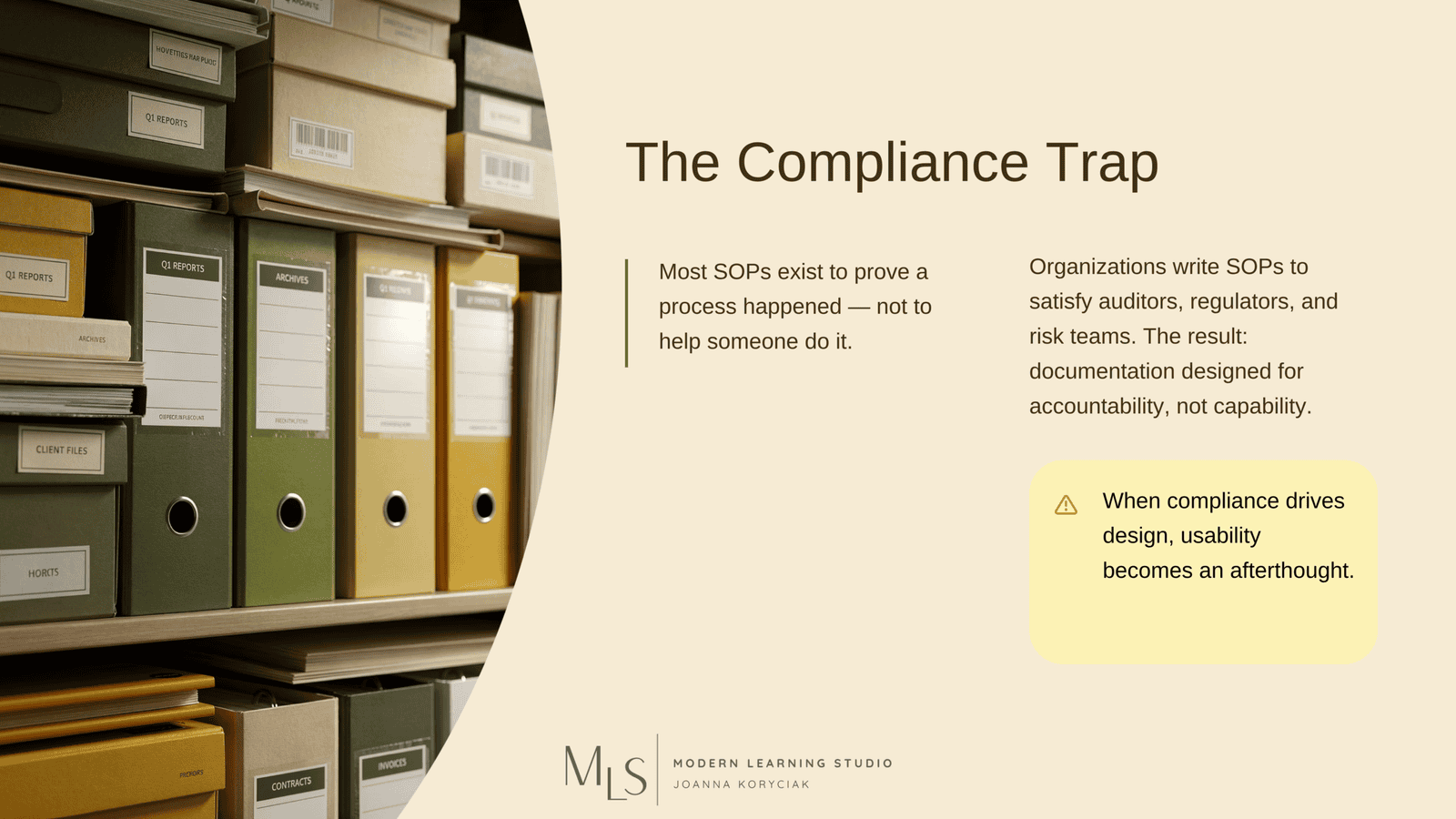
Because most SOPs are written for compliance — not learning.
The Real Purpose Behind Many SOPs
A large percentage of operational documentation is created to satisfy:
- audits
- legal requirements
- accreditation standards
- policy expectations
- risk management needs
That creates documents designed to prove information exists.
Not necessarily to help employees use it.
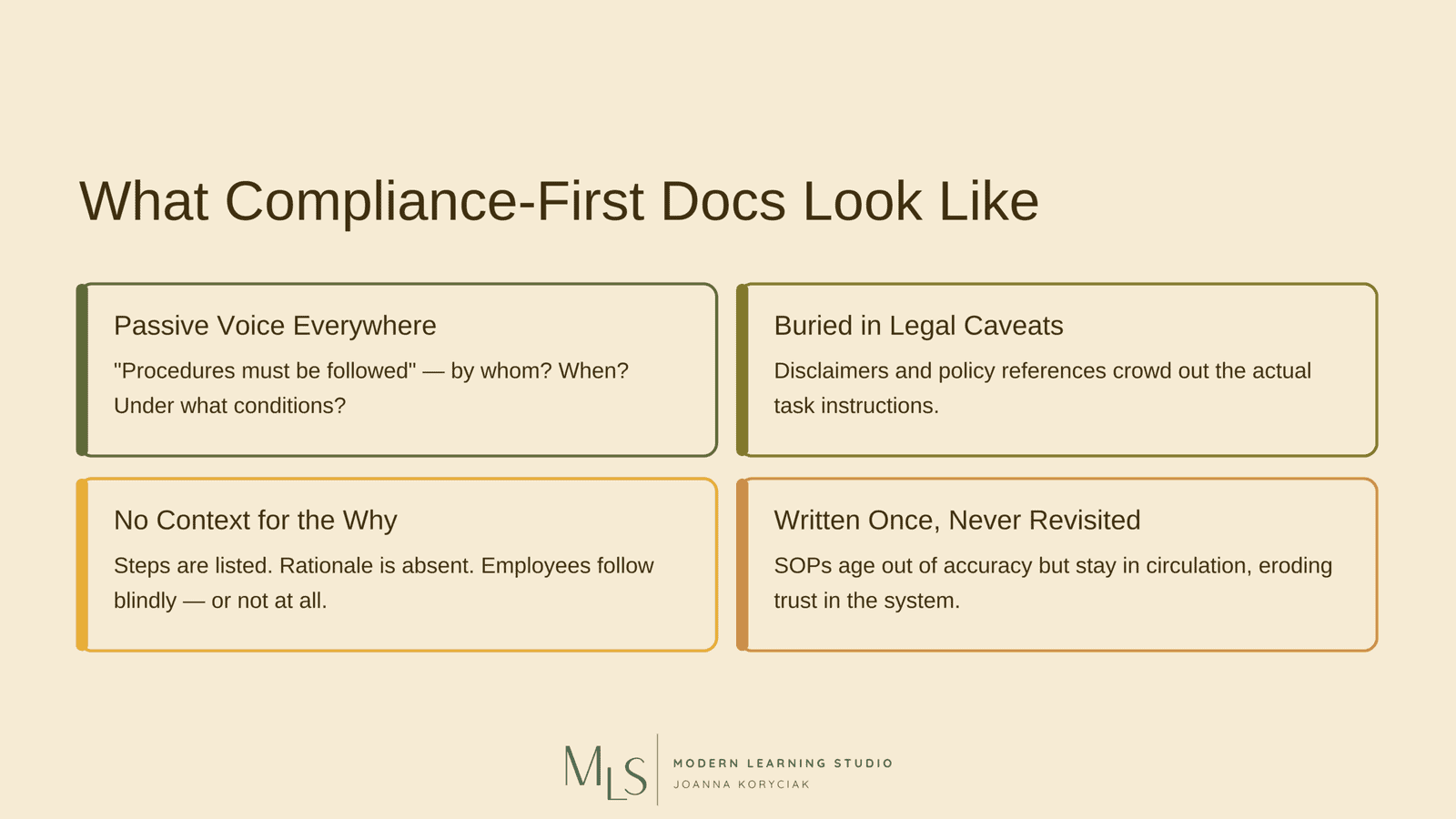
As a result, SOPs often become:
- long
- text-heavy
- difficult to scan
- disconnected from workflow reality
- overloaded with policy language
- missing operational context
Technically complete.
Operationally ineffective.
Employees Do Not Learn Well From Dense Documentation
Most employees are not sitting down to study procedures like textbooks.
They are trying to complete tasks in real time.
That means effective operational learning must support:
- speed
- clarity
- accessibility
- workflow integration
- quick reference usage
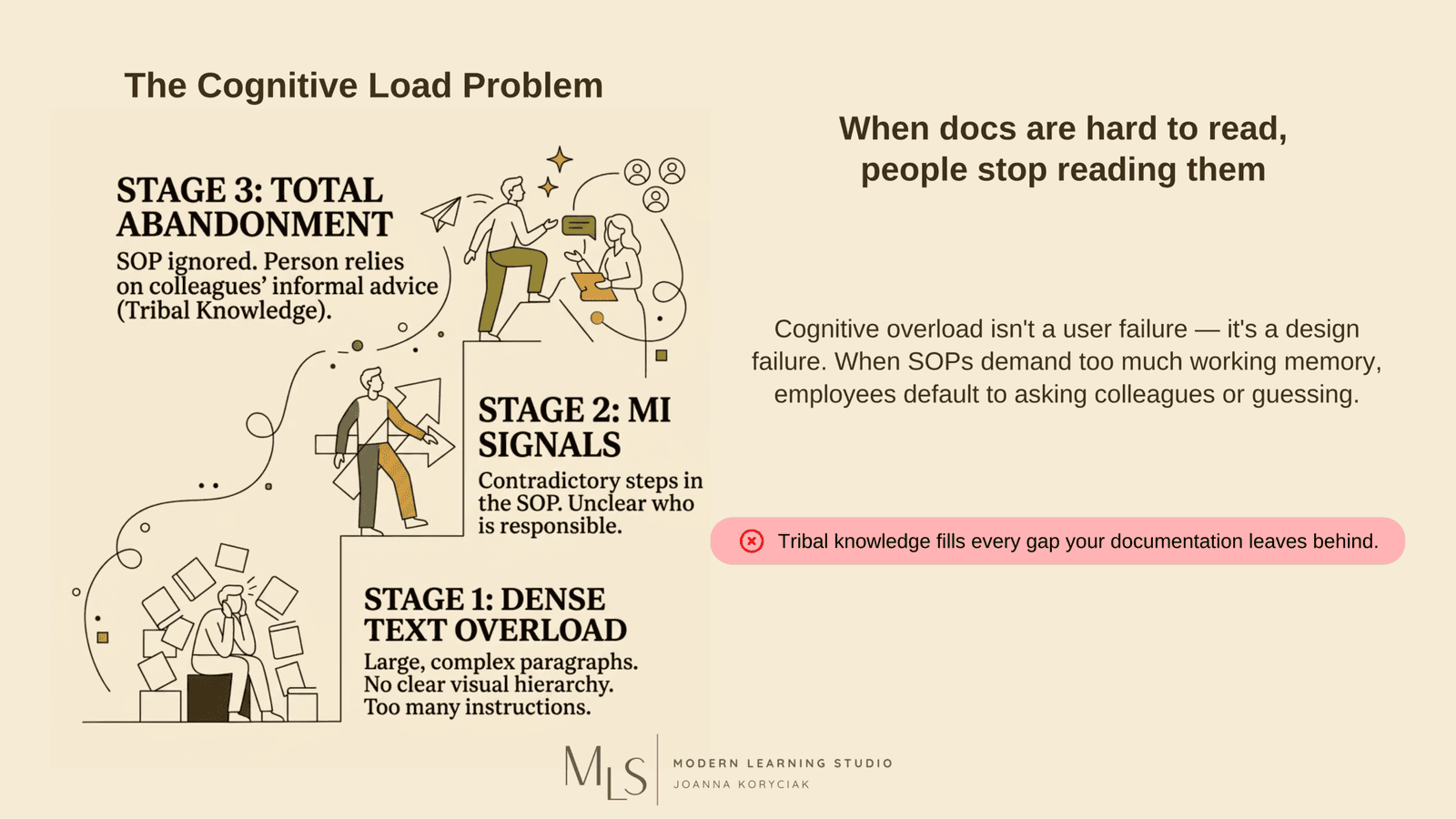
When employees encounter a 14-page SOP during active work, they often:
- skim it
- ignore it
- ask coworkers instead
- create shortcuts
- rely on memory
This is not laziness.
It is usually a mismatch between documentation design and human workflow behavior.
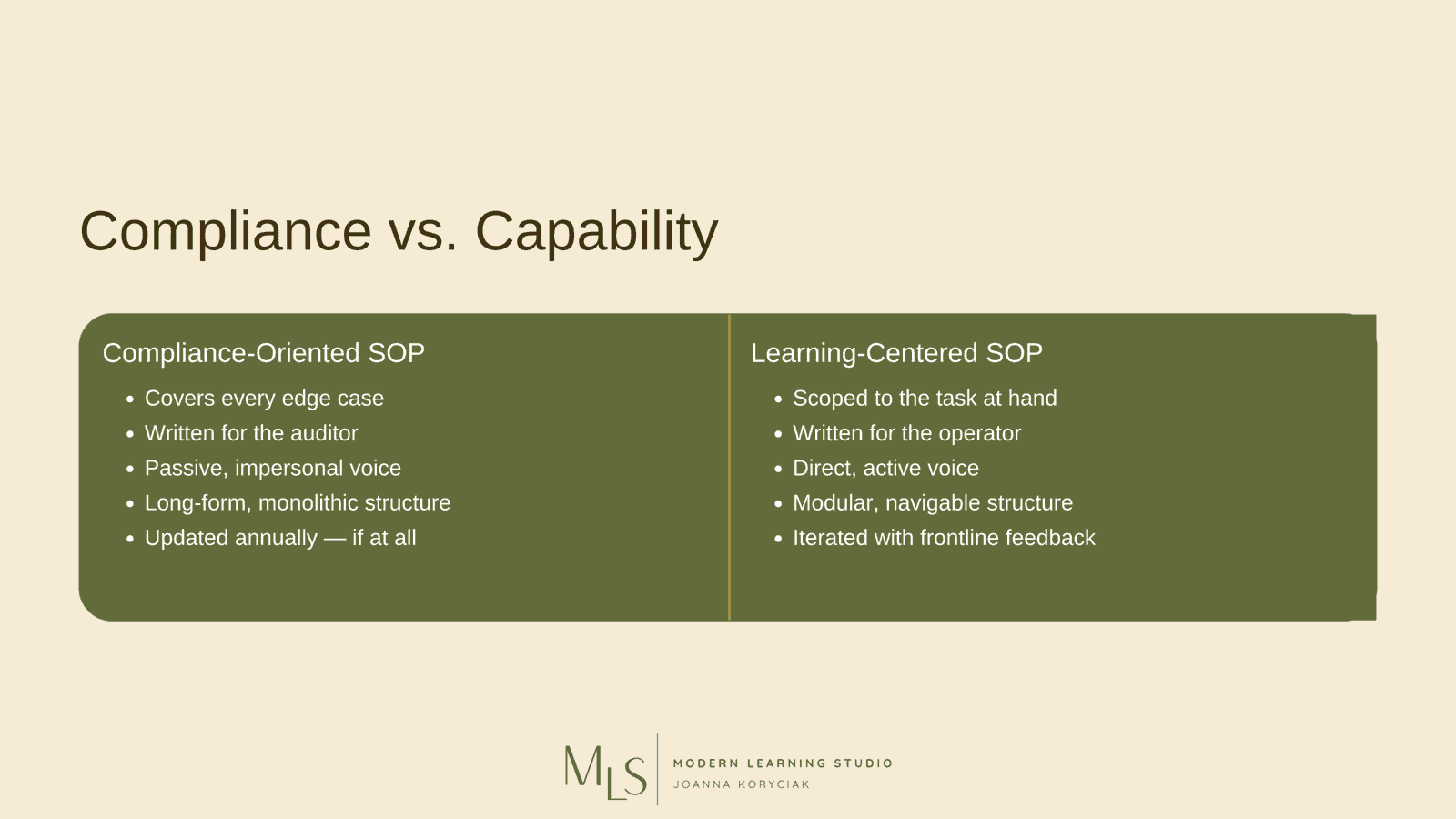
Compliance Documentation vs Learning Documentation
These are not the same thing.
Compliance Documentation Prioritizes:
- completeness
- policy language
- legal defensibility
- formal structure
- standardized wording
Learning Documentation Prioritizes:
- usability
- visual clarity
- workflow sequence
- decision support
- practical execution
Organizations need both.
But many workplaces only optimize for the first category.
Why Visual and Contextual Learning Matters
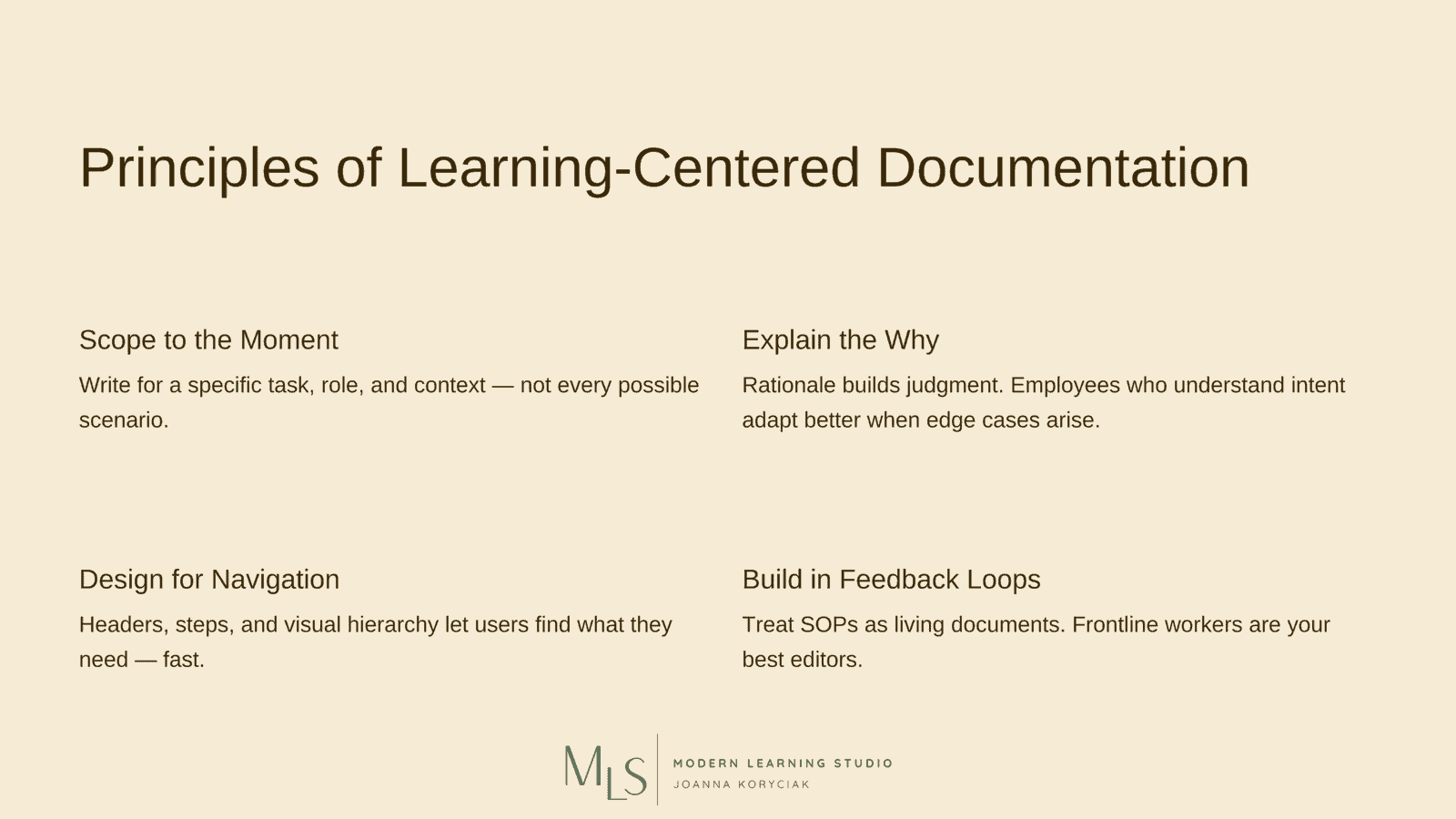
Operational learning works best when information is:
- broken into smaller pieces
- visually structured
- easy to navigate
- tied to actual workflow moments
This is why employees often prefer:
- screenshots
- quick guides
- short videos
- flowcharts
- visual walkthroughs
- step-by-step references
These formats reduce cognitive load.
Employees do not need to “translate” the information before using it.
The Hidden Organizational Cost
Poor SOP design creates:
- inconsistent execution
- repeated mistakes
- dependency on tribal knowledge
- onboarding gaps
- supervisor overload
- knowledge bottlenecks
Then organizations compensate with:
- retraining
- repeated reminders
- corrective conversations
- extra meetings
The issue is often not employee unwillingness.
The issue is that the learning infrastructure was never designed for practical application.
SOPs Should Function Like Operational Tools
The best operational documentation behaves less like a manual and more like a support system.
Employees should be able to quickly identify:
- what to do
- when to do it
- where to find information
- who owns the step
- what common errors look like
Good SOPs reduce uncertainty.
Great SOPs reduce dependency.
Final Thought
Compliance matters.
But documentation alone does not create capability.
Employees learn best through systems that are:
- practical
- visual
- contextual
- accessible during real work
If a procedure cannot realistically support execution, it is not functioning as a learning tool.
It is functioning as archived information.
And modern organizations need operational learning systems — not just stored documentation.