
Individual Development Plans are one of the most common tools used in workforce development. Nearly every organization talks about growth, career progression, leadership development, or employee engagement through development planning.
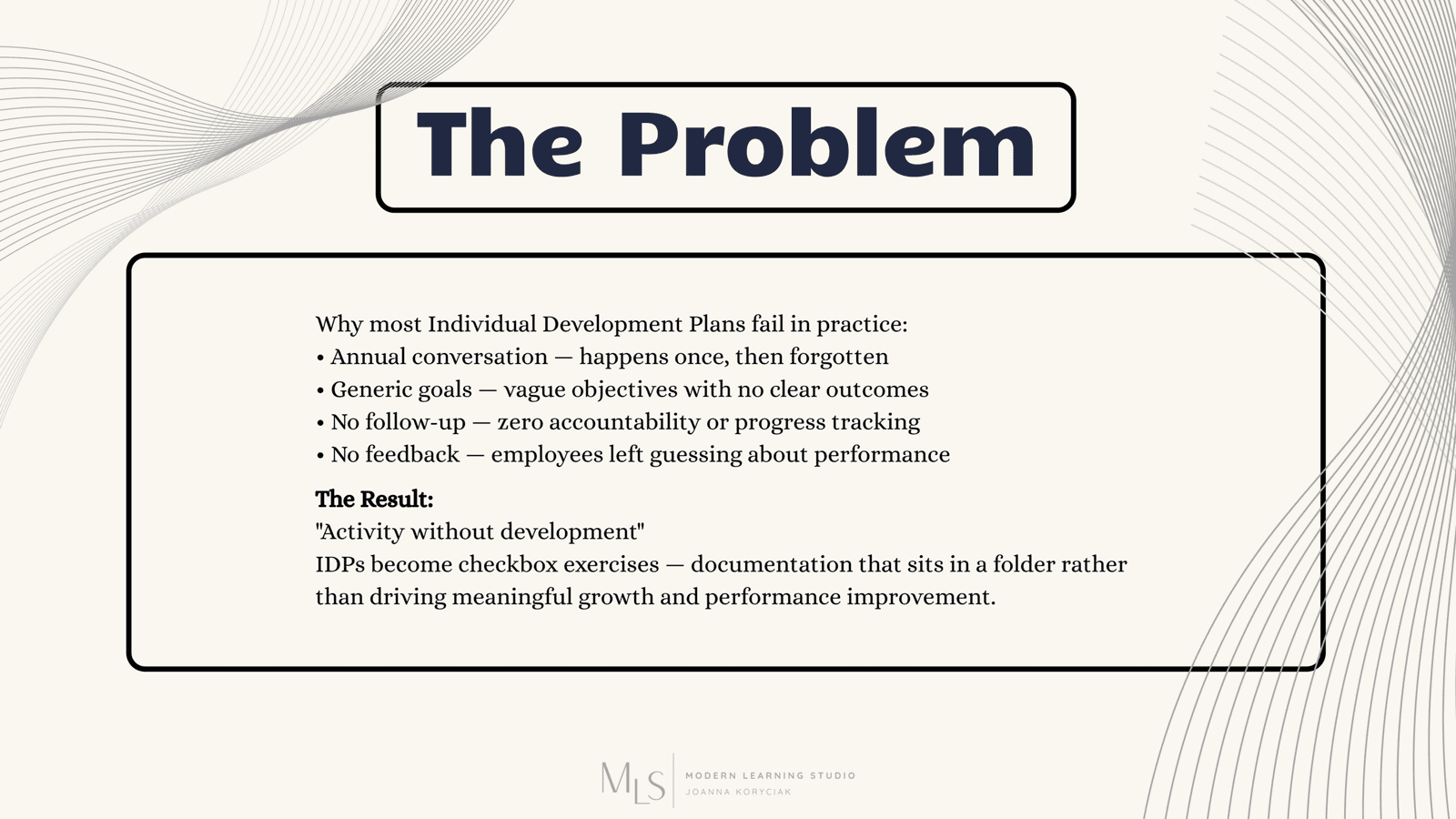
Yet many IDPs fail to produce meaningful change.
The issue is rarely the form itself.
The issue is what happens after the conversation.
In many organizations, development planning becomes a documentation exercise rather than a learning system. Employees complete a template, identify goals, discuss future aspirations, and then return to daily operational demands with little follow-through.
The result is predictable:
- goals become vague,
- accountability disappears,
- progress is rarely measured,
- and development becomes disconnected from daily work.
Effective development planning requires structure, reinforcement, and operational integration.
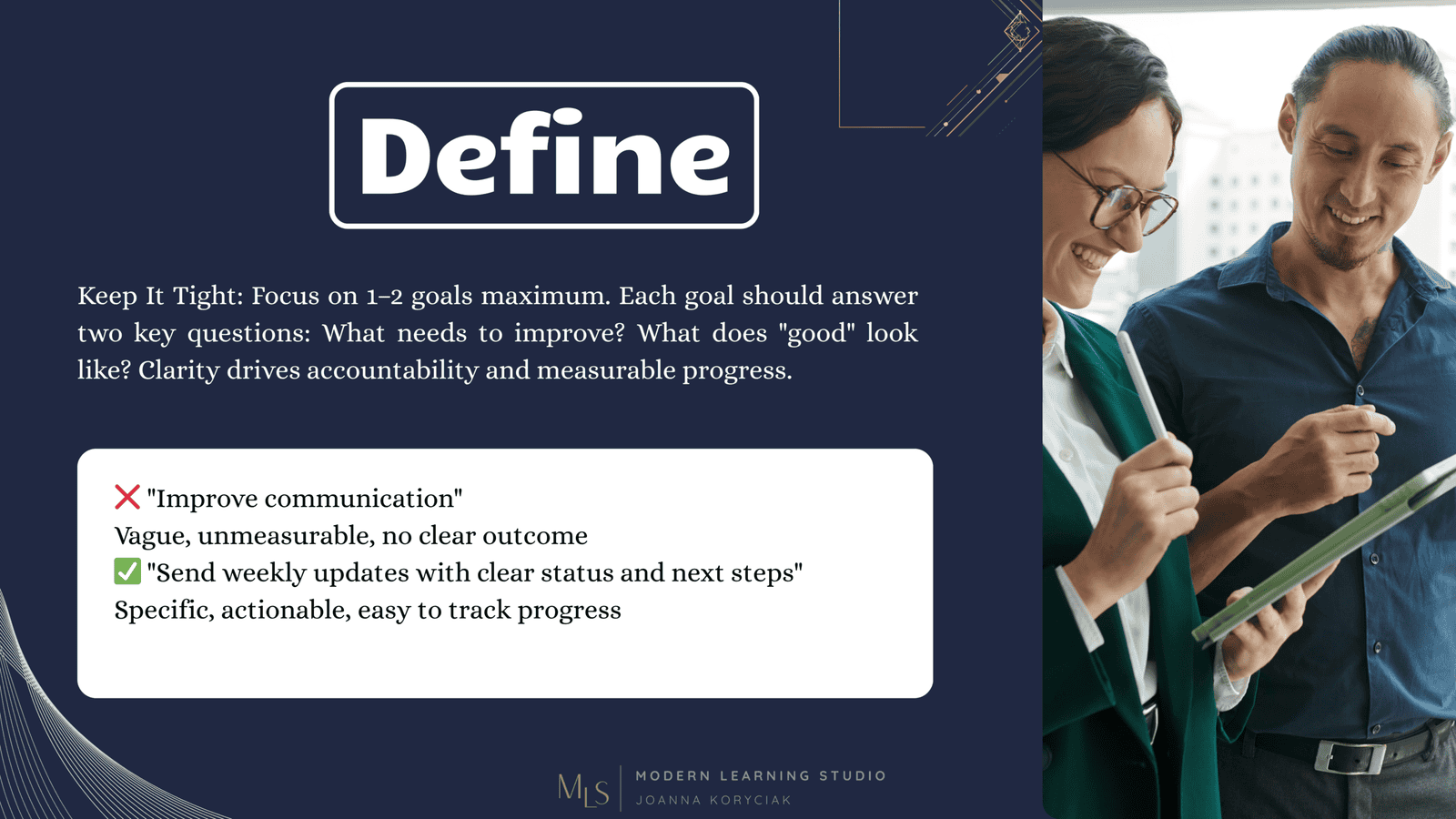
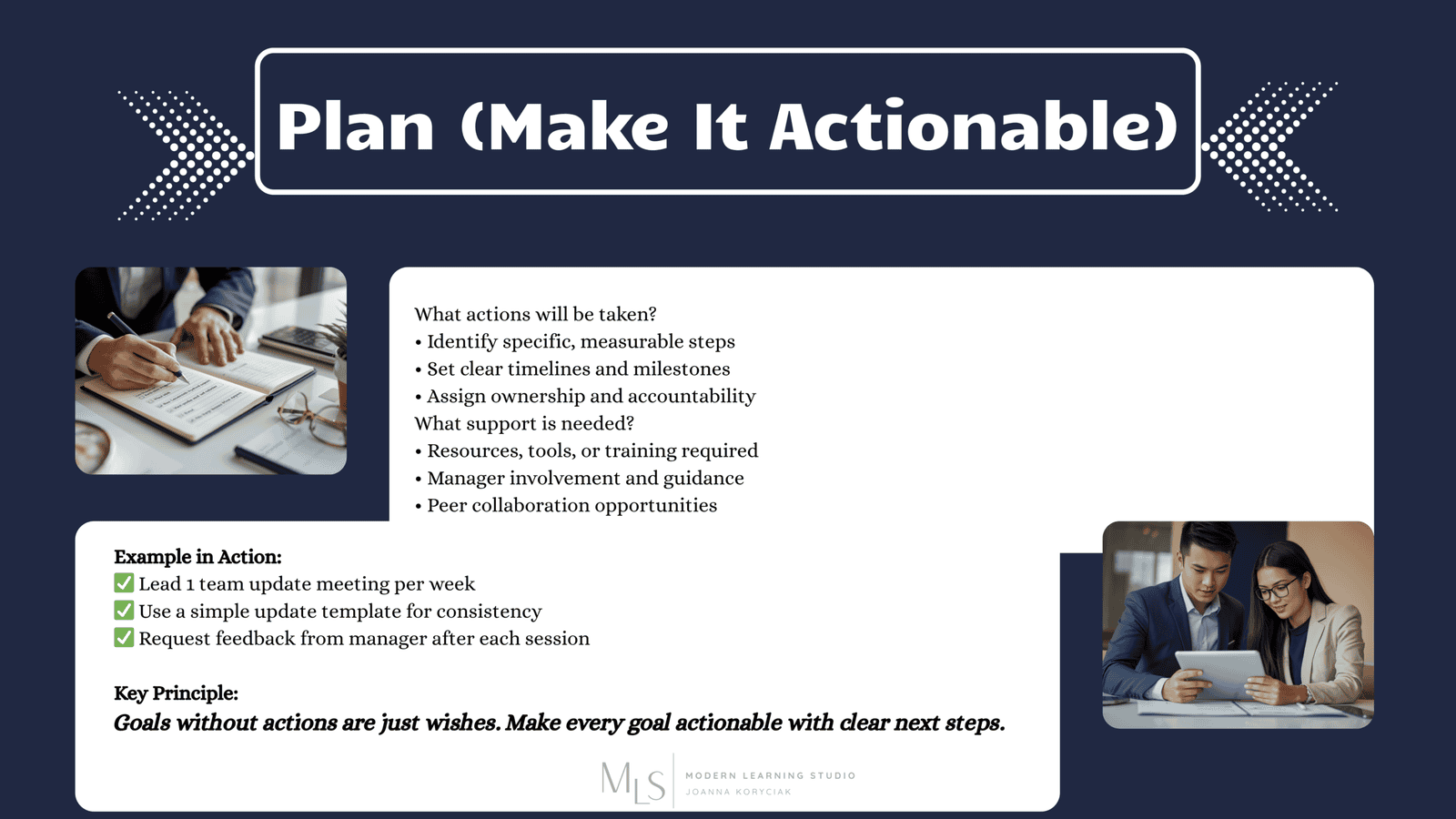
Strong IDPs are not built around abstract aspirations alone. They are built around actionable learning behaviors that can be observed, practiced, reviewed, and adjusted over time.
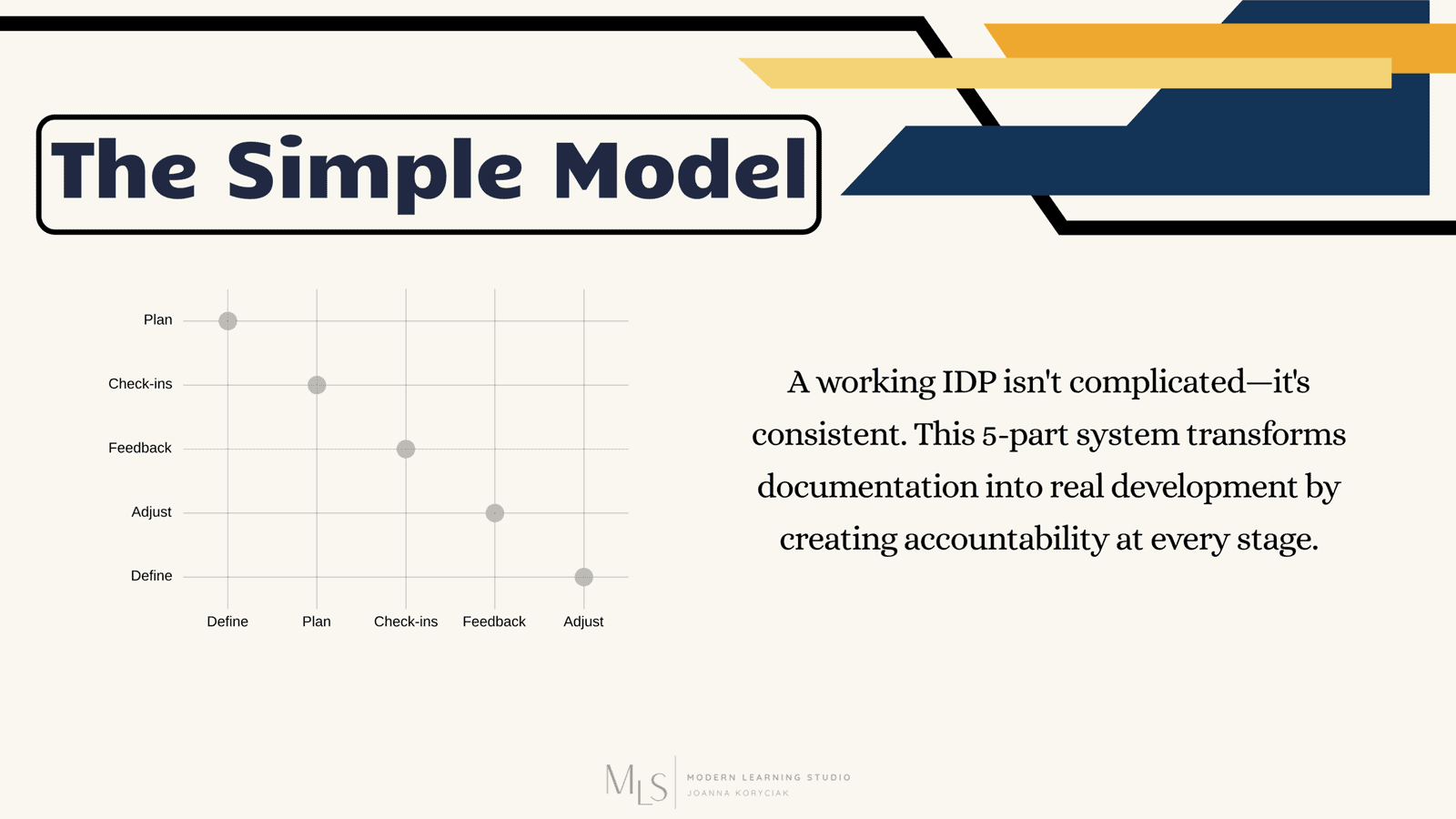
The most effective development systems typically include:
- clearly defined goals,
- measurable action steps,
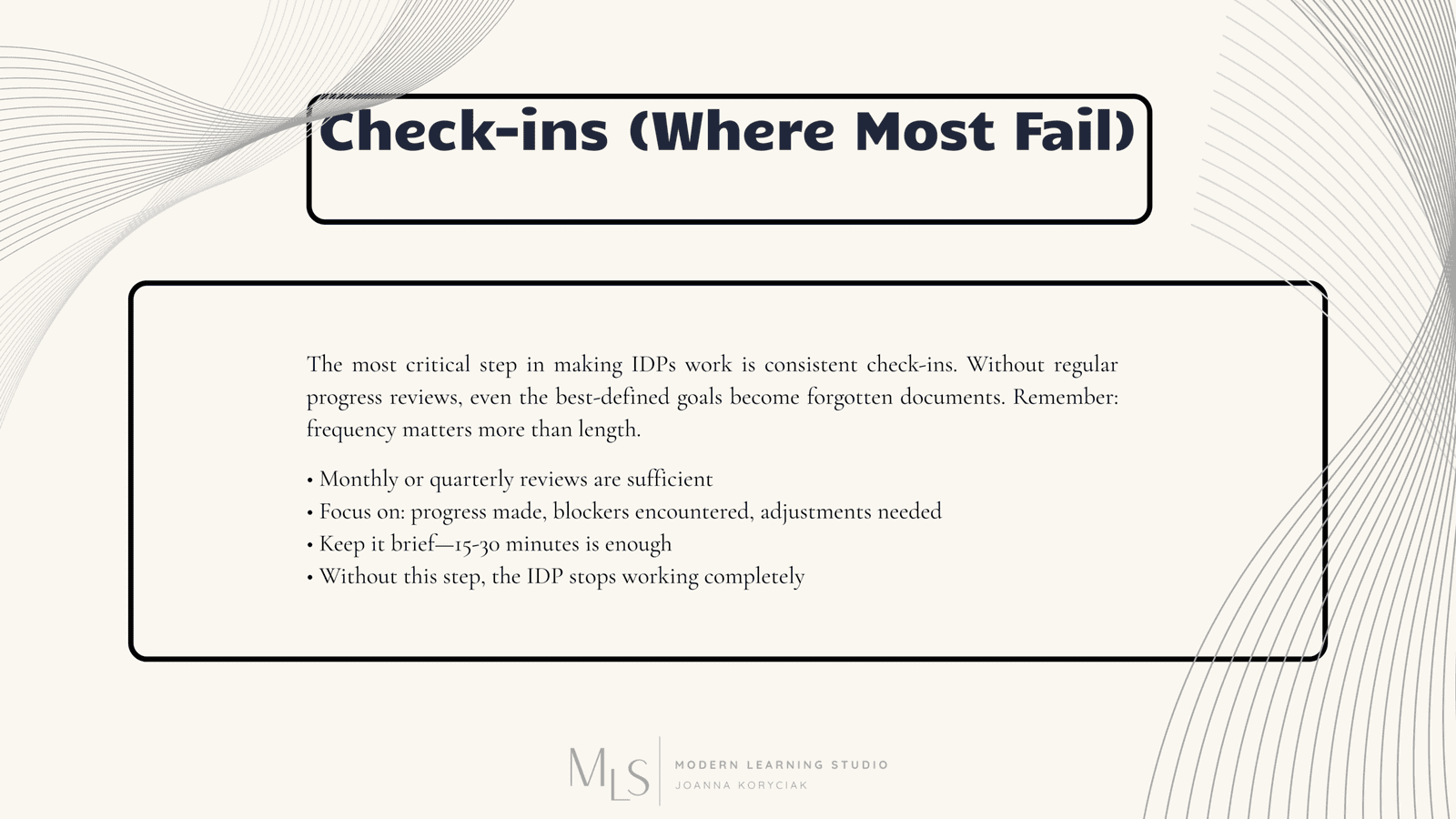
- regular check-ins,
- practical application,
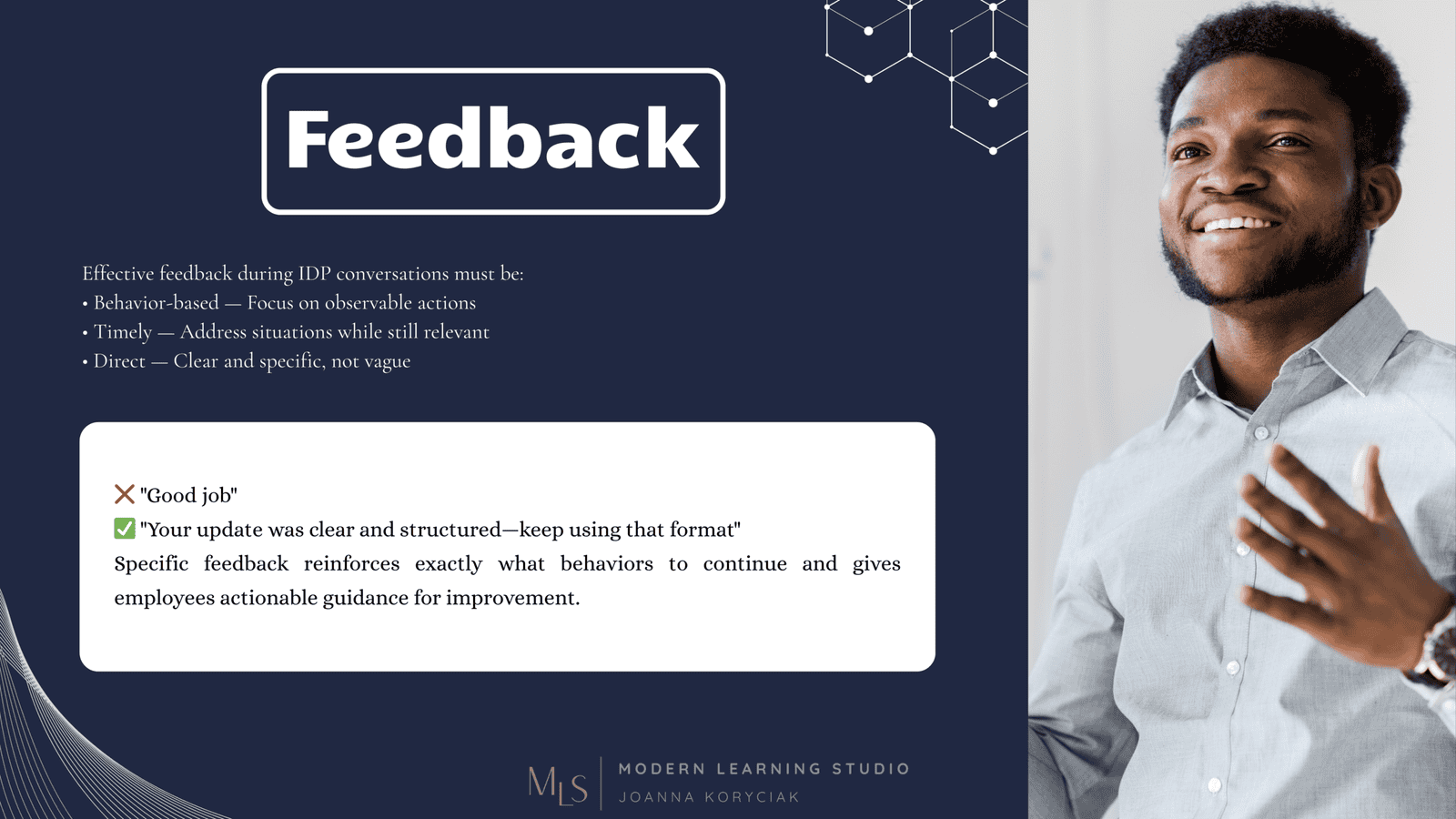
- and continuous feedback loops.
This creates momentum.
Without reinforcement, development plans become static documents.
With reinforcement, they become operational learning systems.
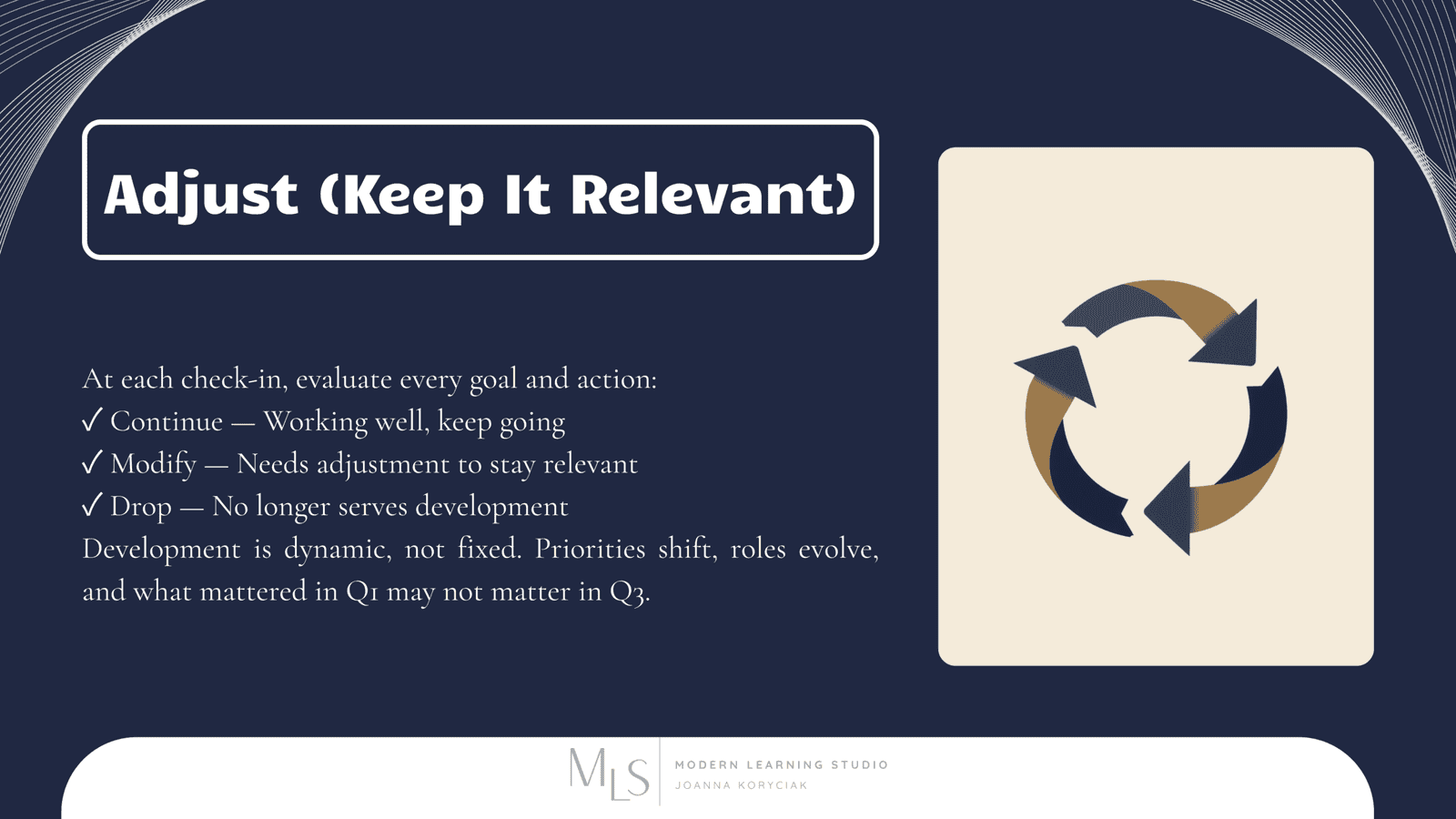
One of the biggest mistakes organizations make is treating development as a one-time event rather than an ongoing process. Growth does not happen during the meeting itself. The meeting simply establishes direction.
Real development occurs afterward:
- during coaching conversations,
- project assignments,
- reflection,
- feedback,
- and repeated behavioral practice.
This is why consistency matters more than intensity.
A simple development process repeated consistently often produces stronger long-term growth than highly ambitious plans that receive little follow-through.
Organizations that build sustainable learning cultures understand that employee development is not separate from operational systems. It must be integrated into how people work, communicate, solve problems, and receive feedback every day.
The goal is not to create impressive development documents.
The goal is to create measurable growth over time.