
The modern workplace is defined by profound complexity and rapid transformation. From the rising stress levels among workers and the evolving dynamics of hybrid work to the rapid advancements in artificial intelligence, today’s organizations are navigating unprecedented disruption. In this volatile environment, Human Resources (HR), Learning & Development (L&D), and Organizational Development (OD) professionals are constantly searching for the defining characteristics that make a leader successful.
Historically, corporate leadership models have focused heavily on strategy, execution, and agility. However, a monumental global study conducted by Gallup—surveying over 30,000 adults across 52 countries—reveals a surprisingly profound truth: the foundation of being a good leader is rooted in meeting the fundamental needs of followers, and above all else, followers need hope.
For HR and OD leaders, the message is clear. Hope is not a passive emotion, a sunny disposition, or a fixed personality trait. It is a critical, measurable leadership skill that must be actively developed and deployed to drive employee engagement, growth, and organizational resilience.
The Data Speaks: Key Gallup Findings on the Supremacy of Hope
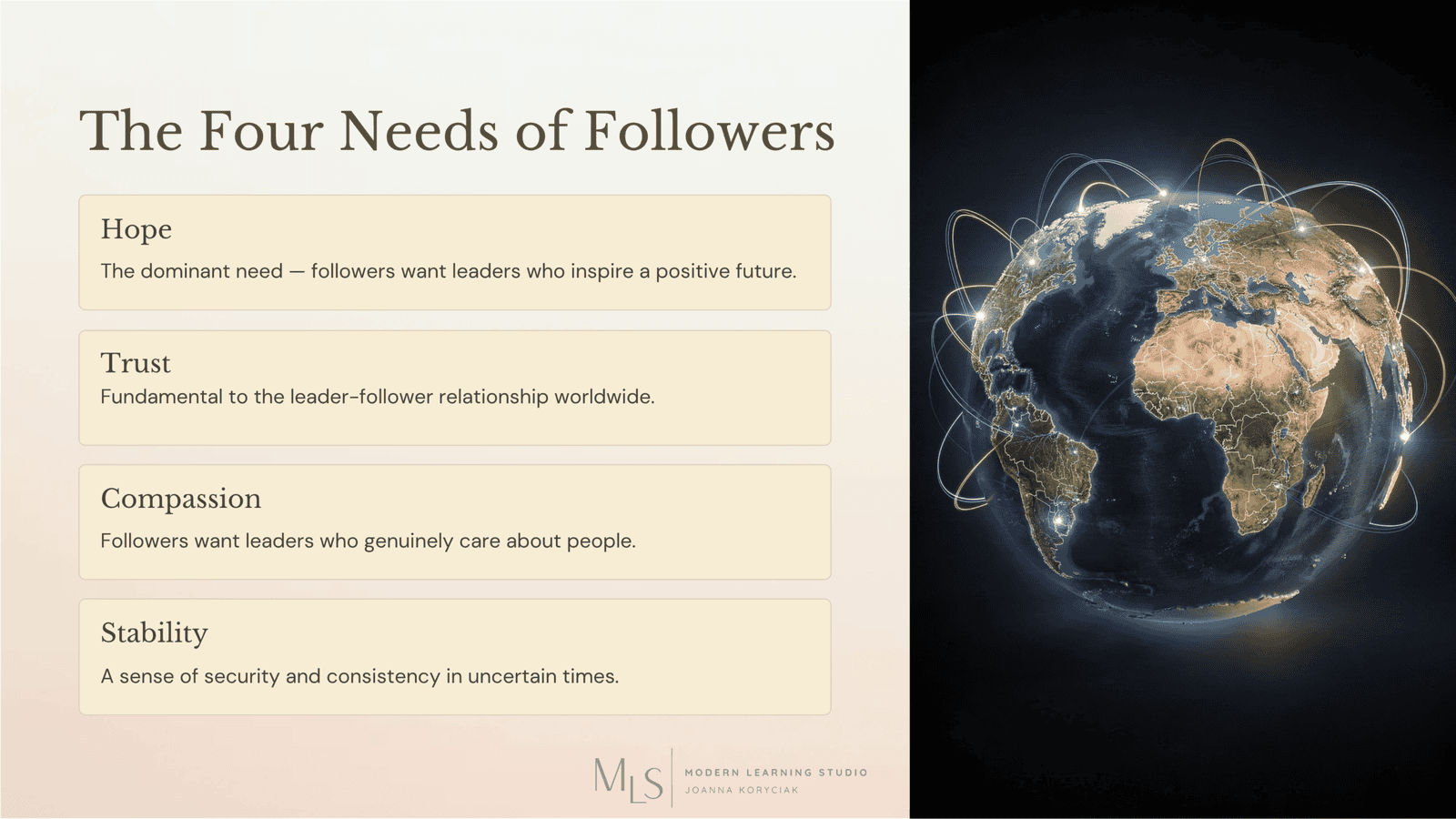
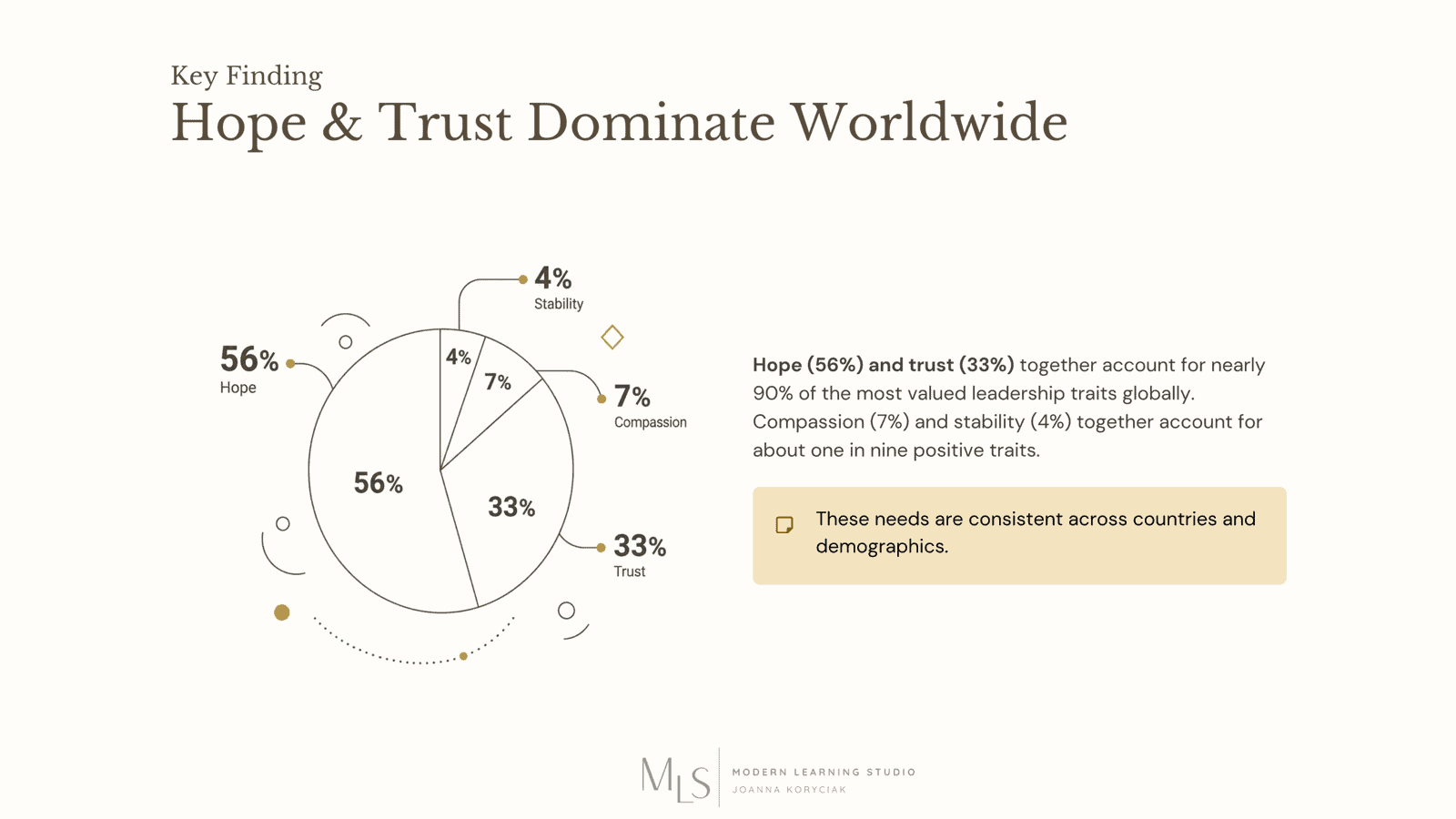
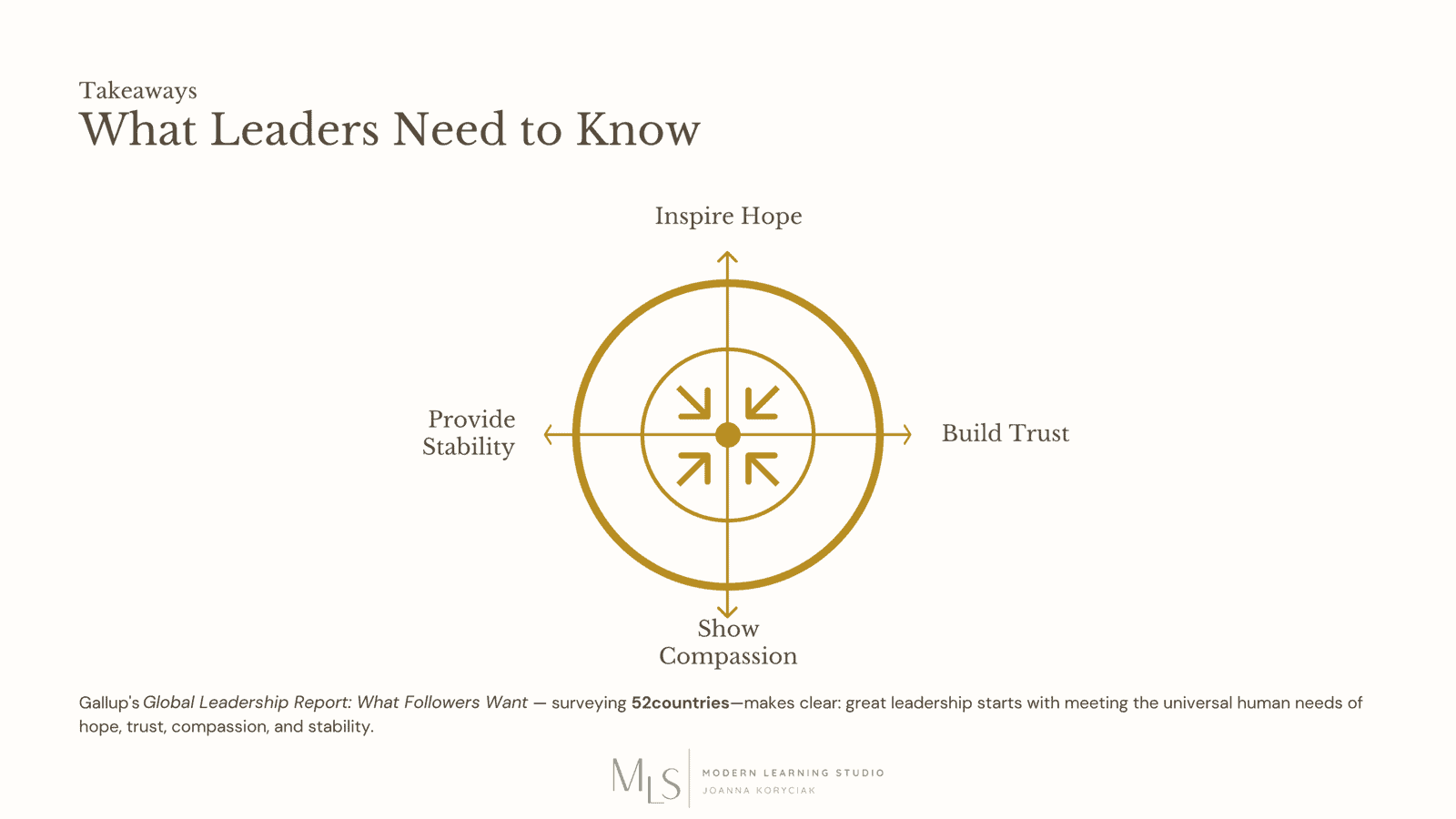
To understand what followers genuinely need, Gallup asked individuals globally to identify the leader who has the most positive influence on their daily lives, and then to describe what that leader contributes. The resulting data established the “four needs of followers”: Hope, Trust, Compassion, and Stability.
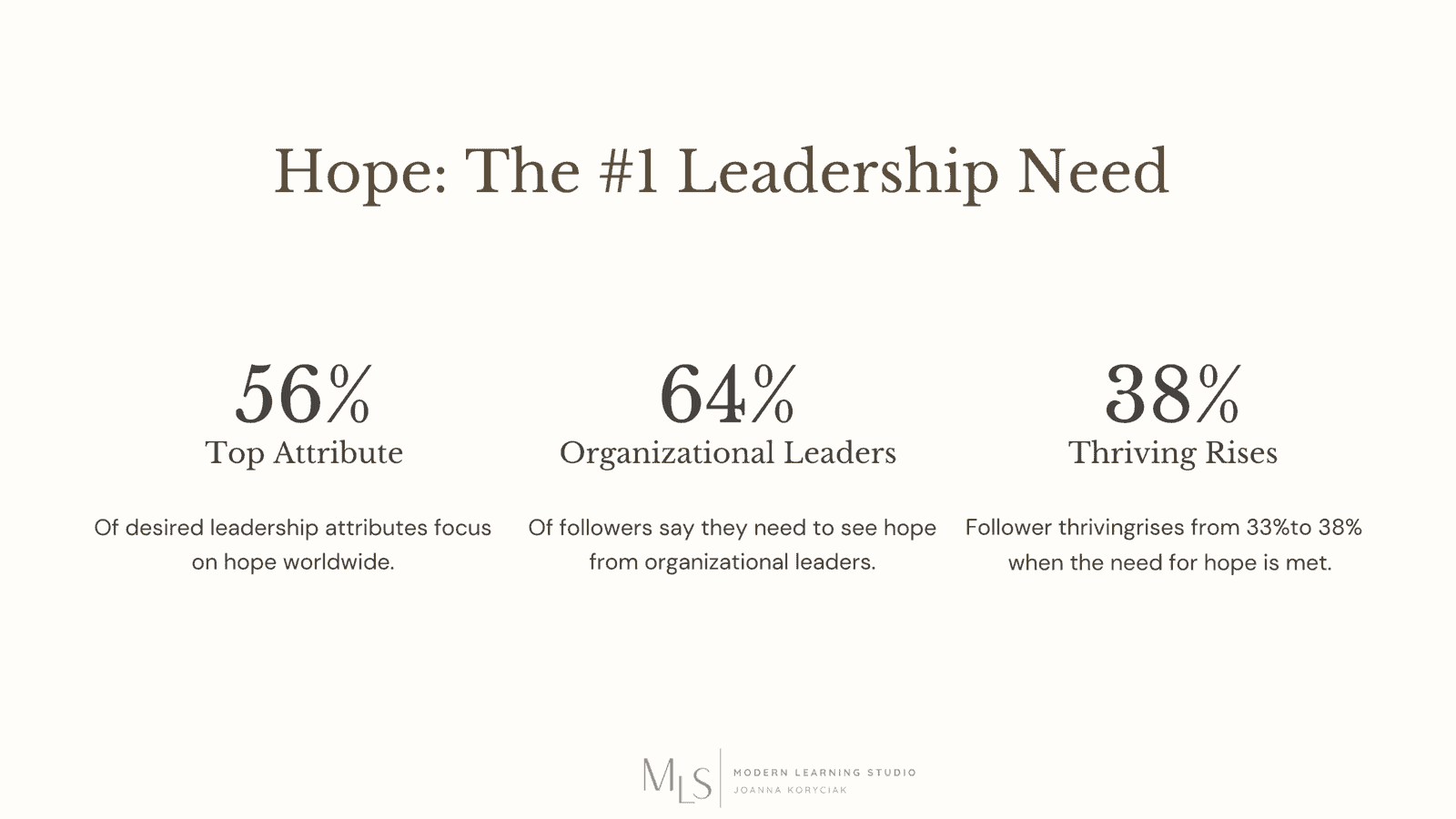
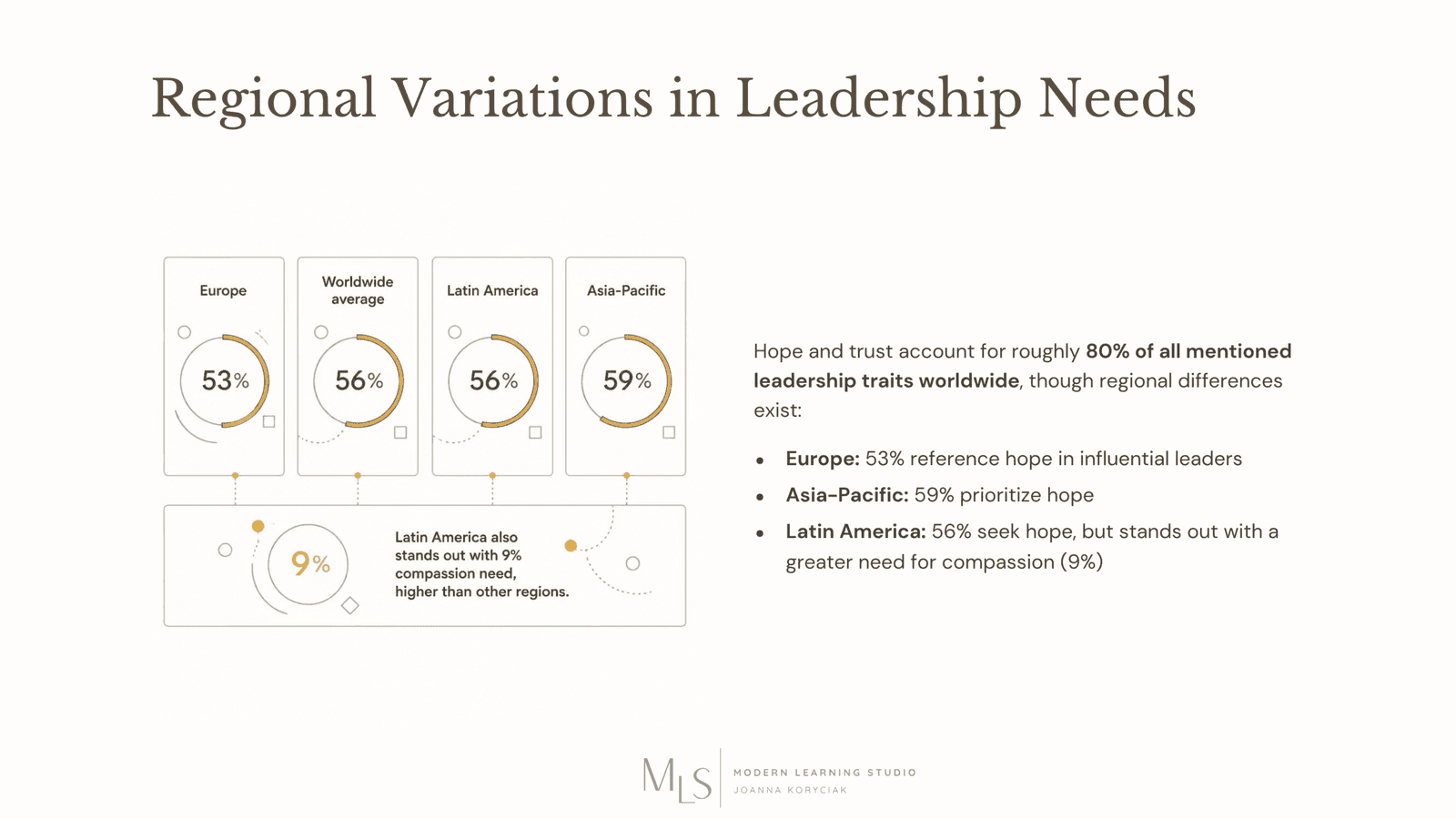
While all four are essential, hope reigns supreme. Over half (56%) of all attributes linked to influential leaders in daily life speak directly to the theme of hope. This far outpaces the second most important need, trust (33%), followed by compassion (7%) and stability (4%),.
This demand for hope is universal across all 52 countries surveyed and spans all income brackets. However, for HR and OD professionals, the demographic and structural nuances of this data are highly actionable:
- The Generational Imperative: The need for hope is significantly emphasized among the youngest generation of workers. For those aged 18 to 29, 57% of the leadership attributes they value relate to hope, compared to just 32% for trust. Because younger individuals have more of their lives and careers ahead of them, they actively seek inspiration and a positive vision for the future from their leaders.
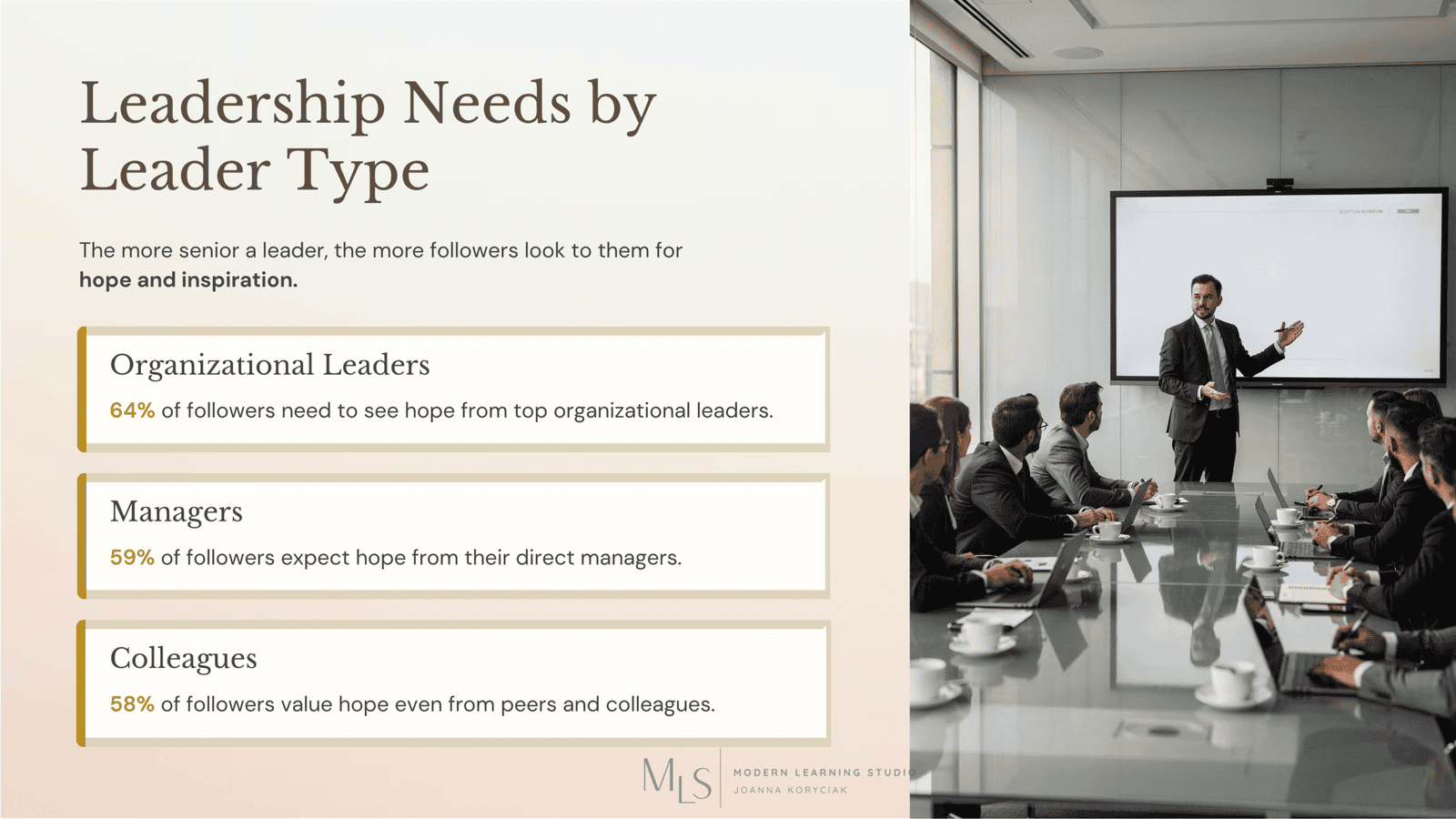
- The Organizational Hierarchy of Hope: The context of leadership matters. Followers view organizational leaders through a different lens than they do their direct managers or peers. Followers are significantly more likely to demand hope from senior organizational leaders (64%) than they are from line managers (59%) or colleagues (58%),. The higher a leader ascends in an organization, the more their people rely on them for future-oriented inspiration.
Why Hope Matters: The Engine of Resilience and Thriving
In an organizational context, hope is fundamentally pragmatic. Gallup defines it as giving followers “something better to look forward to, enabling them to navigate challenges and work toward a brighter future”. It is the deeply held belief that the future will be better than the present, coupled with the empowerment to make it so.
Why does this matter to the bottom line? Because without hope, people disengage, lose confidence, and become less resilient.
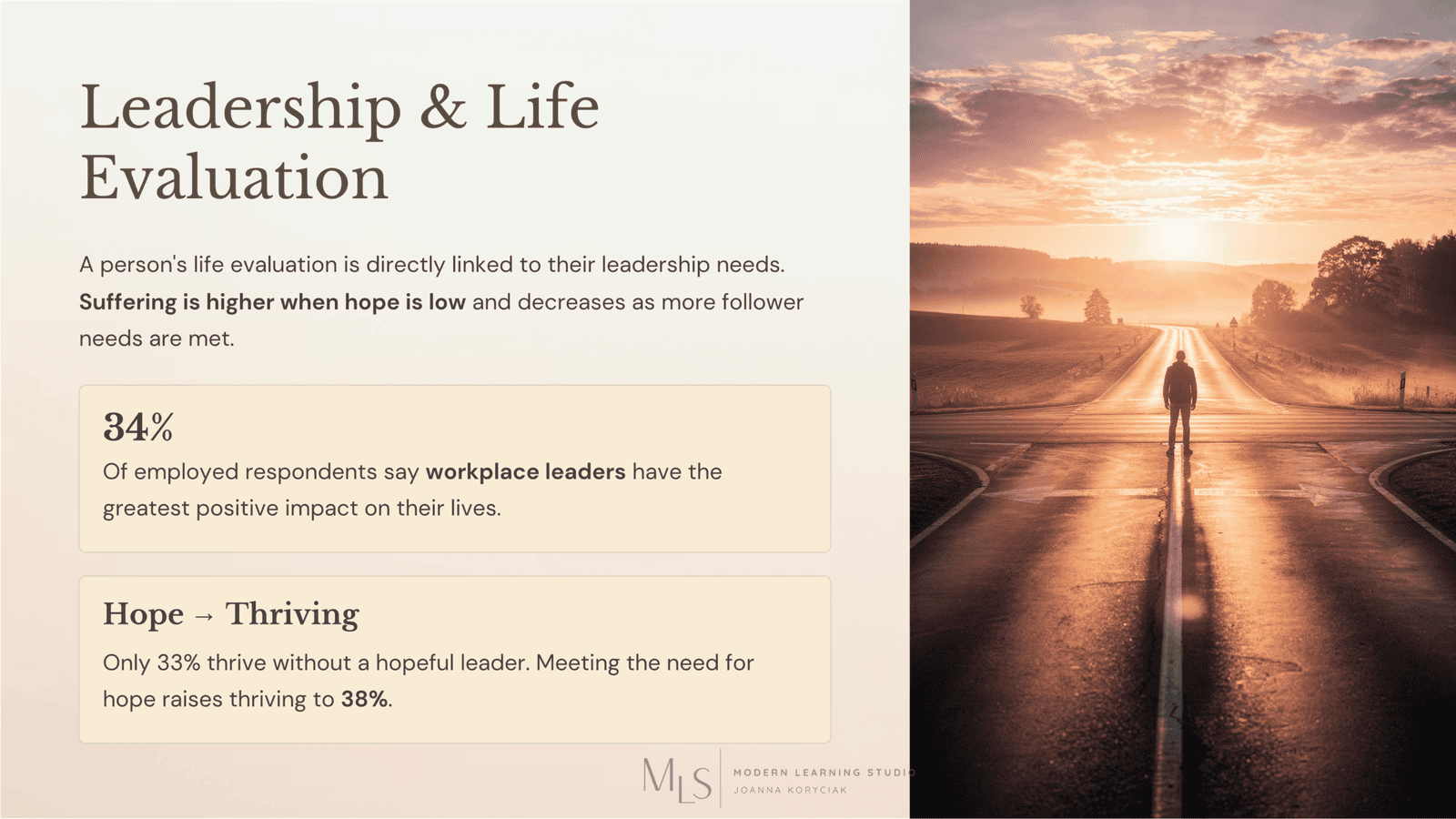
The presence of hope is also directly tied to employee well-being and life evaluation. Gallup’s research measures life satisfaction, categorizing individuals as “thriving,” “struggling,” or “suffering”. The data reveals a stark contrast:
- Among individuals who do not associate hope with the most influential leader in their lives, only 33% are classified as thriving, and 9% are suffering.
- When the need for hope is met by a leader, thriving rises to 38%, and suffering drops to 6%.
While a drop from 9% to 6% in suffering may seem numerically small, the human and organizational impact is profound. When leaders combine hope with trust, stability, and compassion, thriving jumps even higher (up to 43%), and suffering plummets to 4%. Hope is the vital baseline that mitigates workplace suffering and fuels high performance.
The Strategic Link Between Learning, Growth, and Hope
For L&D professionals, cultivating “hope” in leadership training might sound nebulous. However, Gallup’s methodological coding provides a remarkably clear roadmap.
When researchers grouped the open-ended responses from global followers into the core theme of “Hope,” they identified specific, actionable sub-attributes. Alongside “Inspiration, vision and personal integrity,” Gallup found that “Growth, learning, development and achievement” fall directly under the umbrella of Hope. Financial growth and support are also categorized under this core need.
This reveals a profound connection: Providing pathways for employee learning, skill development, and career growth is not just an administrative L&D function; it is a primary mechanism for delivering hope.
When leaders actively invest in their employees’ development, they are intrinsically signaling that the employee has a valuable future within the organization. By coaching teams and providing learning opportunities, leaders fulfill the psychological need for future orientation and achievement, effectively operationalizing hope in the workplace.
Fueling Employee Engagement Through Future Orientation
The concept of employee engagement is inherently tied to the interaction between leaders and followers within their environment. Leaders in the world of work possess a massive capacity to improve the daily lives of their teams.
Remarkably, 34% of people employed by an organization name a workplace leader (a manager, organizational leader, or colleague) as the leader with the most positive influence on their daily life. Employed individuals are nearly as likely to cite a leader from their work environment (34%) as they are to name a family member (44%). In some countries, such as China (70%), Germany (60%), and the UAE (52%), workplace leaders are the most frequently cited positive influencers globally.
This staggering level of influence means that leadership behaviors directly govern engagement. Because hope is a powerful motivator that prevents disengagement, leaders who fail to provide a clear direction for the future risk losing their followers’ commitment entirely. If a leader does not create a sense of hope and illuminate the way forward amidst organizational change or industry disruption, followers will inevitably detach.
A Playbook for HR and OD: Practical Leadership Applications
How can HR, L&D, and OD professionals build a leadership pipeline that effectively delivers hope, trust, compassion, and stability? The research suggests a three-part playbook for successful leadership:
1. Teach Leaders to Actively “Initiate” Hope
A person without followers is not a leader, and the best leaders act with their followers’ needs in mind. Hope does not happen by accident. Leaders must take an active role in developing hope by choosing to initiate change rather than merely reacting to it. HR professionals must train leaders to continuously communicate a compelling, positive vision of the future, ensuring that employees feel empowered to help build that future.
2. Base Leadership Development on Innate Strengths
Leaders cannot meet the needs of their followers if they do not know themselves. L&D programs often make the mistake of encouraging leaders to emulate other admired figures or spending excessive time fixing weaknesses. Instead, good leaders must develop and invest in their own innate strengths. By understanding their natural talents and calling upon the right strengths at the right time, leaders can authentically deliver hope and inspiration in a way that resonates deeply with their teams.
3. Align Strengths with the Demands of the Role
Finally, OD professionals must help leaders map their strengths to the explicit demands of their roles. Gallup identifies seven expectations of successful organizational leaders, which overlap perfectly with the four needs of followers:
- To provide Hope: Leaders must “inspire others through positivity, vision, confidence and recognition” and actively “lead change and efforts to adapt”.
- To provide Trust: Leaders must “build relationships,” establish connections, and “communicate clearly” by listening and sharing information openly.
- To provide Compassion: Leaders must “develop people” by coaching, setting clear expectations, and encouraging their teams.
- To provide Stability: Leaders must “think critically” to solve problems and “create accountability” for themselves and others.
Conclusion
As Napoleon Bonaparte famously noted, “A leader is a dealer in hope”. In today’s complex, high-stress corporate environment, this historical observation is backed by definitive global data.
Hope is the most important quality followers seek. It is the antidote to suffering, the engine of resilience, and the core driver of employee engagement. For HR, Leadership, and OD professionals, the mandate is clear: We must stop treating hope as a secondary, soft attribute. By deeply integrating future orientation, vision, and continuous learning into leadership development programs, we can equip leaders with the definitive skill they need to guide their organizations into a thriving future.