
Organizations often assume incentives are the solution to disengagement, low performance, or inconsistent accountability. In reality, incentives are rarely the problem or the solution by themselves. The structure surrounding them determines whether they improve performance temporarily or reshape behavior over time.
Many workplace incentive systems are built around short-term outputs:
- quarterly bonuses,
- individual productivity targets,
- attendance rewards,
- or cash-based recognition tied to narrow metrics.
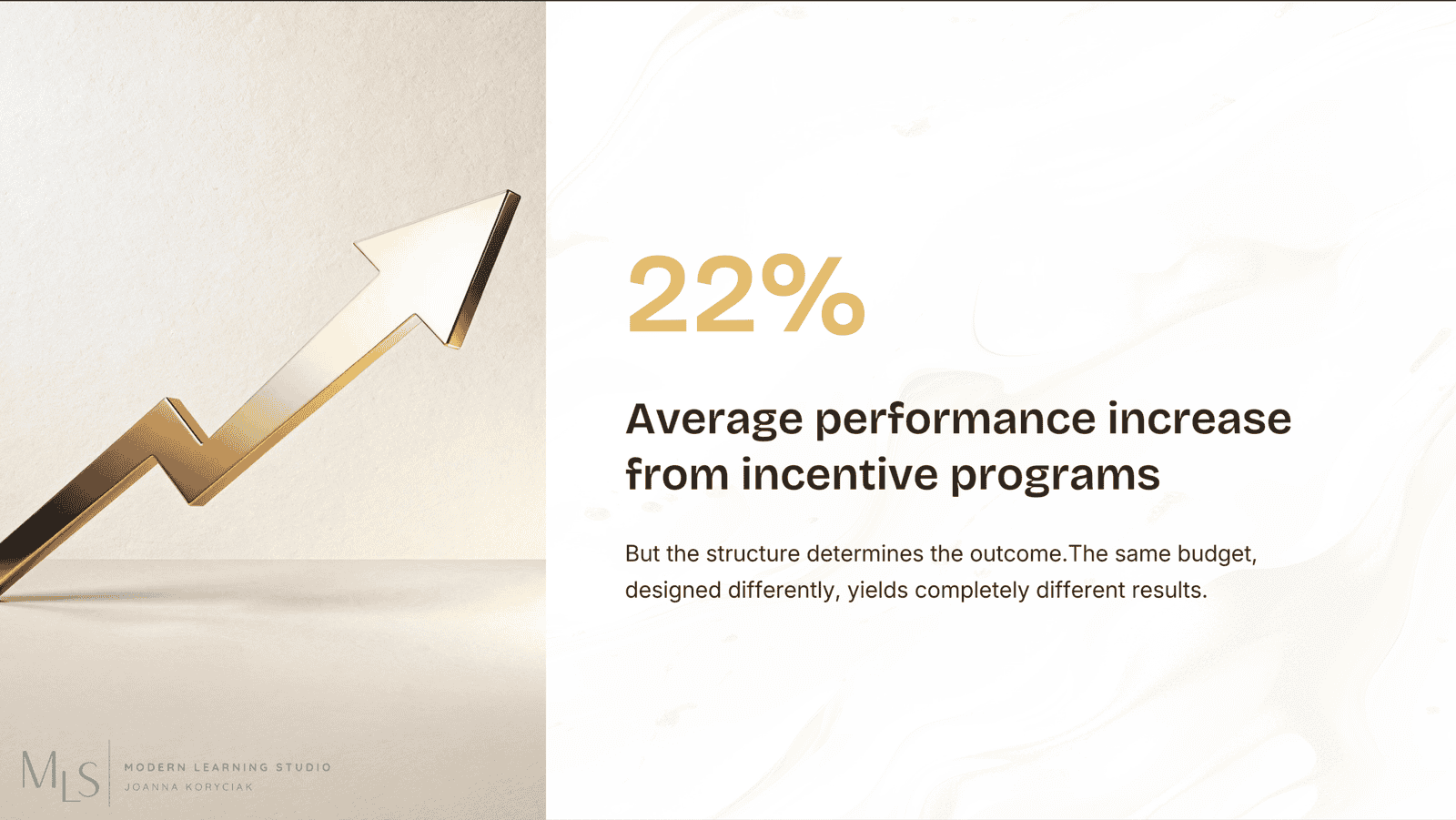
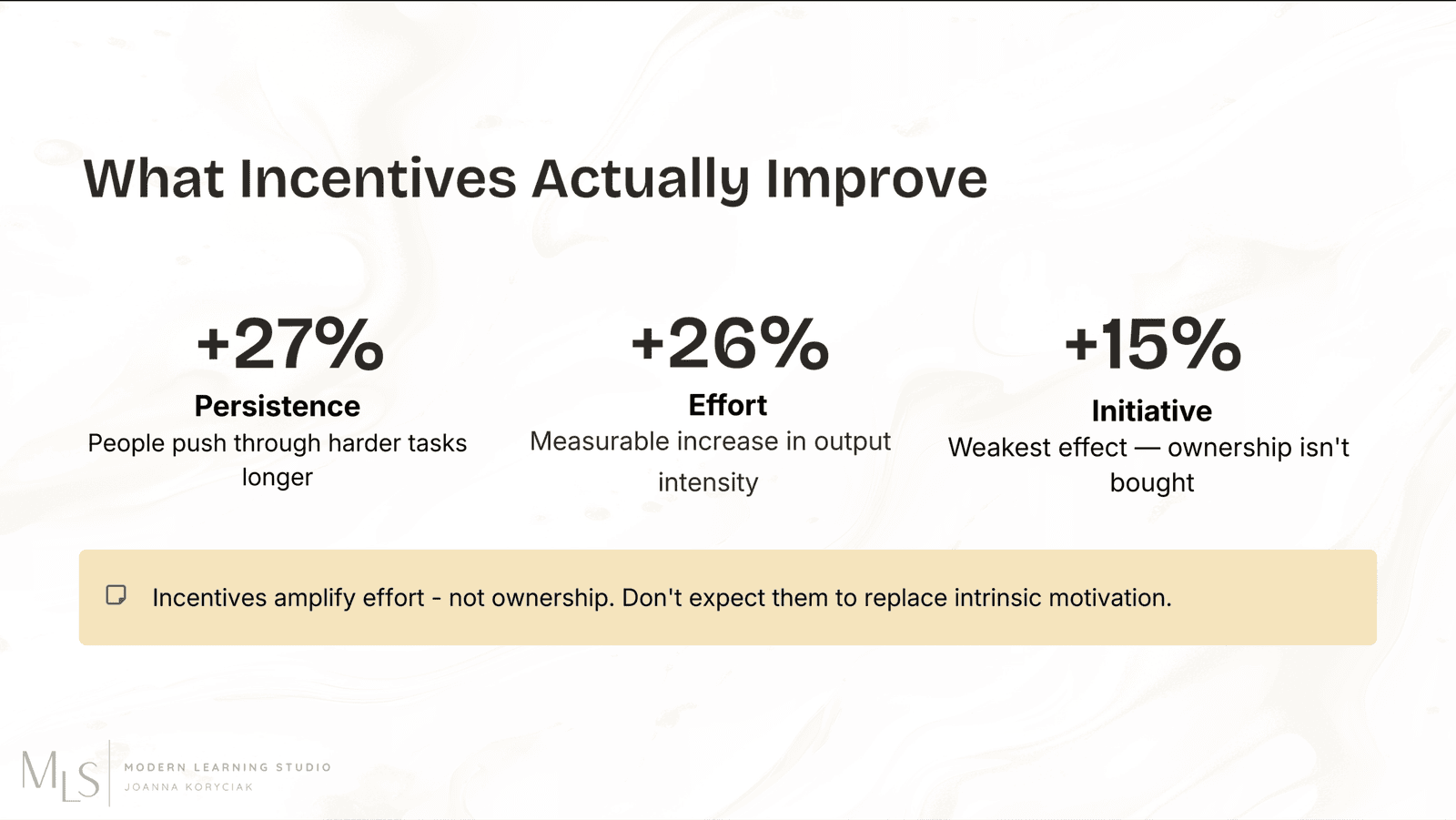
These systems can produce immediate results. Data consistently shows that incentives increase measurable effort. Employees often work harder, move faster, and focus more intensely when rewards are attached to outcomes.
But effort and engagement are not the same thing.
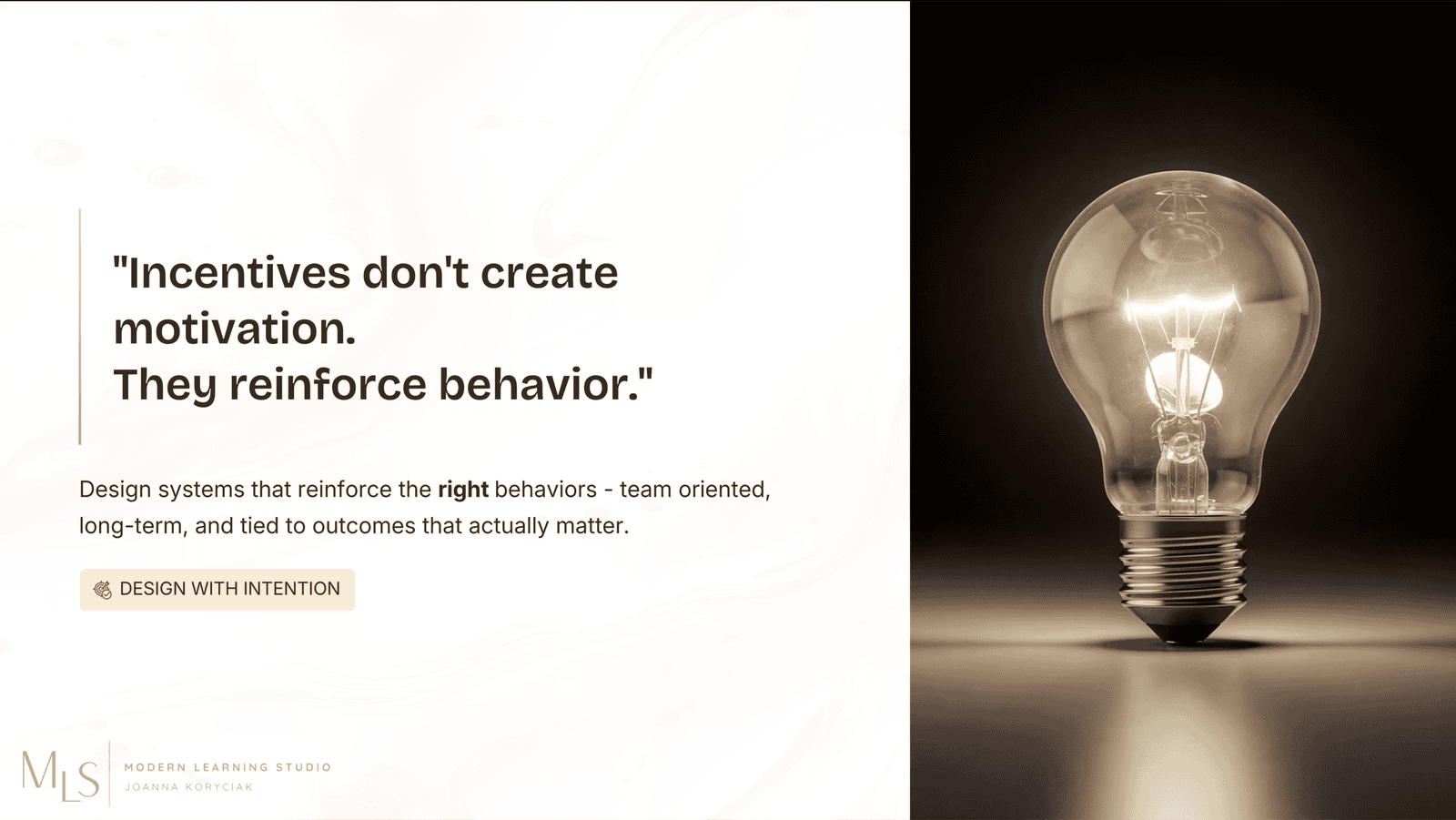
One of the biggest misconceptions in workforce design is believing that incentives create motivation. They do not. Incentives reinforce behavior that already has structural support around it.
That distinction matters.
If the surrounding culture lacks:
- trust,
- collaboration,
- growth opportunities,
- operational clarity,
- or meaningful ownership,
then incentives usually create short bursts of compliance rather than sustained performance.
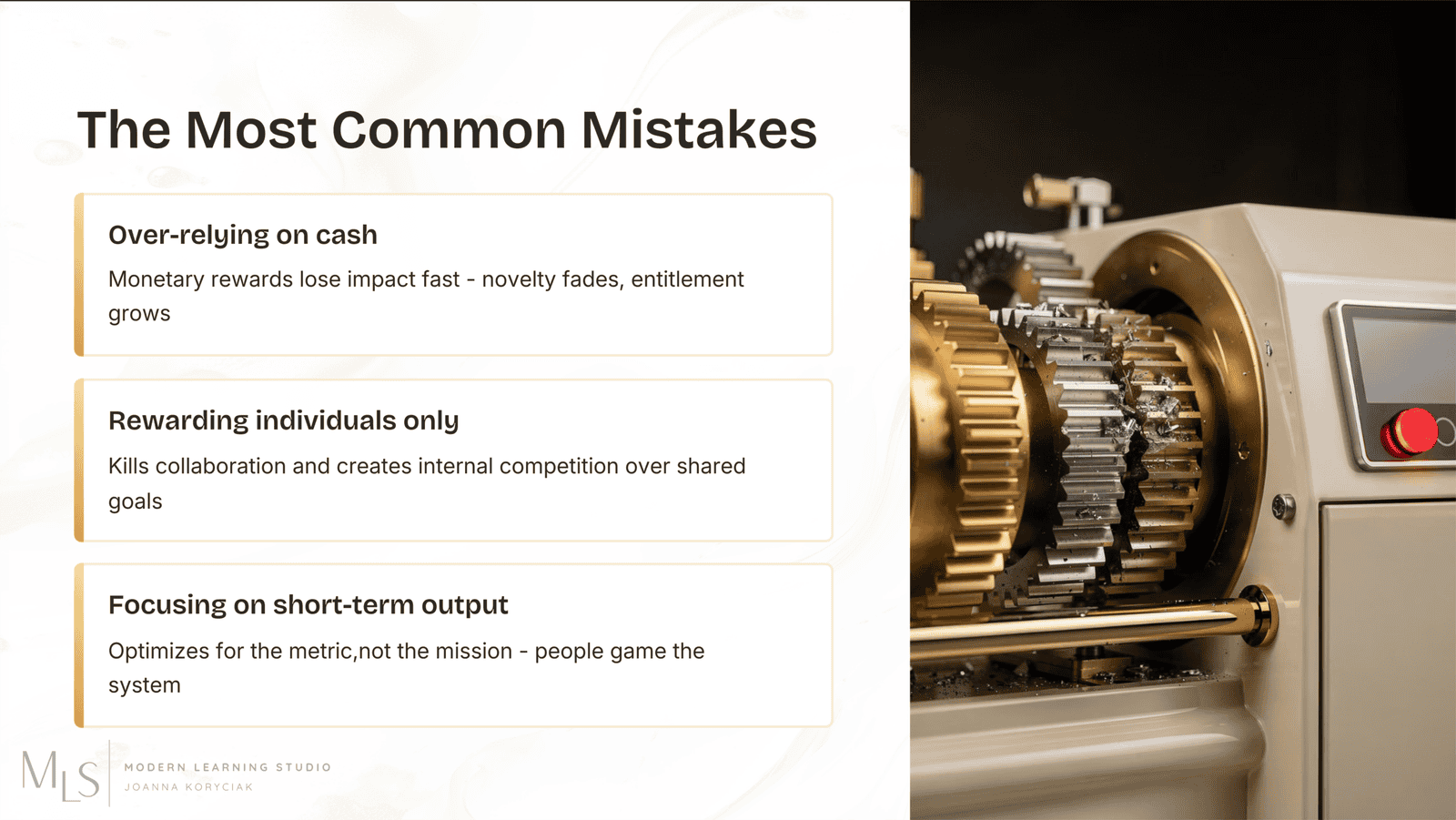
This is why many organizations unintentionally create systems that reward:
- short-term output over long-term quality,
- individual competition over collaboration,
- metric optimization over actual mission impact.
The design of the system matters more than the reward itself.
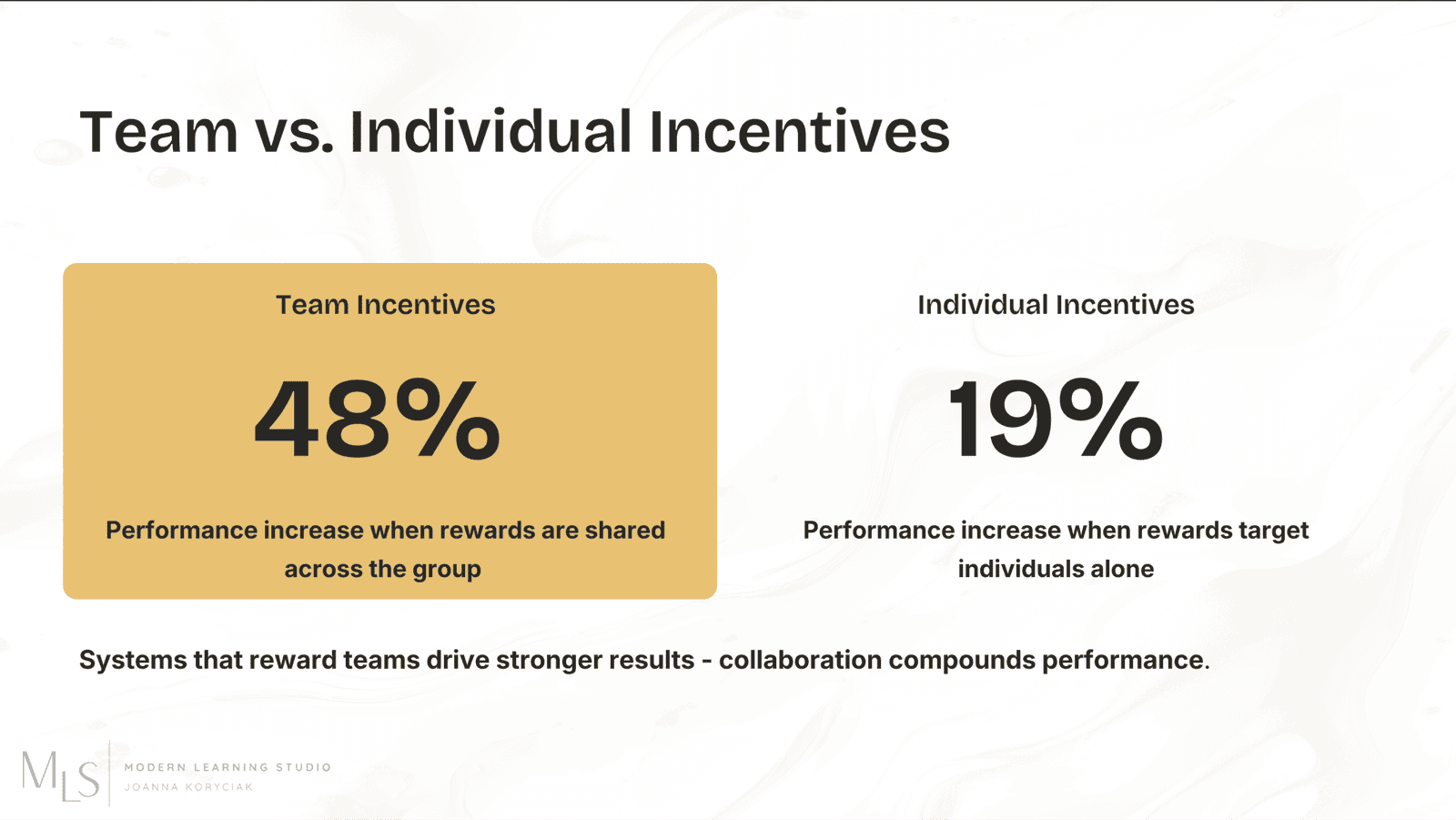
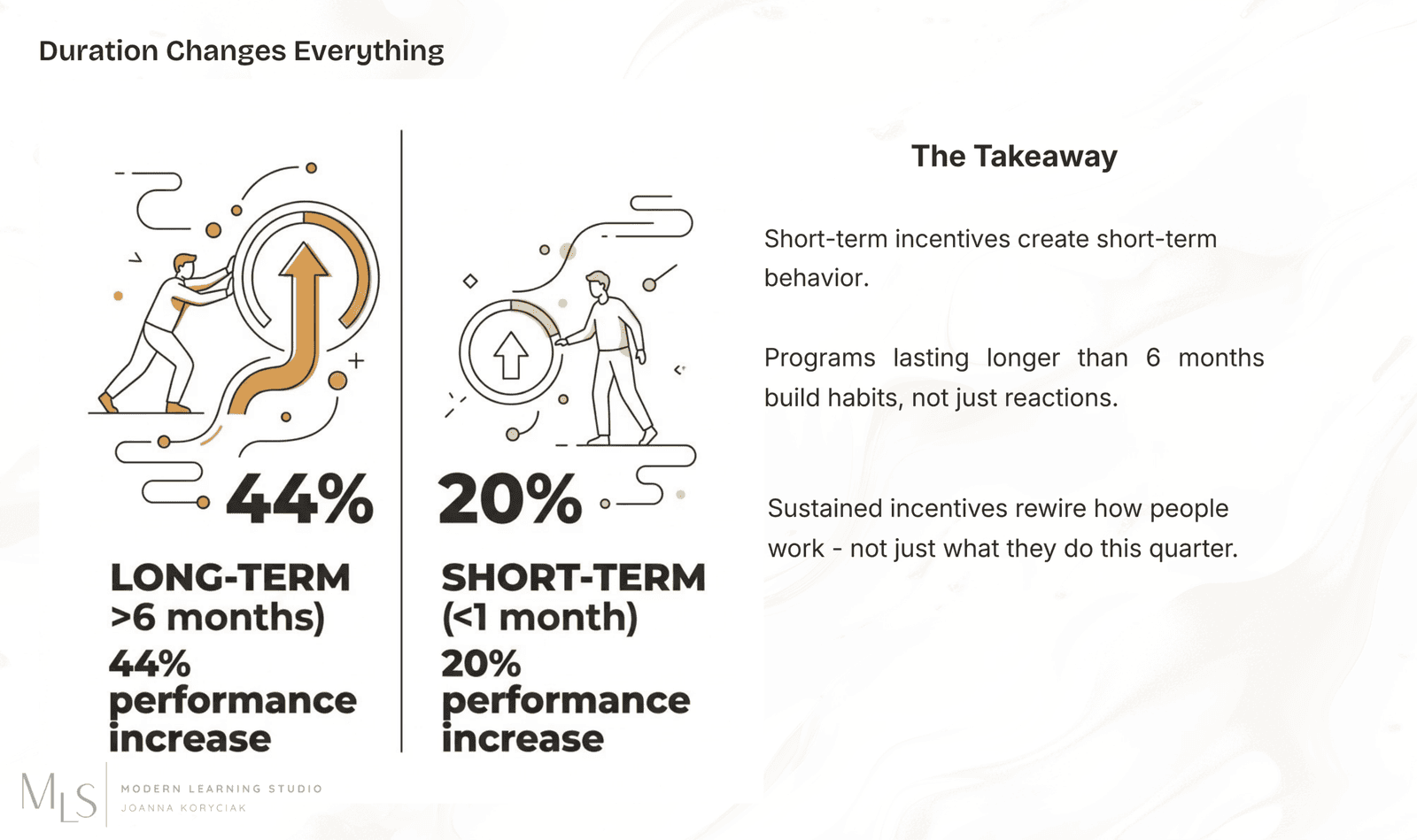
Research consistently shows that team-based incentives often outperform strictly individual reward structures because they reinforce shared accountability and collaborative problem-solving. Similarly, longer-duration incentive systems tend to outperform short-term reward cycles because they help stabilize habits rather than trigger temporary reactions.
Strong workforce systems use incentives carefully and intentionally:
- to reinforce desired behaviors,
- support consistency,
- encourage collaboration,
- and align effort with organizational outcomes.
Weak systems use incentives as substitutes for leadership, communication, training, and culture.
Incentives are amplifiers.
They strengthen what already exists.
If the underlying system is fragmented, incentives amplify fragmentation.
If the system is collaborative, clear, and sustainable, incentives reinforce those behaviors over time.
The most effective organizations understand that performance management is not about dangling rewards in front of employees. It is about designing environments where the right behaviors become easier, clearer, and more sustainable to repeat.