
How AI is changing employee learning, operational support, and workforce development
Traditional workplace learning was built for a different era.
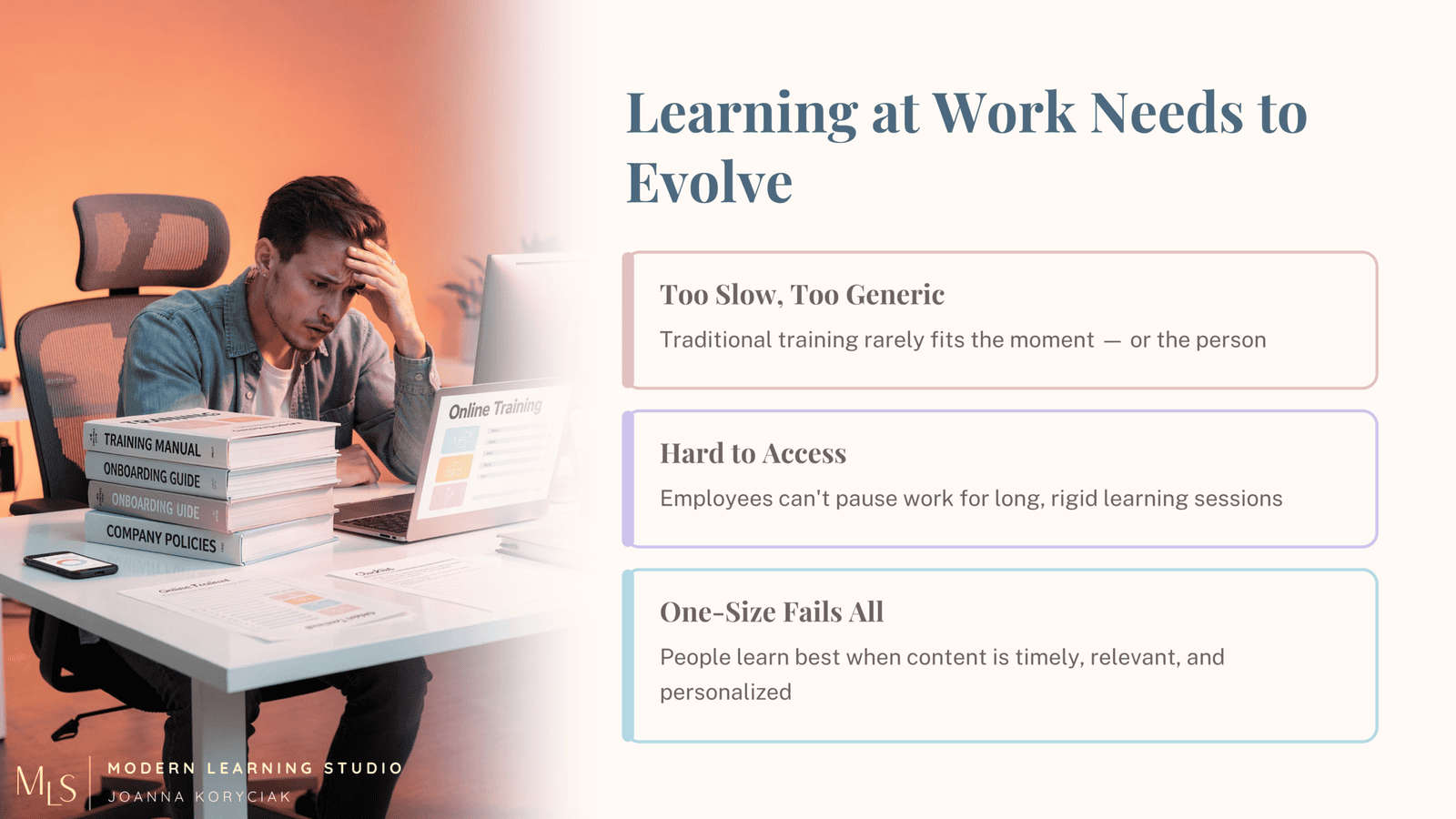
Employees were expected to stop working, attend long training sessions, read large manuals, and retain information they might not use for weeks or months afterward. The result was often slow onboarding, inconsistent knowledge transfer, and learning that felt disconnected from the actual work employees were trying to perform.
Today, that model is starting to shift.
AI is changing workplace learning by making support faster, more accessible, and more personalized. Instead of treating learning as a separate event, organizations can now integrate learning directly into daily work.
That shift matters.
Modern employees do not only need information. They need immediate clarity, quick reinforcement, simplified guidance, and support in the exact moment they are trying to complete a task.
AI makes that possible.
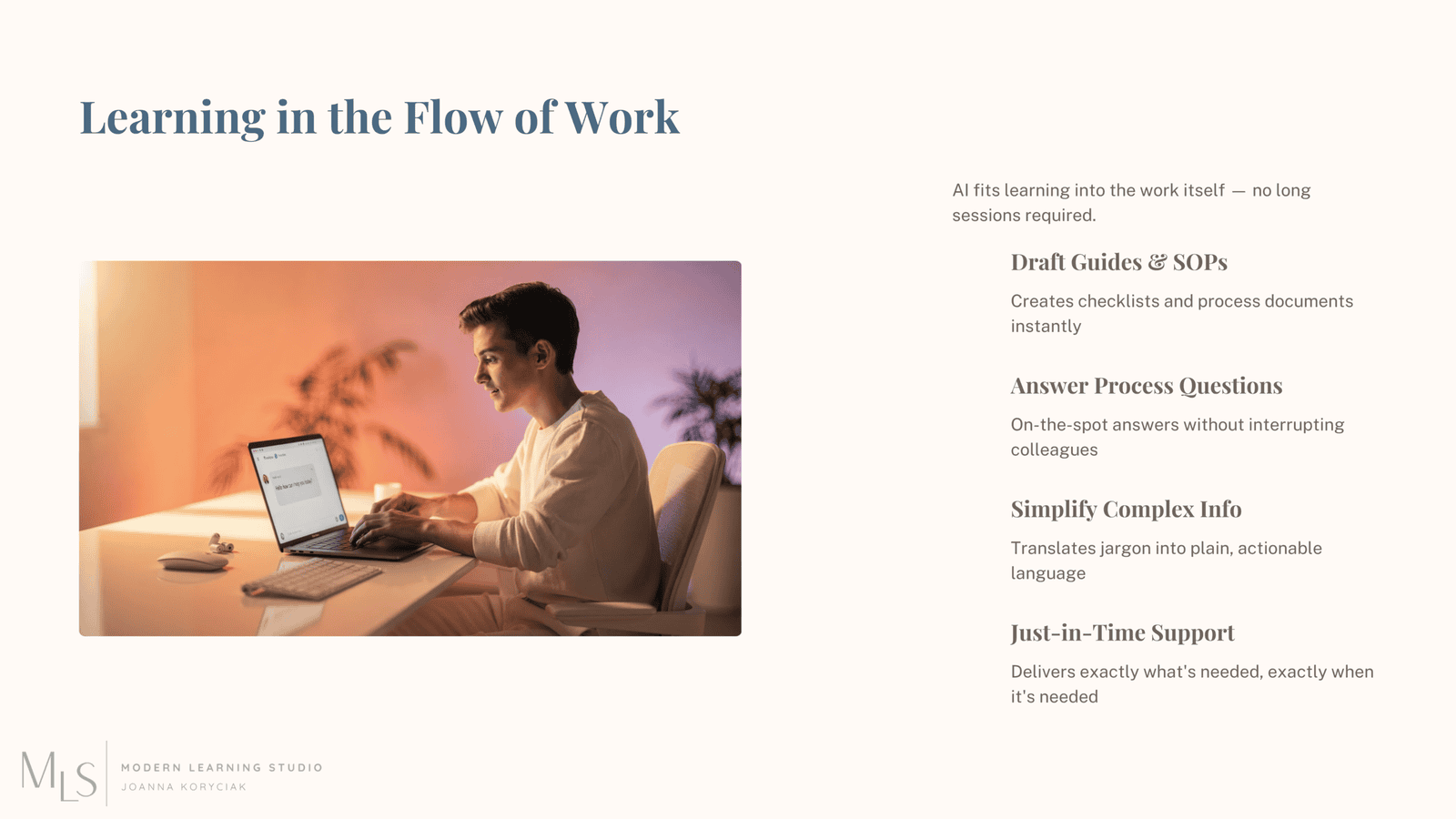
Learning in the Flow of Work
One of the biggest advantages of AI-assisted learning is that it reduces friction.
Employees no longer need to pause their entire day to search through documents, wait for responses, or sit through generic training that may not apply to their role.
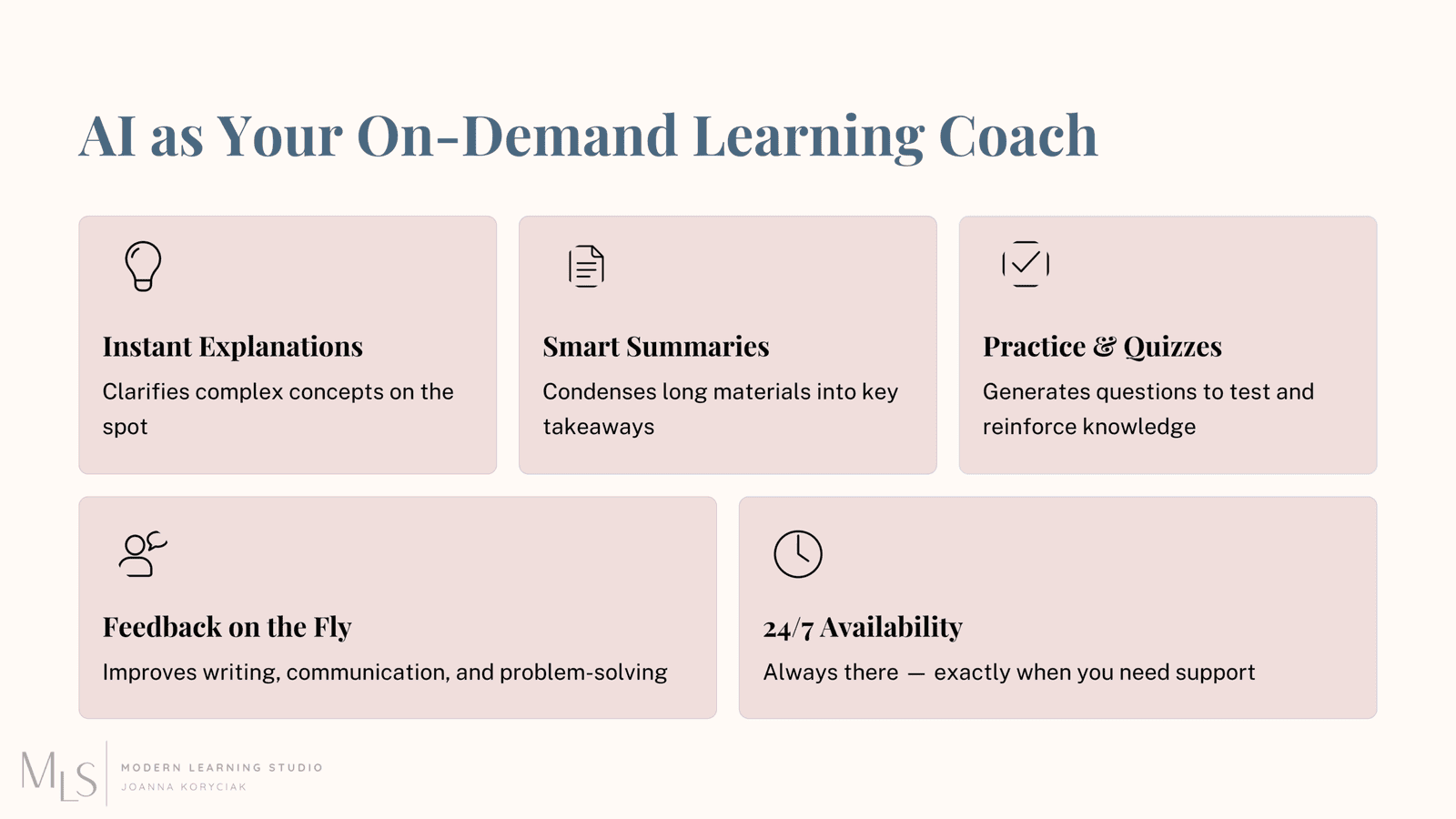
AI tools can now:
- answer process questions in real time,
- simplify complex information,
- generate summaries and checklists,
- create draft SOPs and guides,
- provide practice questions and reinforcement,
- support writing and communication,
- recommend relevant learning resources based on role or skill level.
This creates a more continuous learning environment where development happens naturally alongside work rather than outside of it.
More Personalized Learning
Traditional training programs are often built around standardization.
AI introduces adaptability.
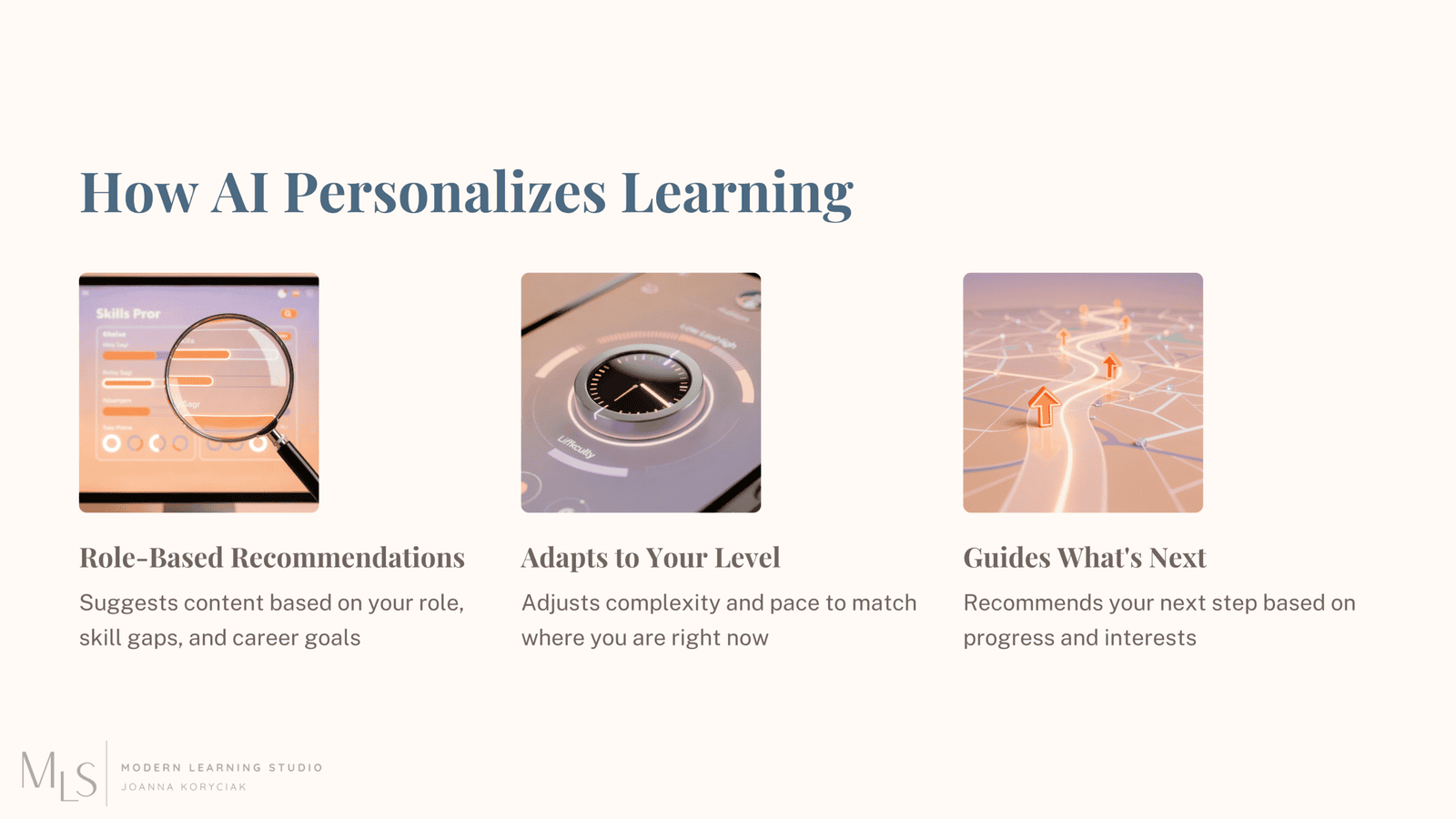
Learning support can now adjust based on:
- role,
- experience level,
- skill gaps,
- pace of learning,
- interests,
- career goals.
Instead of forcing every employee through the exact same experience, organizations can provide learning that feels more relevant and useful to the individual.
That relevance increases engagement and improves retention of information.
Faster Operational Learning
AI also has major implications for operational clarity.
Many workplace challenges are not caused by a lack of intelligence or effort. They are caused by:
- confusing processes,
- inaccessible information,
- inconsistent documentation,
- knowledge bottlenecks,
- unclear communication.
AI can help reduce those barriers by translating dense or technical information into more understandable, actionable guidance.
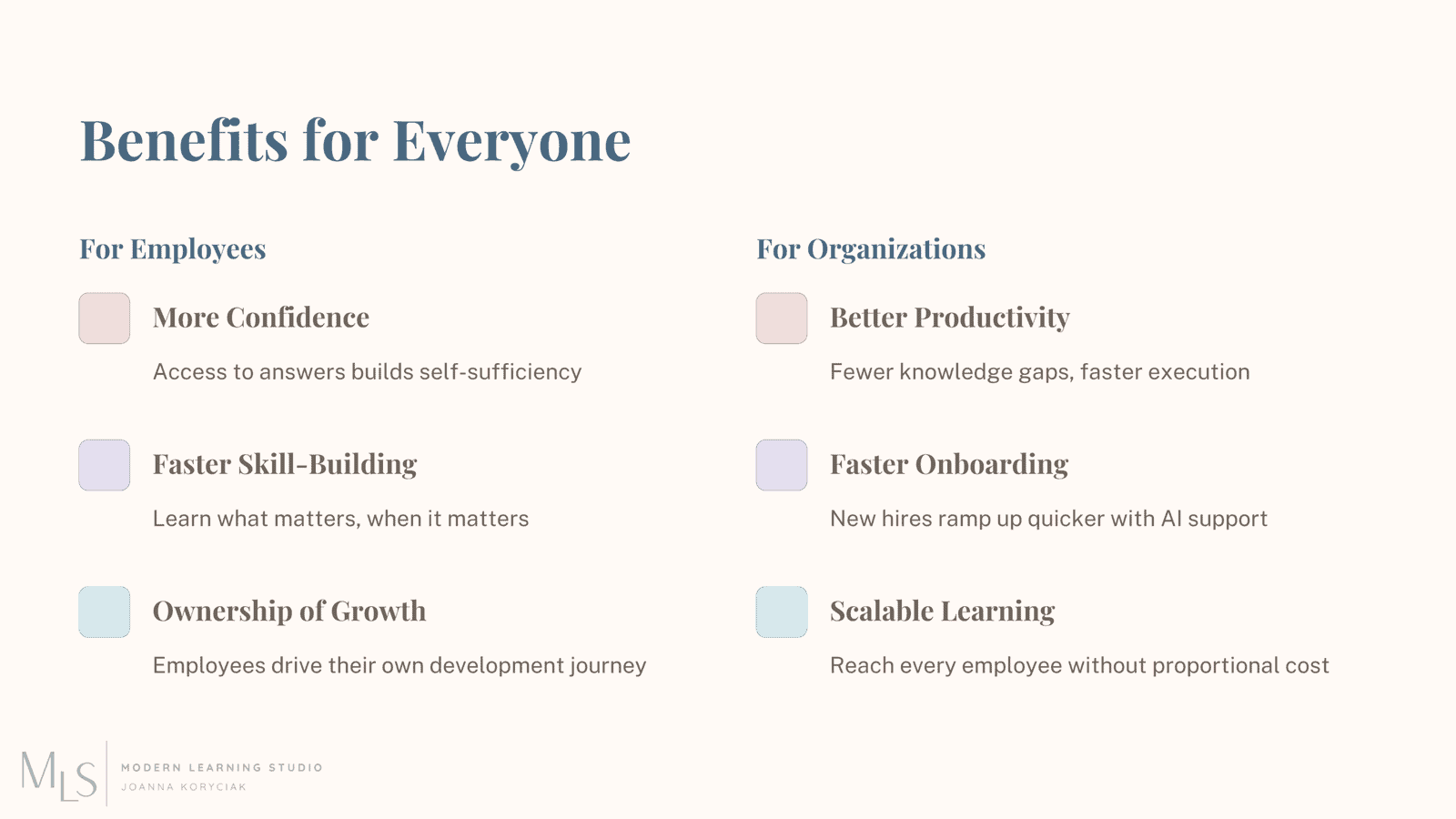
For organizations, this can support:
- faster onboarding,
- quicker skill development,
- reduced dependency on tribal knowledge,
- improved consistency,
- scalable learning systems.
In many ways, AI is becoming an operational support layer as much as a learning tool.
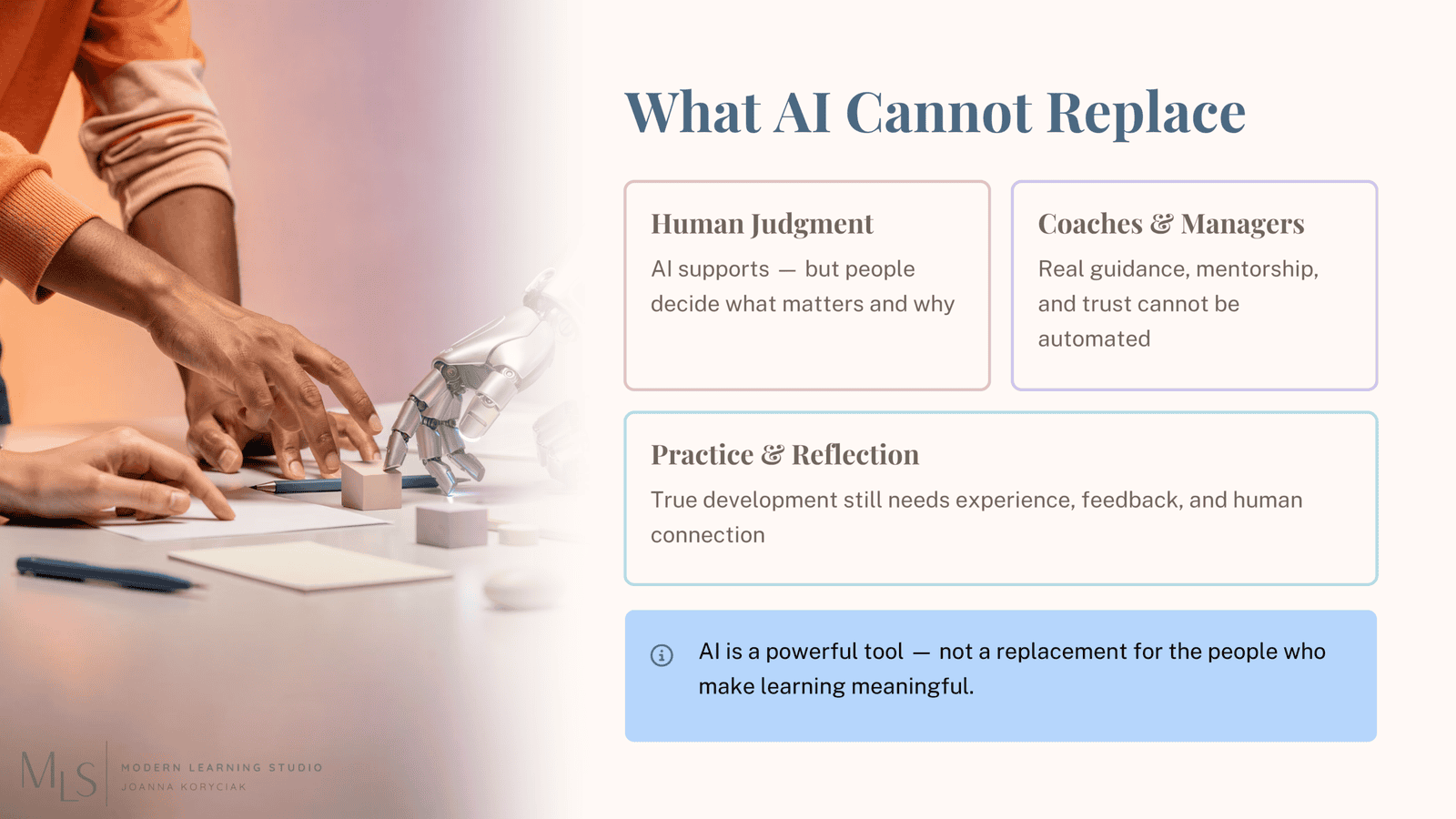
What AI Cannot Replace
Despite its advantages, AI still has clear limitations.
AI cannot replace:
- human judgment,
- coaching,
- mentorship,
- trust,
- lived experience,
- reflection,
- leadership.
Real development still depends on human connection and practical experience.
The strongest learning environments will not be fully automated. They will combine human guidance with AI-assisted support.
That distinction matters because the goal should not be replacing people. The goal should be removing unnecessary friction so people can learn, adapt, and perform more effectively.
The Future of Workplace Learning
AI is not eliminating learning and development.
It is reshaping how learning happens.
The organizations that benefit most will likely be the ones that stop treating learning as occasional training events and start building systems that support continuous development inside everyday work.
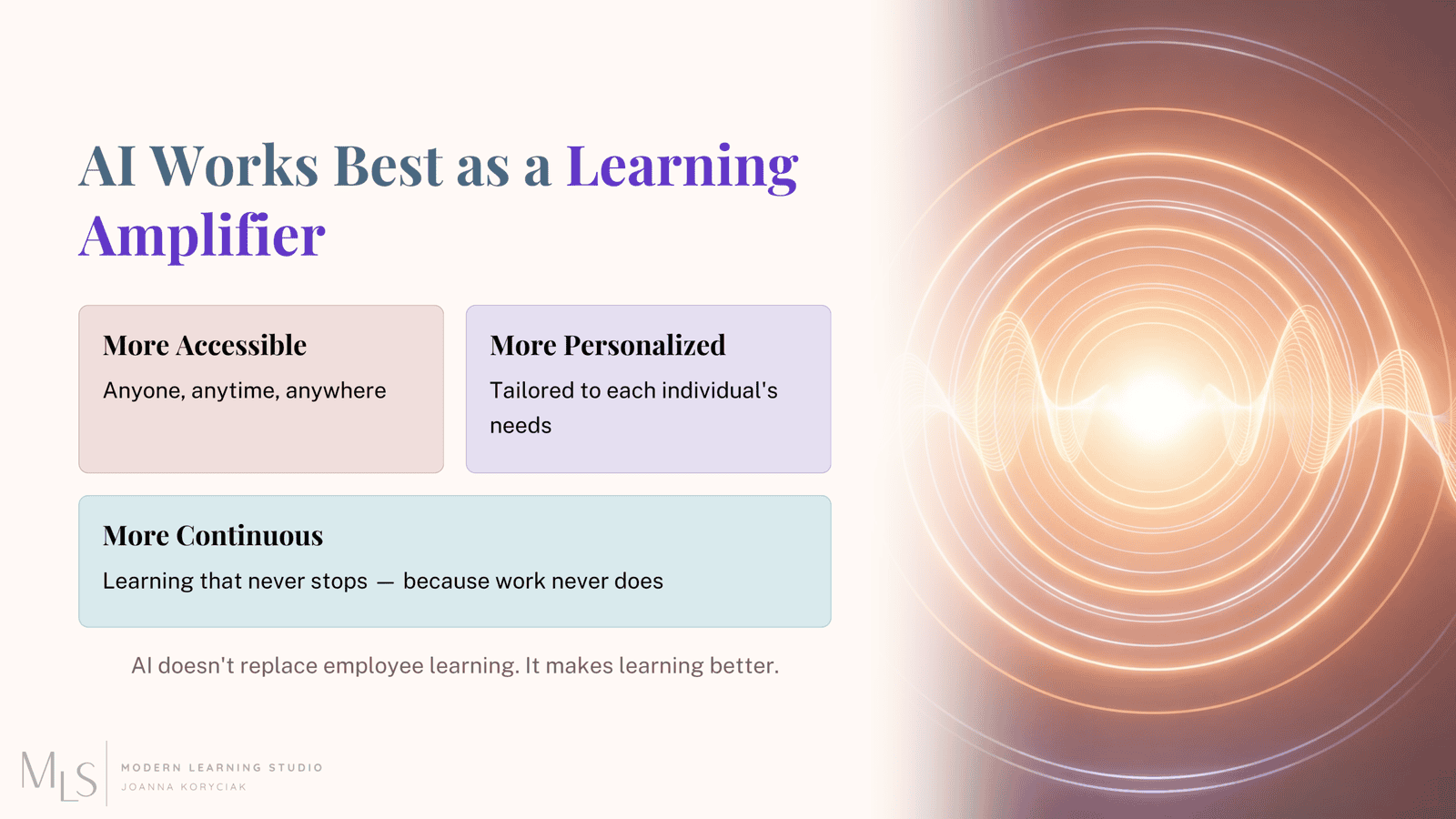
AI works best as a learning amplifier:
- more accessible,
- more personalized,
- more continuous,
- more integrated into real operational environments.
Learning is no longer limited to classrooms, workshops, or LMS modules.
It can now happen anytime work happens.