
Knowledge vs. Judgment Questions.
SHRM questions do not all test the same thing. Some ask whether you know the information. Others ask whether you can interpret a situation, apply that knowledge, and choose the strongest response. Understanding that difference changes how you study and how you approach the exam.
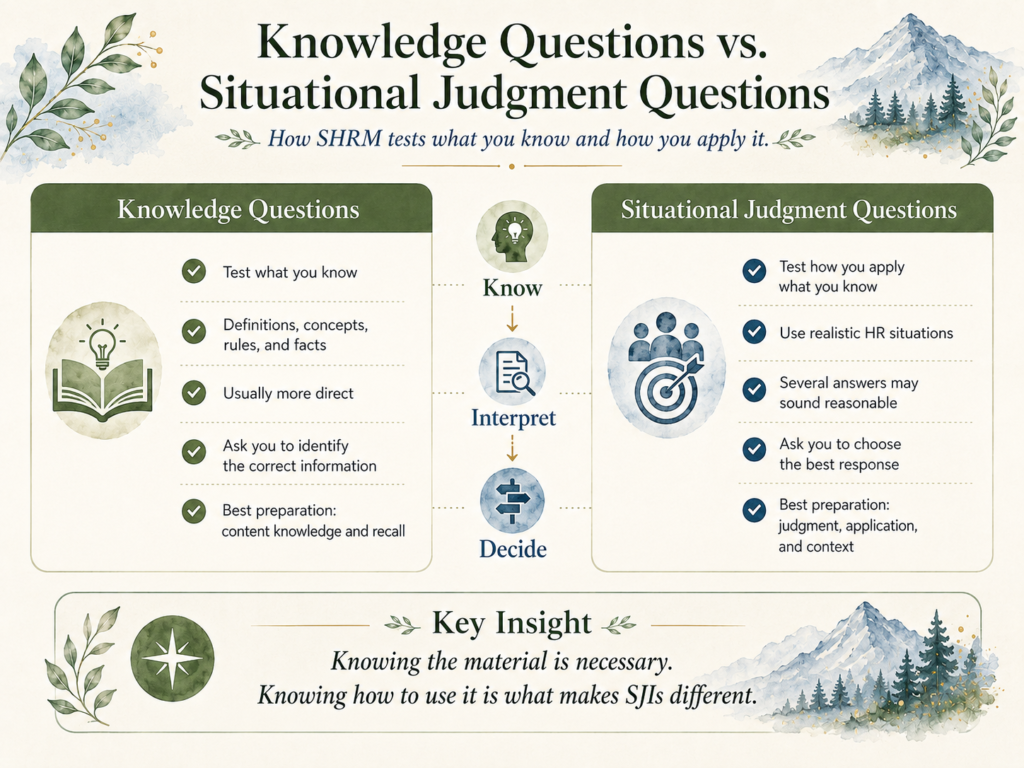
The biggest shift happens when a question moves from recall to application. A candidate may know the correct HR concept and still struggle with a situational judgment item because the challenge is deciding what should happen first, what response is most appropriate, and which option best fits the situation.
Why Situational Judgment Questions Feel Harder
Situational judgment questions are difficult because the challenge is rarely identifying one obviously correct answer. More often, several options may seem reasonable, and you have to decide which response best fits the situation, the level of responsibility, and the outcome SHRM is looking for.
A Practical Way to Think Through an SJI
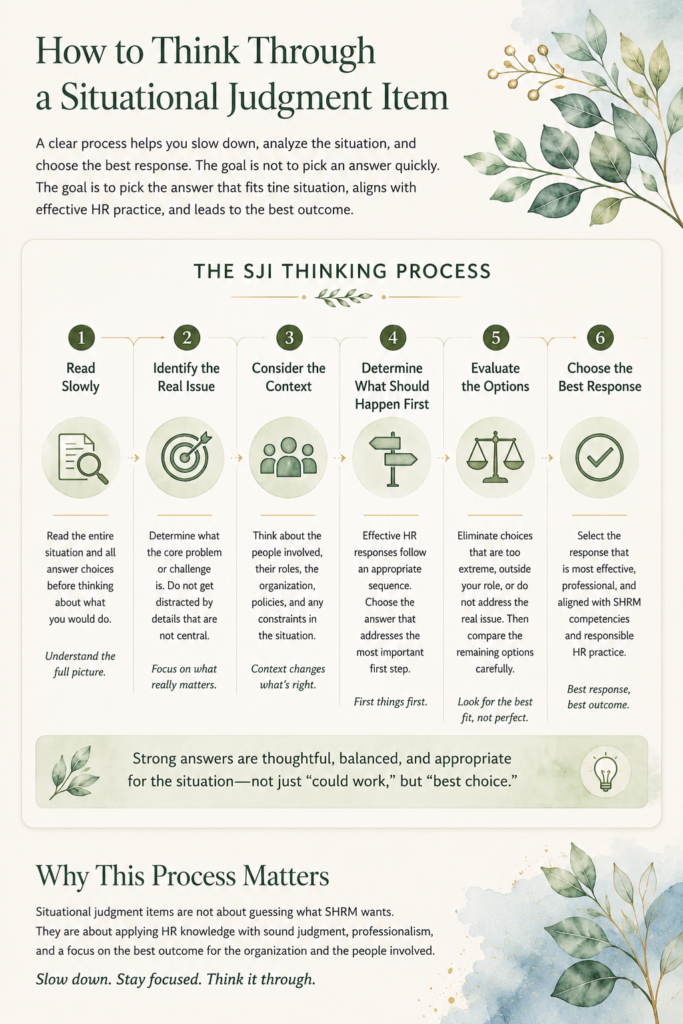
When several answers seem reasonable, the best approach is to slow the question down. First identify what is actually happening, then consider the HR professional’s role, what should happen first, and which response addresses the issue most effectively without overreacting or skipping an important step.
Common Traps in Situational Judgment Questions
Situational judgment items often become difficult when a reasonable answer is mistaken for the best answer. Common traps include reacting too quickly, choosing an option that is outside the HR professional’s role, solving the wrong problem, skipping an important first step, or selecting an answer because it sounds decisive rather than because it fits the situation.
What to Explore Next?
Now that you can see the difference between knowing the material and applying it, the next step is turning that understanding into a practical exam strategy. You can also return to the broader exam overview if you want to revisit structure, scoring, or what the exam is designed to measure.