
Understanding the SHRM Exam
The SHRM-CP and SHRM-SCP exams are designed to test both what you know and how you apply that knowledge in realistic HR situations. Understanding the structure, timing, question types, and scoring framework makes the exam feel much less mysterious before you begin building a strategy for it.
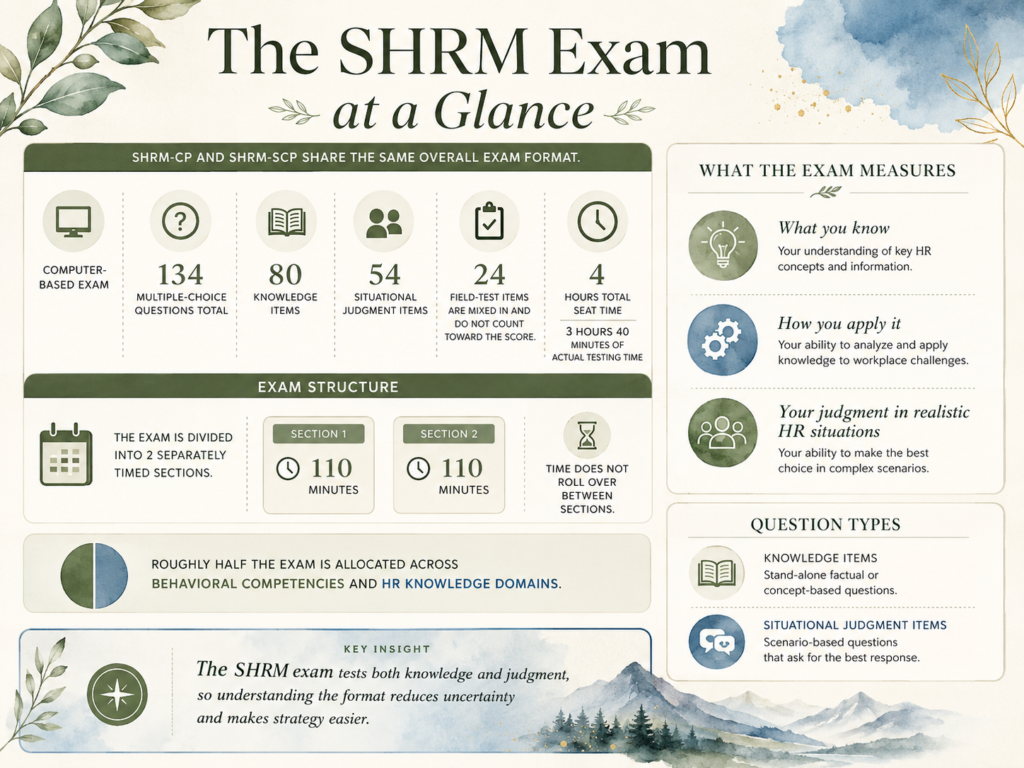
The SHRM-CP and SHRM-SCP exams share the same overall format, combining knowledge questions with situational judgment items. Knowing the structure, timing, and question mix ahead of time makes the testing experience easier to understand and gives you a clearer foundation for building an exam strategy.
What the Exam Is Really Measuring
The exam is not only checking whether you remember HR information. It is also testing how well you interpret situations, apply knowledge, and choose the strongest response when more than one option may seem reasonable.
How SHRM Exam Scoring Actually Works?
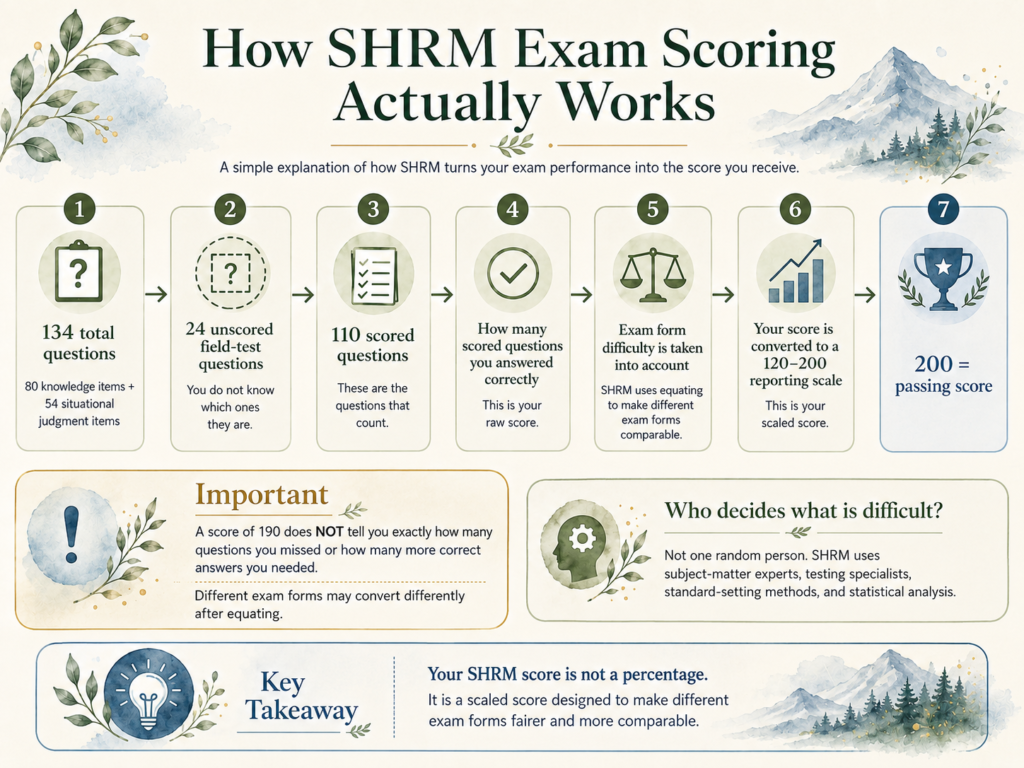
A missed question is more useful when you diagnose why it went wrong. Was the problem missing SHRM exam scores do not work like a traditional percentage. Your performance on the scored questions is converted to a reporting scale that accounts for differences between exam forms. Here is what that actually means — without the testing jargon.
Who Decides What Is Difficult?
SHRM does not decide that an exam is difficult because one person or one panel simply thinks the questions look hard.
The certification exams use established psychometric and standard-setting methods that are also used in other professional certification and licensure testing programs.
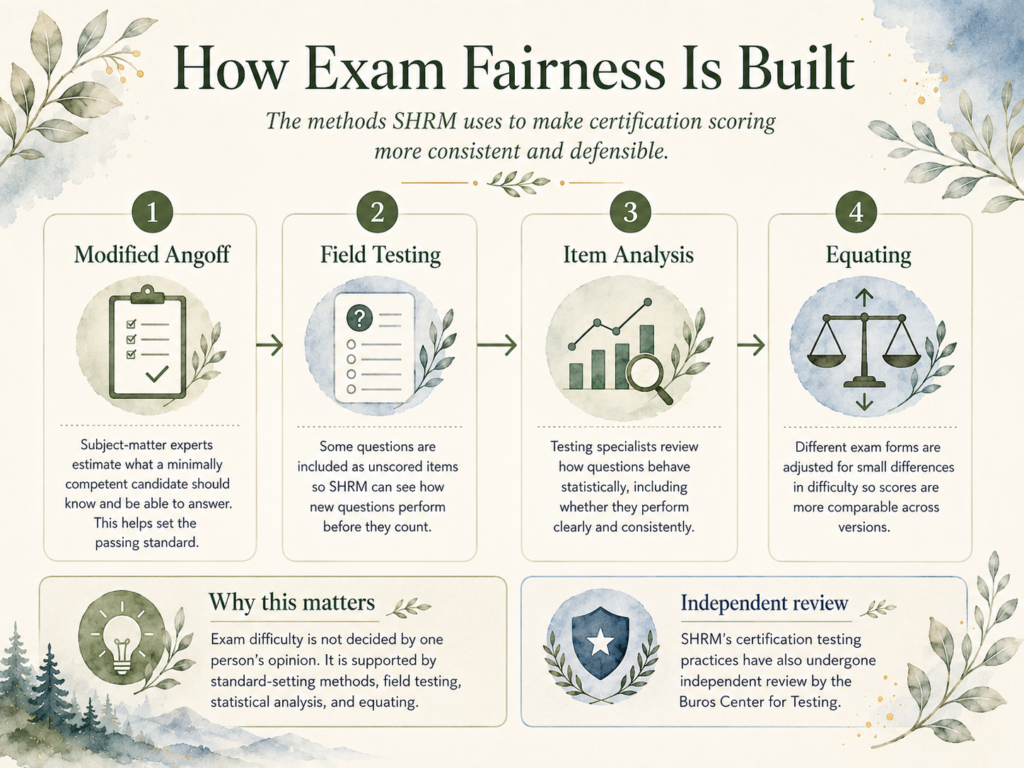
One of those methods is the Modified Angoff method. SHRM uses it to set the passing standard for the SHRM-CP and SHRM-SCP exams. In simple terms, qualified experts evaluate what a minimally competent candidate should be able to answer correctly. That work helps establish the level of performance required to pass.
SHRM also uses a statistical process called equating. Different versions of the exam cannot be made perfectly identical in difficulty, so equating is used to account for those differences. That is why the exact number of questions someone must answer correctly can vary slightly from one exam form to another.
And there is another important piece: field-test questions. Twenty-four questions on the exam do not count toward a candidate’s score. SHRM uses them to collect information about how new questions perform before they may eventually become scored questions.
What those terms mean
Modified Angoff method
Helps determine where the passing standard should be.
Equating
Helps make different exam forms comparable when their difficulty is not exactly the same.
Field testing / item analysis
Helps determine how individual questions actually perform before or as part of the testing program.
And there is an additional credibility point I really like for MLS: SHRM’s certification testing program has also been reviewed by the Buros Center for Testing, an independent testing organization. SHRM says that review examined areas including psychometric properties, reliability, decision consistency, equated passing scores, and item analysis.
The short version: No one is sitting in a room deciding, “This question feels hard.” SHRM uses established methods including the Modified Angoff method, equating, field testing, and psychometric analysis, and its testing practices have undergone independent review.
What to Explore Next?
Now that you understand how the SHRM exam is structured, what it measures, and how scoring works, you can move into the practical side of the certification process or take a closer look at the two different ways SHRM tests your knowledge and judgment.