
Most organizations still treat onboarding as a scheduling process.
Complete the paperwork.
Attend orientation.
Review policies.
Shadow another employee.
Finish assigned training modules.
Then hope competency develops over time.
The problem is that traditional onboarding systems were built for a different era of work:
- slower information flow,
- more stable roles,
- centralized offices,
- and lower operational complexity.
Today’s workforce environments move too quickly for static onboarding systems to keep up.
Knowledge changes constantly.
Processes evolve rapidly.
Employees work across distributed systems and digital platforms.
Critical operational knowledge often exists inside conversations, not documentation.
This is where AI is beginning to fundamentally reshape workforce learning.
The next generation of onboarding is not simply about automating tasks or generating training content faster. It is about creating intelligent learning infrastructure that continuously supports employees during real work.
AI-assisted onboarding systems are shifting learning away from:
- isolated training events,
- static manuals,
- and scheduled classroom sessions,
toward:
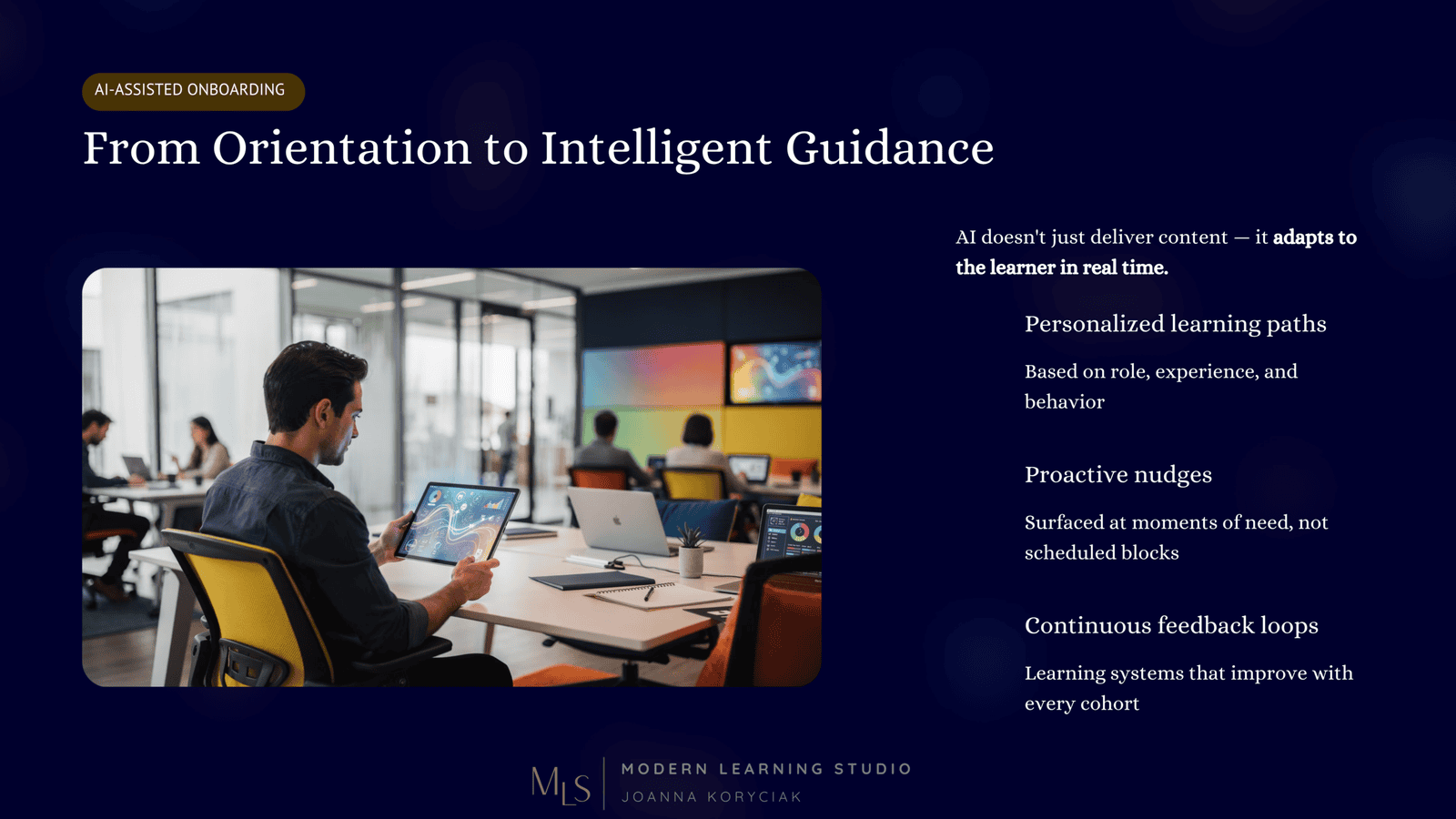
- contextual guidance,
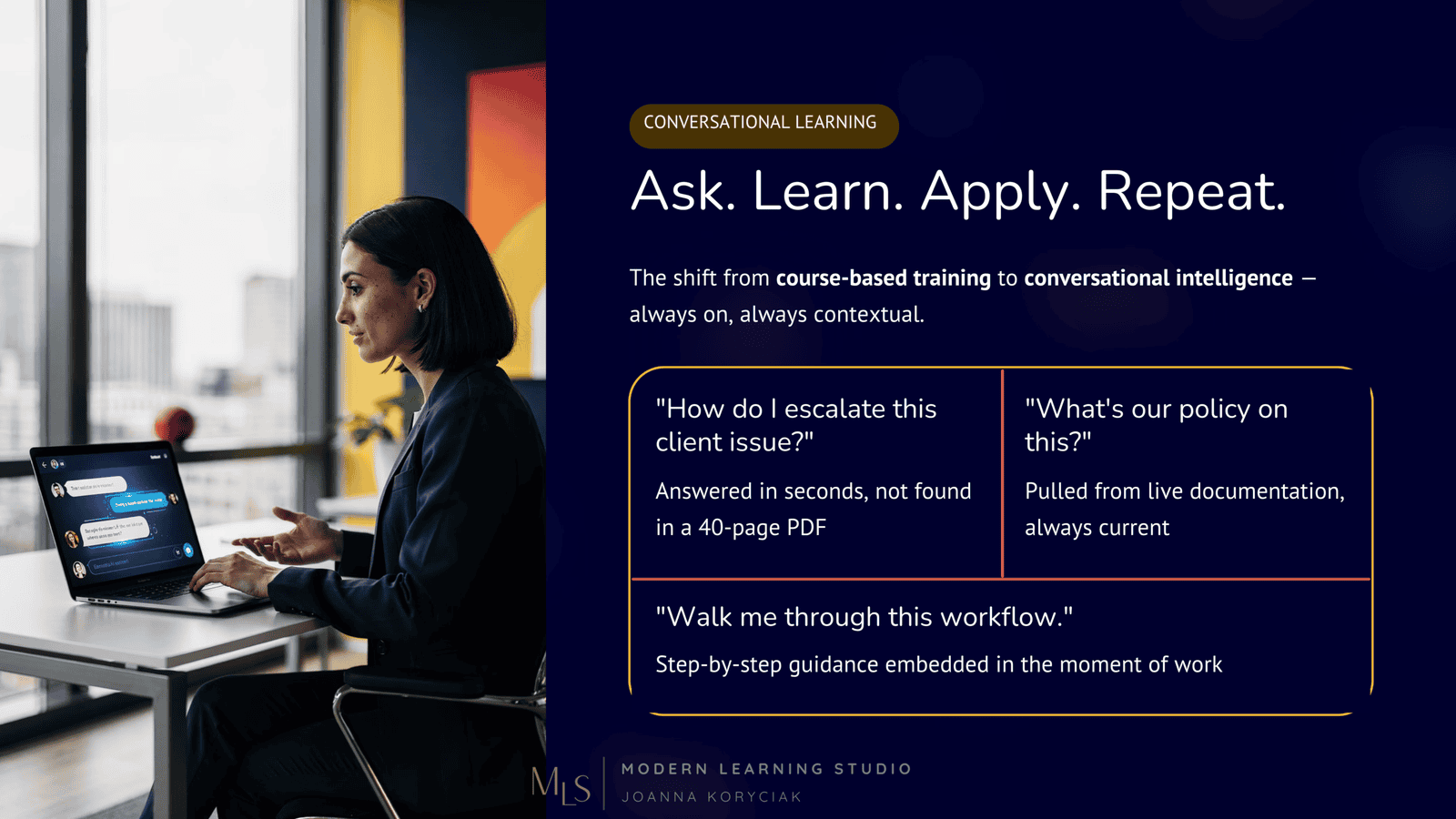
- conversational learning,
- adaptive support,
- and real-time knowledge retrieval.
This changes the role of onboarding entirely.
Instead of forcing employees to memorize information upfront, organizations can create systems that surface the right information at the moment of need.
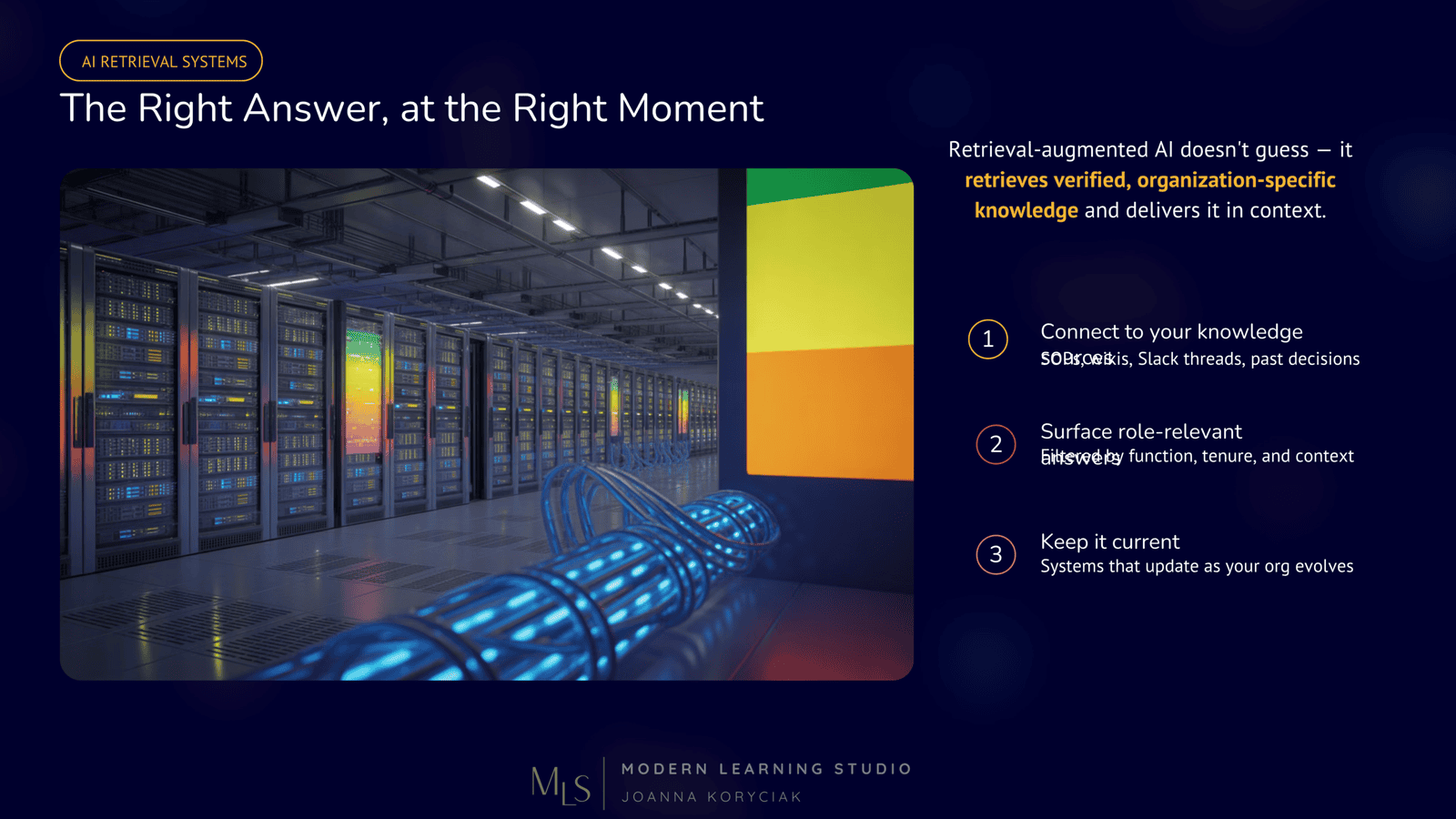
An employee no longer needs to search through a 40-page document to locate a workflow or policy. AI retrieval systems can provide role-specific guidance instantly, using verified organizational knowledge connected to SOPs, documentation, internal communication systems, and operational procedures.
This is especially important because many organizations suffer from a hidden operational problem:
institutional knowledge loss.
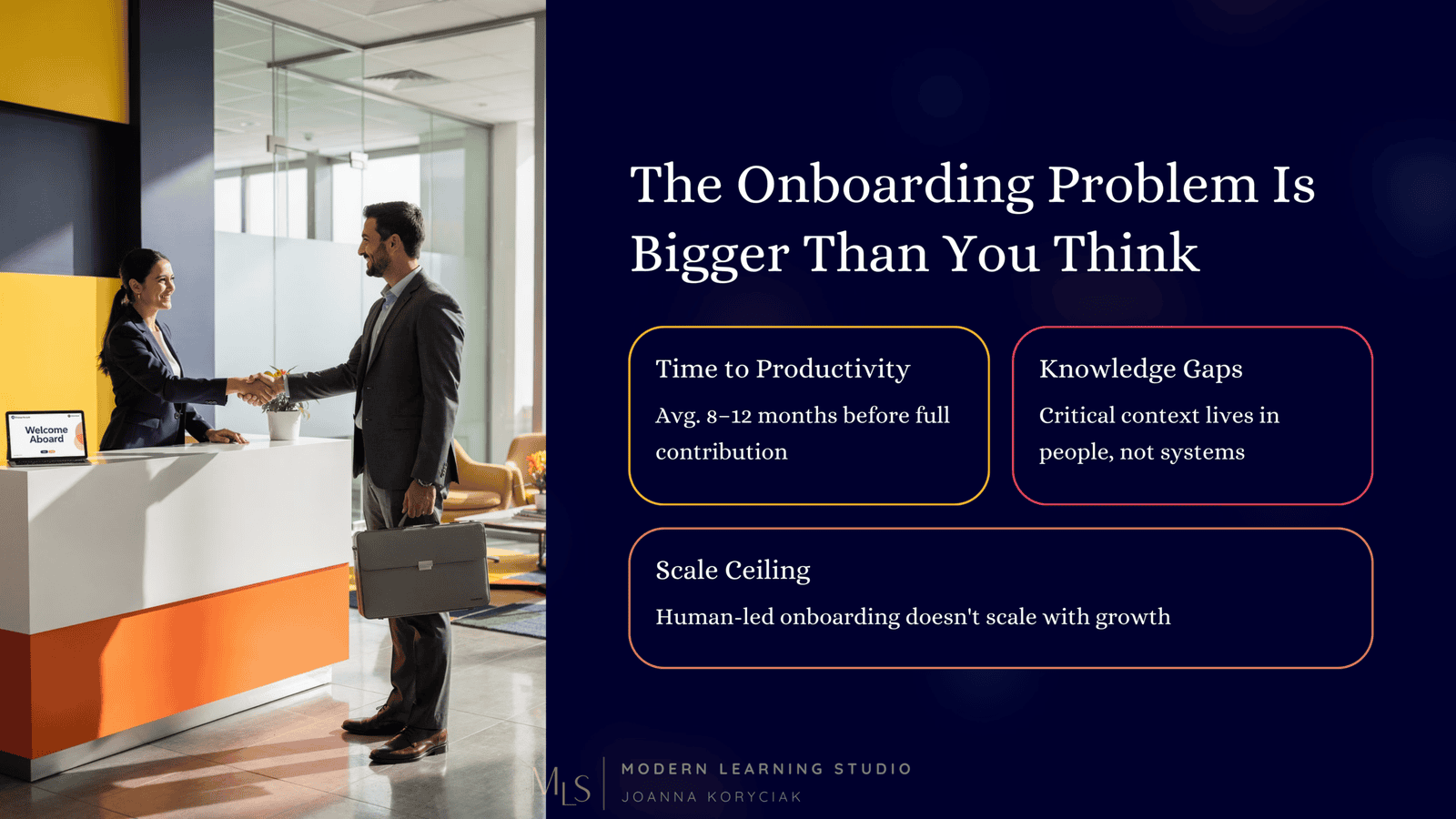
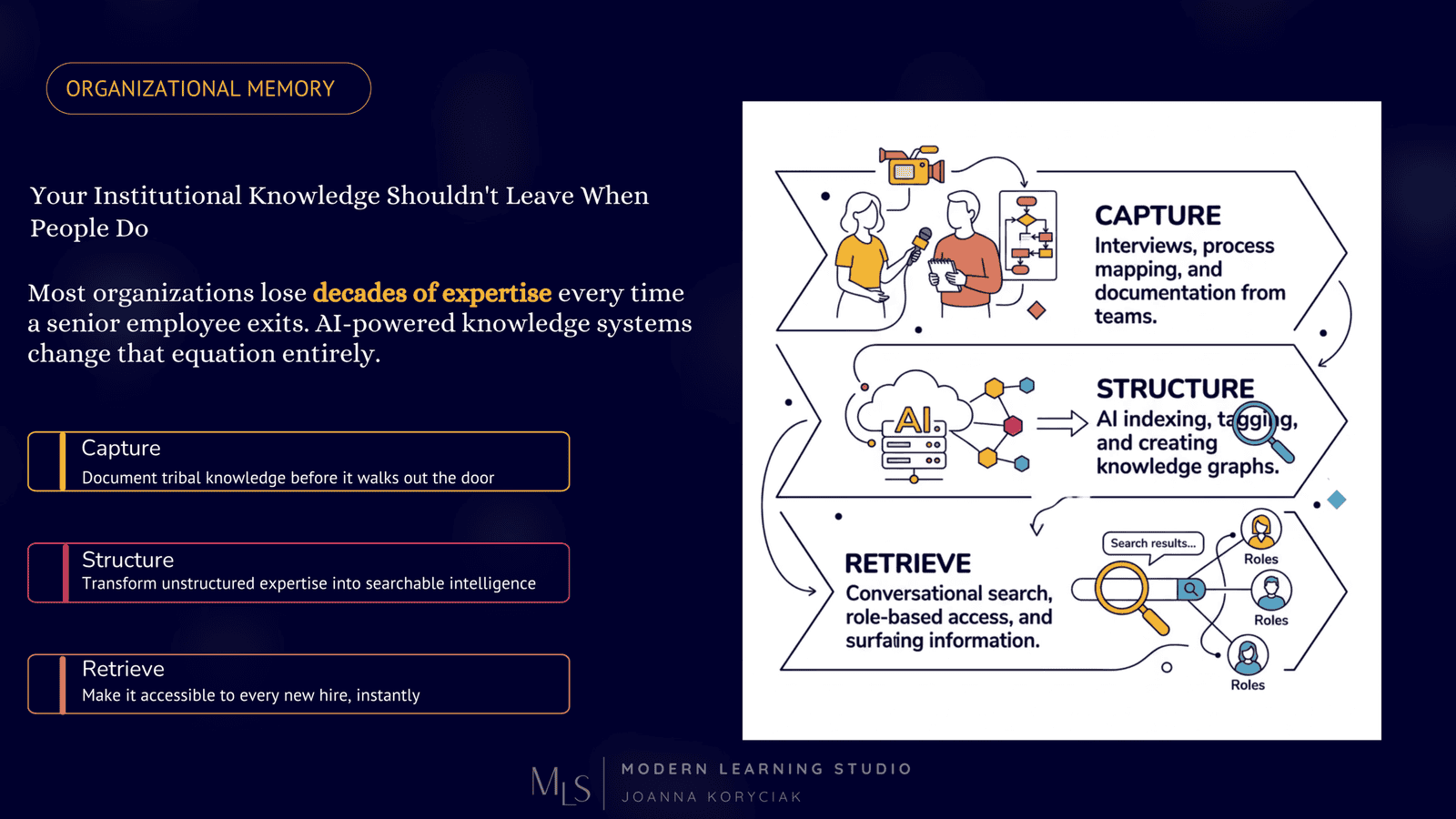
Critical expertise often lives inside experienced employees rather than structured systems. When those employees leave, organizations lose years — sometimes decades — of operational knowledge.
AI-powered organizational memory systems help capture, structure, retrieve, and continuously update that knowledge across the workforce.
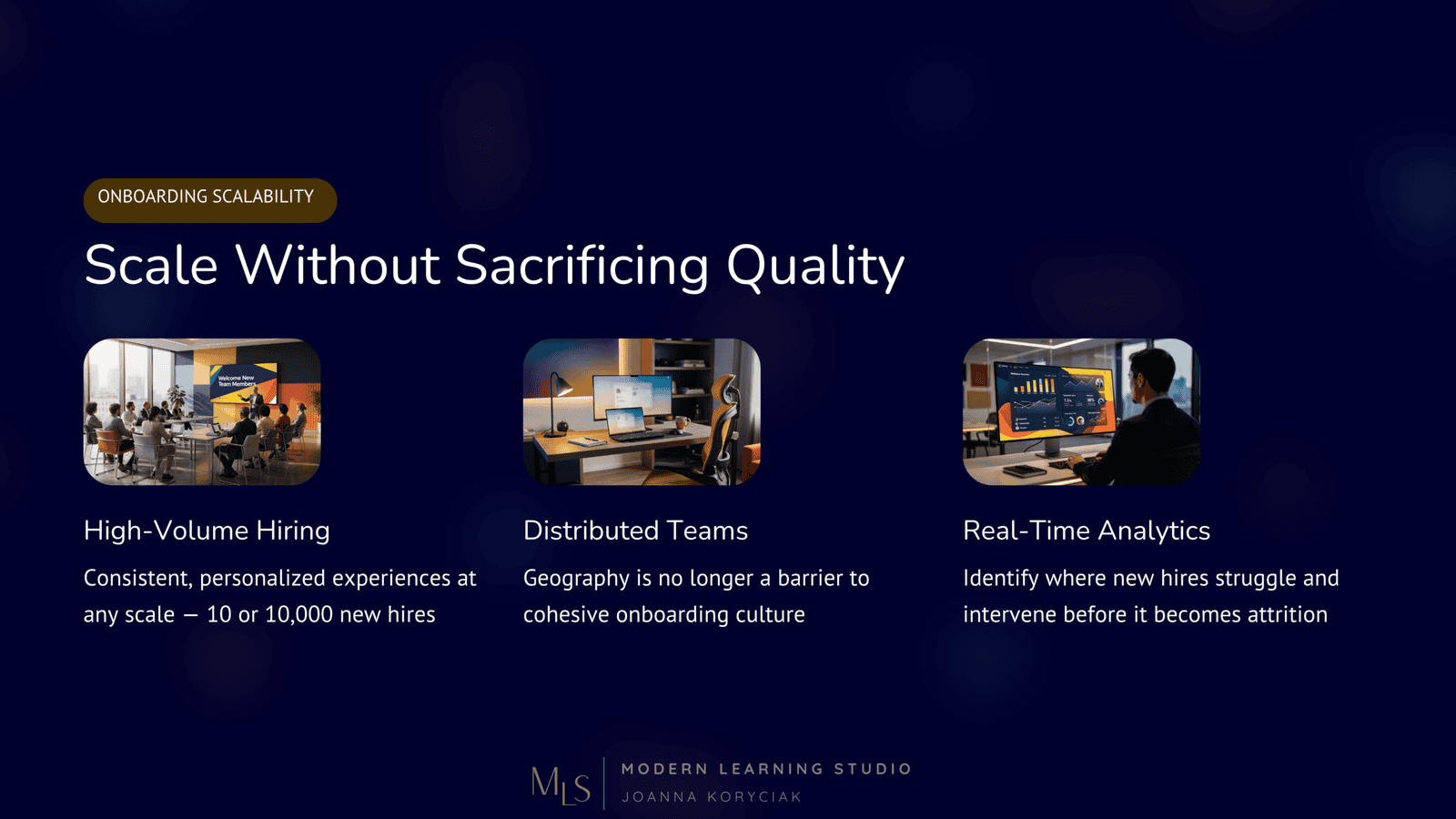
This creates scalability that traditional onboarding struggles to achieve.
As organizations grow:
- onboarding quality often declines,
- inconsistency increases,
- and managers become overloaded with repetitive knowledge transfer.
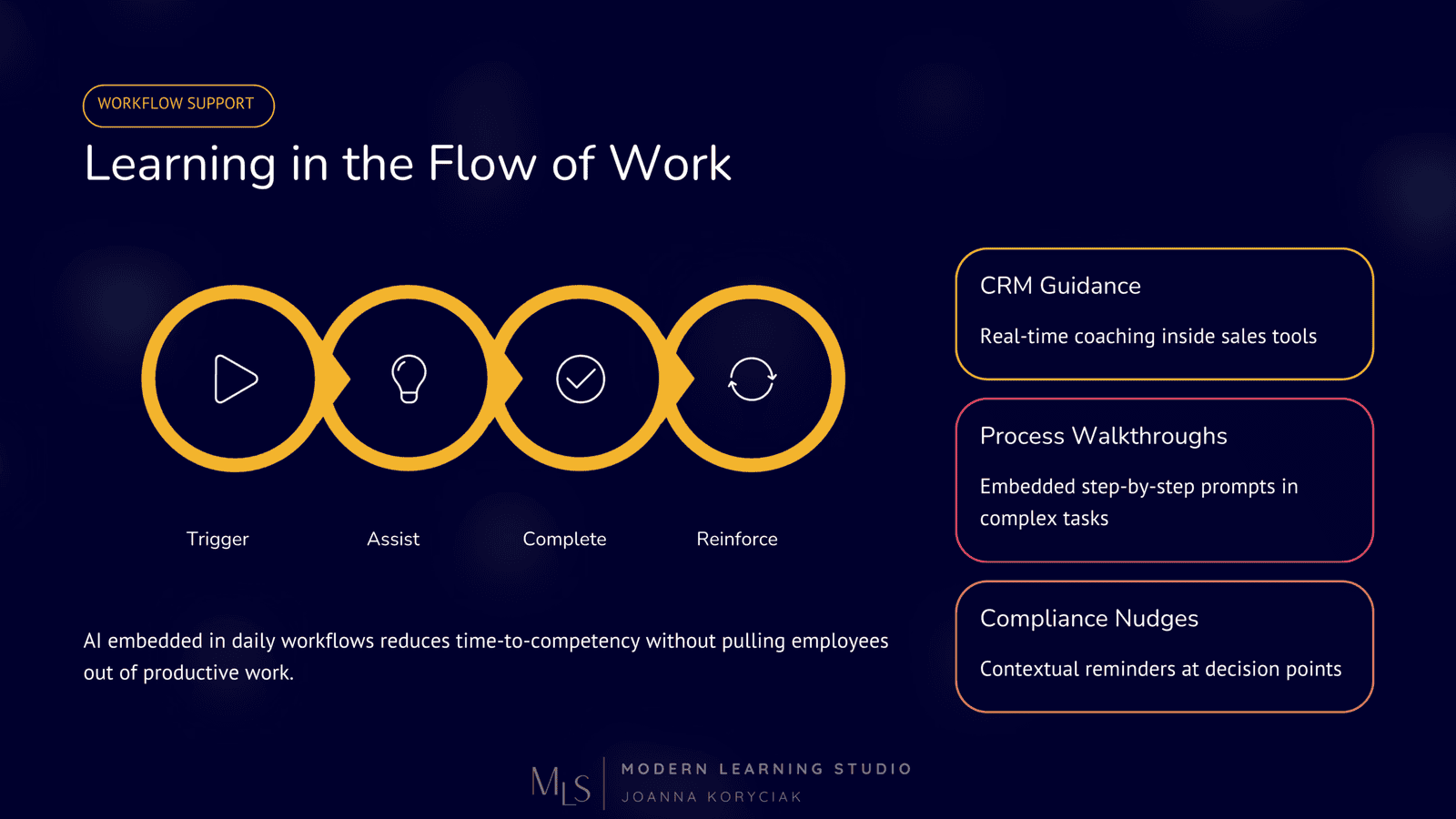
AI-assisted systems can reduce those bottlenecks by embedding learning directly into workflows:
- contextual prompts,
- compliance nudges,
- embedded walkthroughs,
- and conversational support systems.
The most important shift is philosophical.
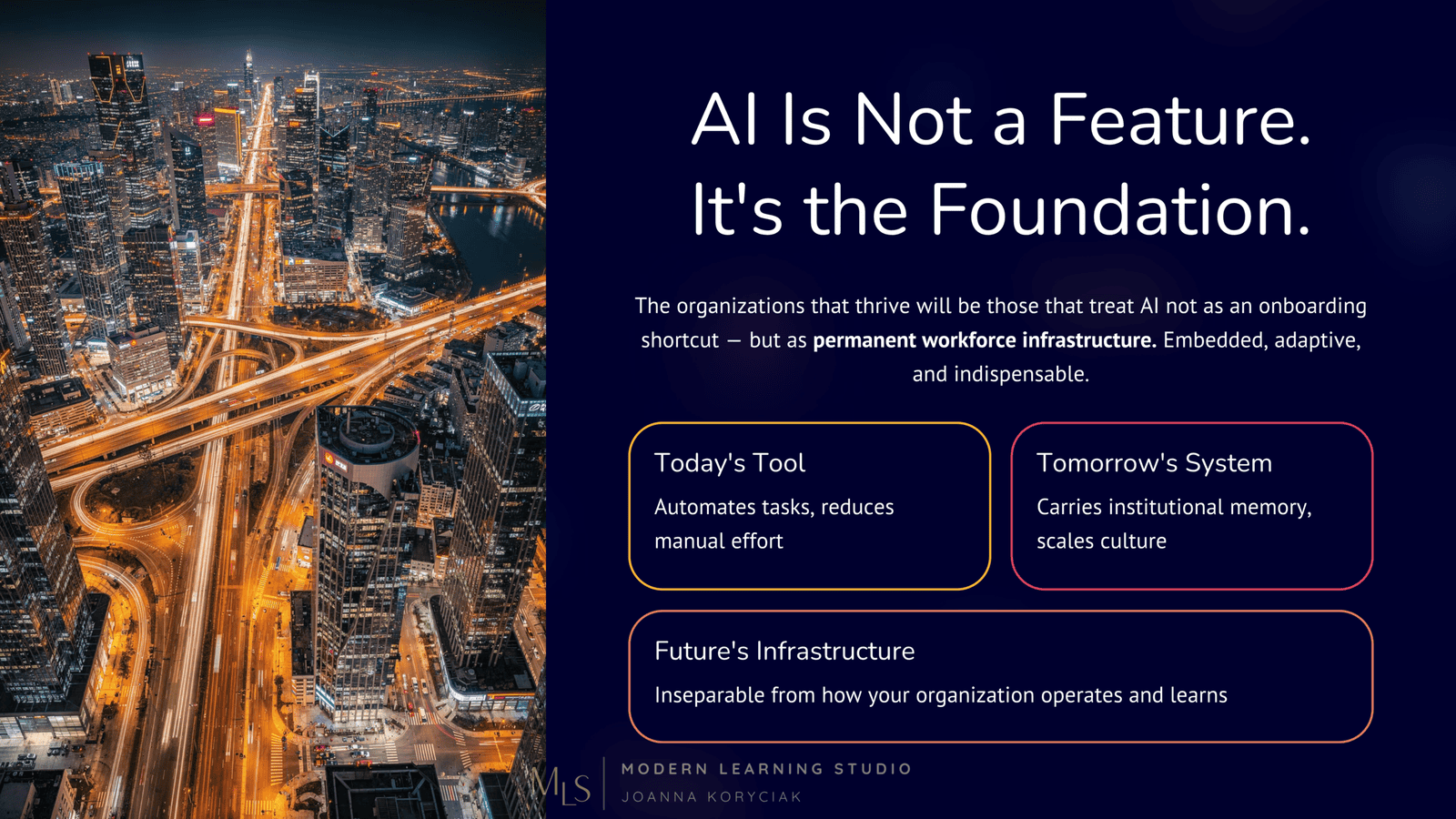
AI is not simply becoming another HR technology tool.
It is becoming infrastructure.
The organizations that adapt successfully will not be the ones that merely automate onboarding tasks. They will be the organizations that redesign workforce learning systems around continuous access to operational intelligence.
The future of onboarding is not static orientation.
It is adaptive organizational memory.