
Many organizations talk extensively about culture.
They discuss engagement, values, collaboration, leadership, communication, and retention. They invest heavily in mission statements, culture initiatives, and employee experience programs.
But employees do not experience culture primarily through slogans or presentations.
They experience culture through operational systems.
The way work is organized determines how people experience the organization every day:
- communication structures,
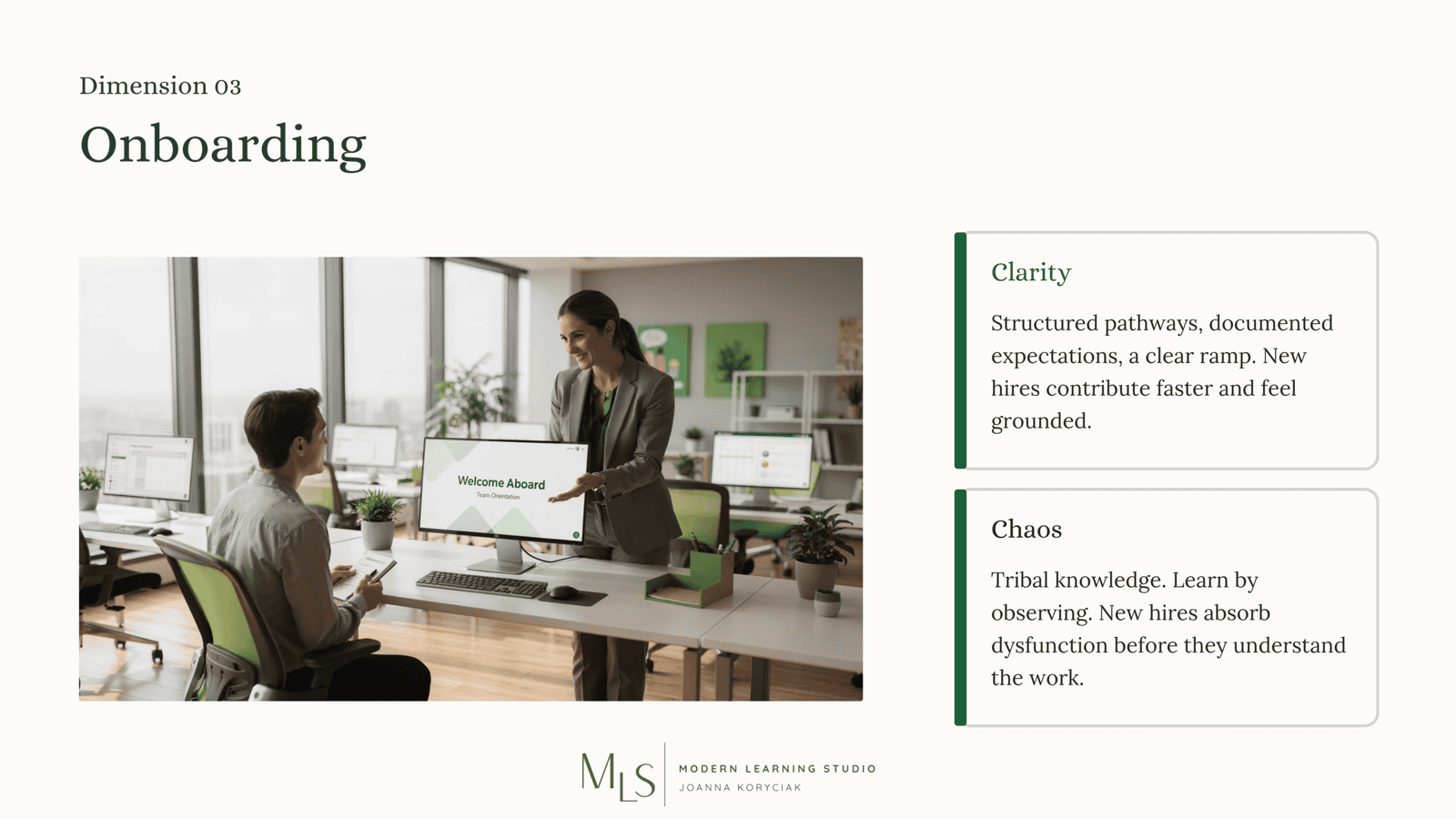
- onboarding systems,
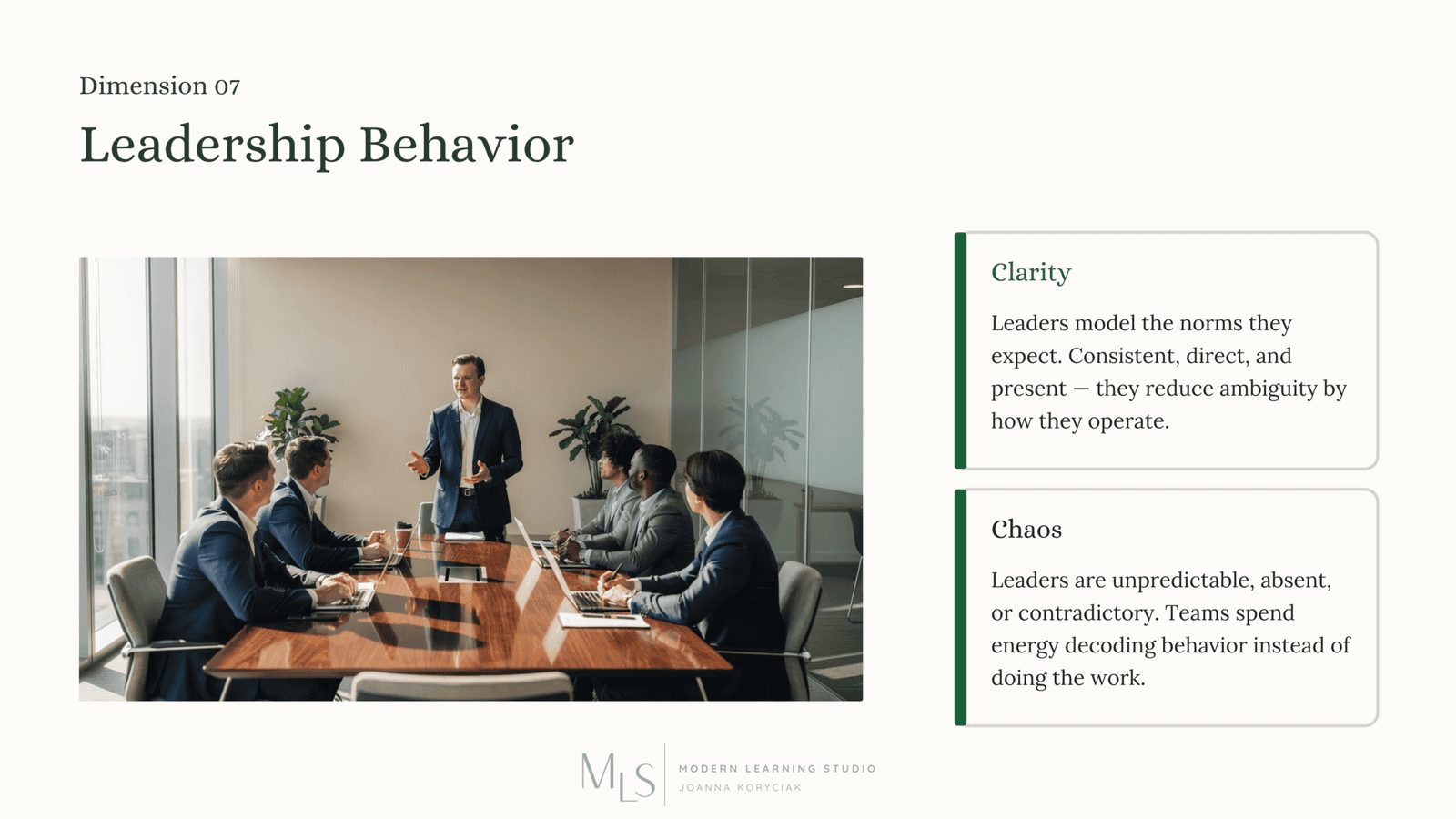
- leadership behavior,
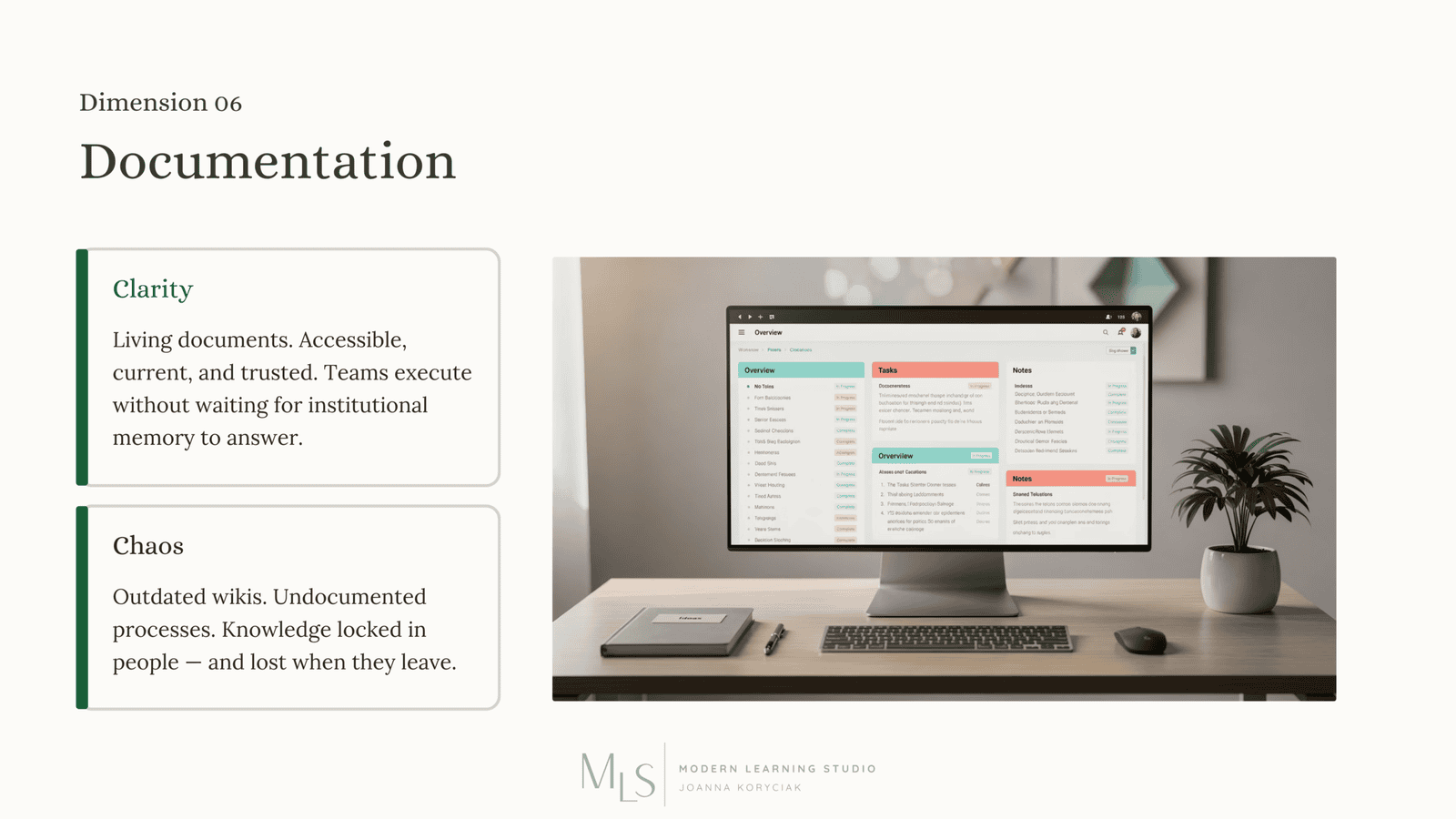
- documentation practices,
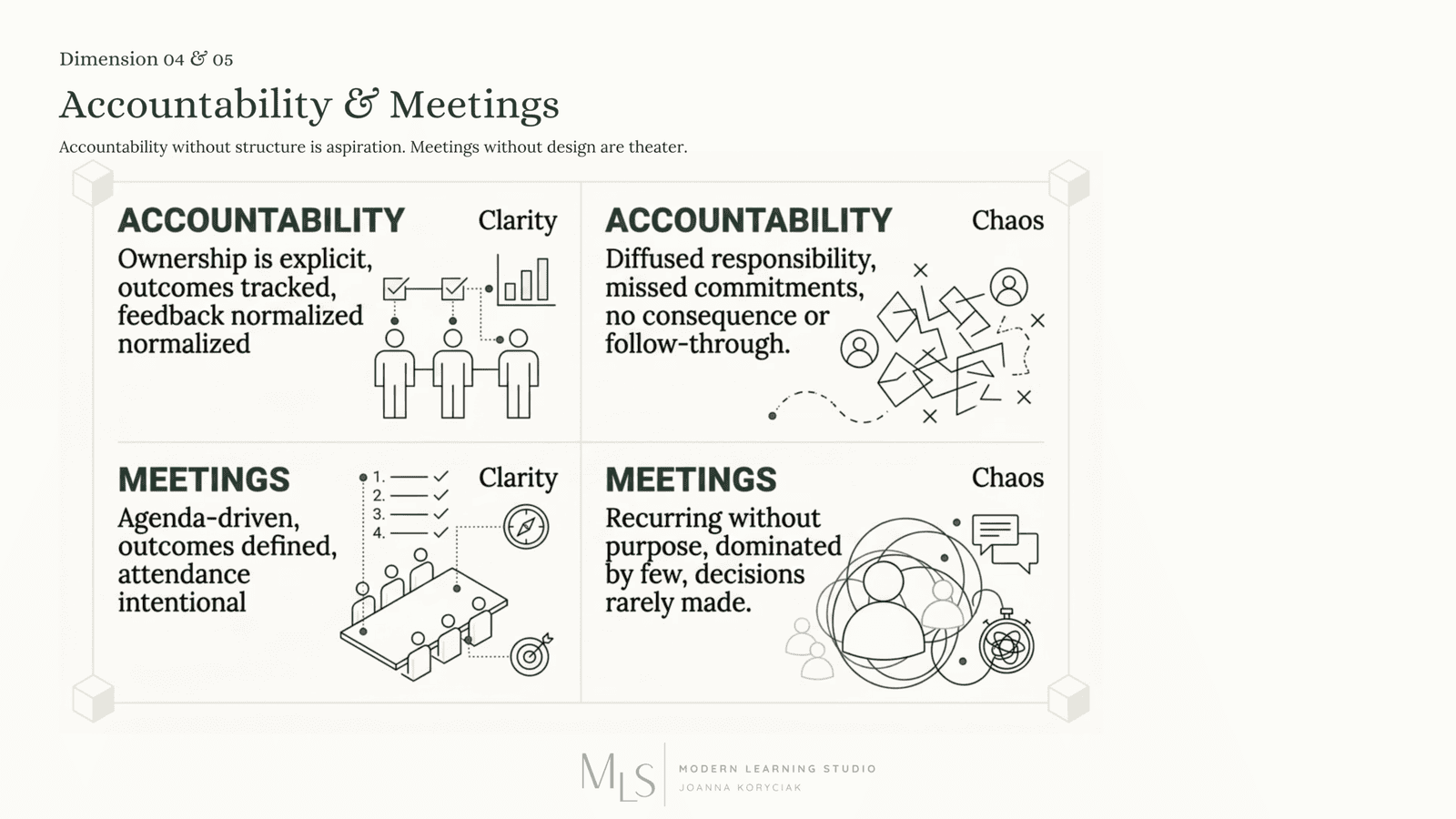
- meeting quality,
- accountability systems,
- and priority management.
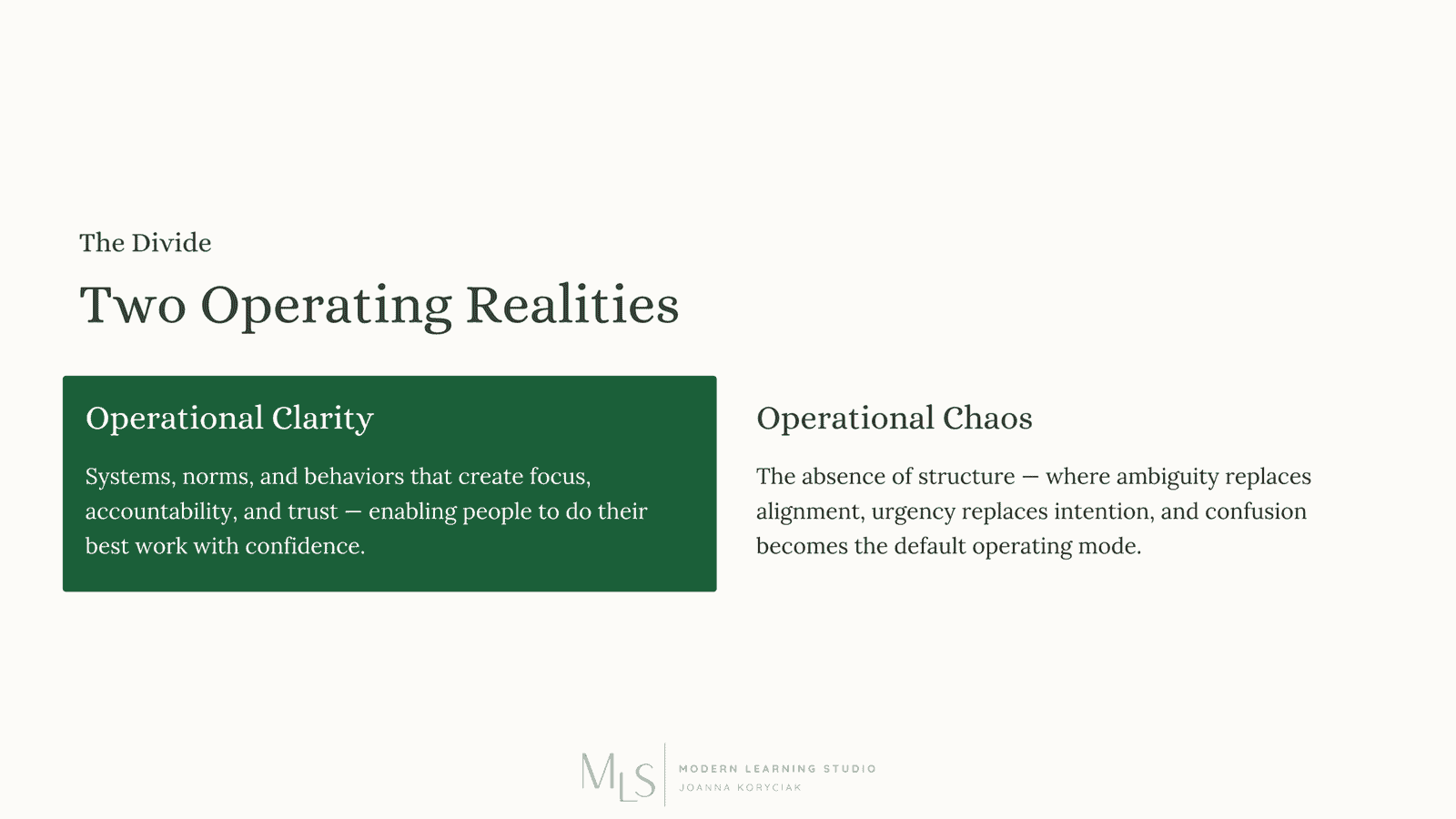
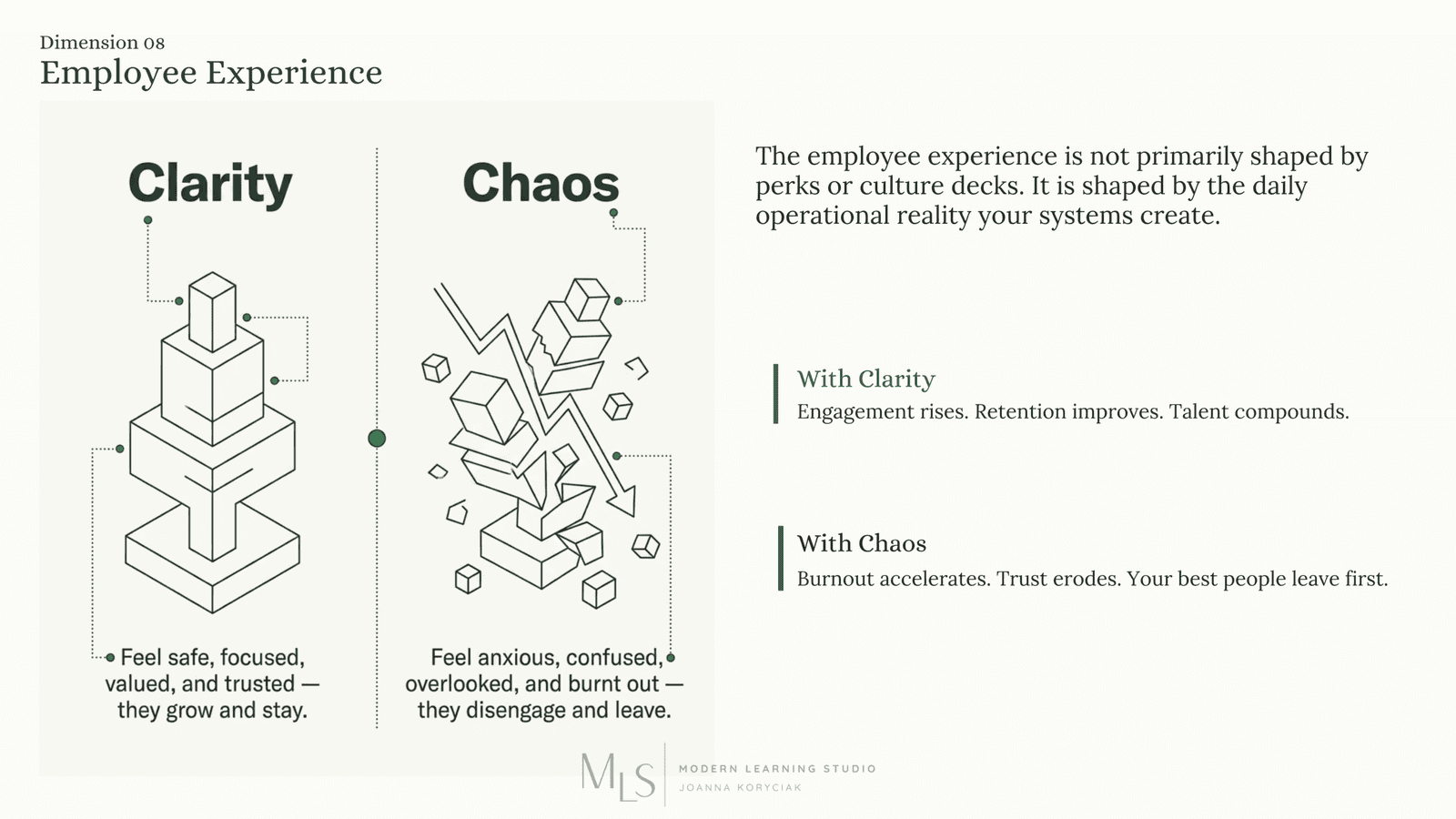
Operational clarity creates stability.
Operational chaos creates friction.
This distinction affects nearly every part of workforce performance.
In organizations with operational clarity:
- employees know where information lives,
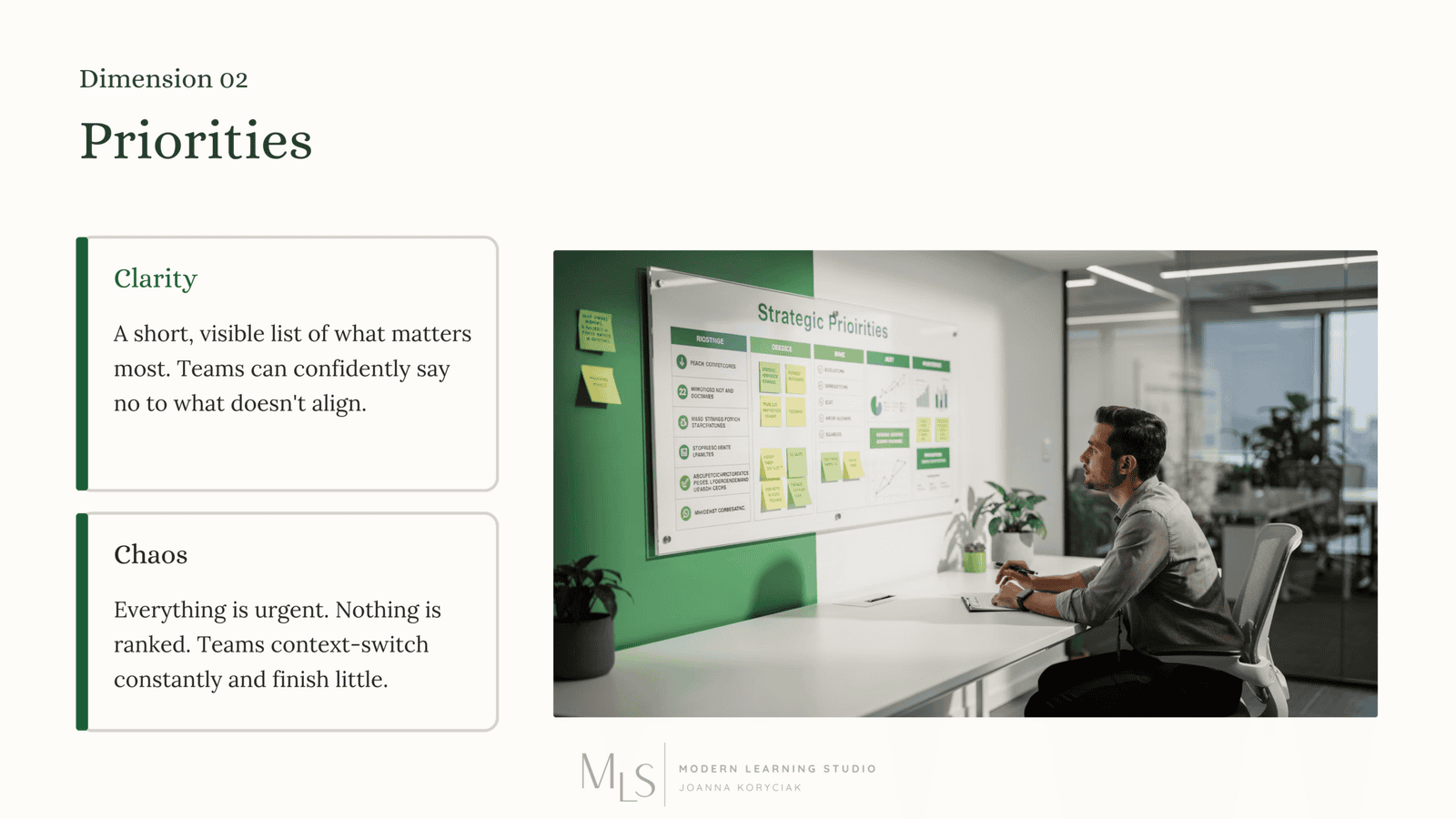
- priorities are visible,
- onboarding is structured,
- expectations are defined,
- and leadership behavior reduces ambiguity rather than increasing it.
People spend less energy decoding systems and more energy contributing meaningfully to work.
In operationally chaotic environments, the opposite happens.
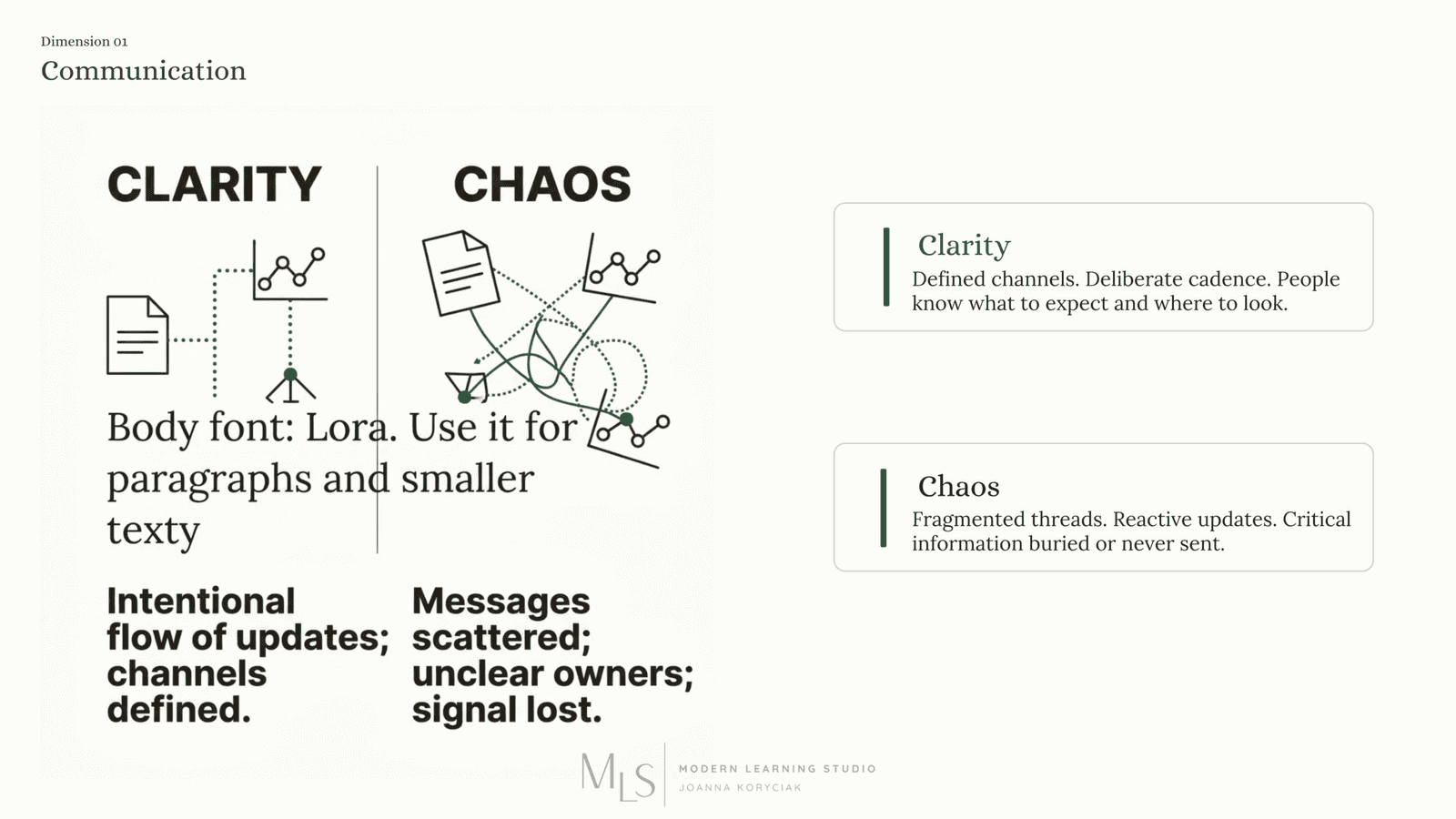
Communication becomes fragmented.
Urgency replaces prioritization.
Processes remain undocumented.
Knowledge becomes trapped inside individual employees rather than accessible systems.
New hires often learn dysfunction before they fully understand the work itself.
One of the most overlooked organizational problems is the hidden cost of ambiguity.
Ambiguity slows execution.
It increases stress.
It weakens accountability.
It creates inconsistent employee experiences across teams.
Eventually, employees adapt to dysfunction by becoming reactive rather than intentional.
This is why operational design matters so deeply.
Strong operational systems are not about rigidity or excessive control. They create clarity that allows employees to move confidently, collaborate effectively, and focus attention on meaningful work rather than organizational confusion.
Leadership behavior plays a central role in this process.
Employees watch operational behavior more closely than organizational messaging.
If leaders:
- communicate inconsistently,
- change priorities constantly,
- avoid accountability,
- or operate unpredictably,
teams absorb those patterns quickly.
Culture is reinforced operationally long before it is reinforced verbally.
One of the clearest indicators of organizational maturity is whether systems reduce cognitive friction or create it.
Healthy operational systems:
- simplify decisions,
- reduce unnecessary ambiguity,
- support learning,
- and make execution more sustainable.
Operational chaos does the opposite.
It increases burnout, weakens trust, and slowly pushes high performers toward disengagement or exit.
The employee experience is not primarily shaped by perks.
It is shaped by the operational reality employees navigate every day.
Clarity is not accidental.
It is a leadership decision.